

The Vishva Hindu Parishad (VHP) stated on Thursday that the formation of a BJP government in West Bengal would be significant and could help address challenges concerning internal security and demographic changes.
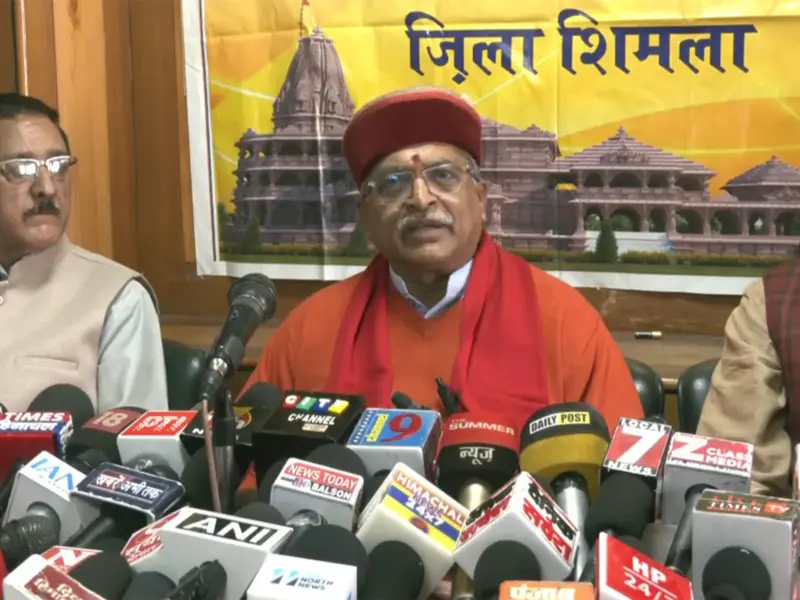
Milind Parande, Central Organising General Secretary of the VHP, made the remarks during a press conference and in an interview with ANI.
Parande said, “If the BJP government is formed in West Bengal, that would be important.” He acknowledged that not all issues could be resolved immediately but added that a change in governance could influence policy direction.
He expressed concerns about illegal immigration and its impact on internal security, especially along the India-Bangladesh border, stating that such developments have posed challenges not only for West Bengal but for the entire nation. “Those who have entered the country illegally should not have any interference in our political process, and India’s resources should not be used for them,” he said.
Parande also alleged that demographic changes have already occurred in the state, complicating the situation. Nevertheless, he maintained that a government aligned with “national and cultural interests” would work towards addressing these concerns.
The VHP leader criticised the previous West Bengal government for not adequately addressing border fencing and illegal infiltration over the years. He emphasised that governance must prioritise national security and ensure the proper use of public resources for citizens.
These remarks come amid ongoing political debates about governance, internal security, and demographic issues in West Bengal.
Regarding temple administration, the VHP reiterated its call to end government control over Hindu temples and demanded stricter enforcement of anti-conversion laws. Parande asserted that Hindu temples have faced “systematic discrimination” since before India's Independence because they remain under government control, unlike places of worship of other religions. “Only Hindu temples are under government control in the country. It is neither the job of courts nor governments to manage temples. They should be run autonomously,” he said.
He added that the VHP has drafted proposed legislation through a think tank consisting of religious leaders, retired High Court chief justices, Supreme Court lawyers, and legal experts, and is engaging with Chief Ministers, legislators, and Members of Parliament across states to build consensus. “Our proposal ensures autonomous temple trusts with no political appointments. Representation will include women and members from all sections of society, and funds will be used for social service and promotion of Hindu traditions,” Parande said.
Parande stressed the importance of resolving disputes through structured mechanisms, suggesting advisory bodies at the state and district levels composed of experts in finance, management, religious practices, and law.
Referring to Himachal Pradesh as “Devbhoomi,” Parande highlighted the need to preserve its identity by curbing religious conversions. “Conversions through inducement, fear or fraud are not permitted under the Constitution. Though Himachal has enacted a law, its implementation is weak, and rules need to be stricter,” he said, adding that police need greater enforcement powers.
He also expressed concerns over alleged organised religious conversions, including what he described as “love jihad,” calling for stronger measures to address such issues.
On national security, Parande pointed to illegal immigration as a major problem along the India-Bangladesh border, insisting that illegal entrants should not influence the country's political process or access its resources. He said political leadership should prioritise “national and cultural interests,” noting that while governance changes may not produce immediate results, they can guide policy direction in the long term.
These comments are made amid ongoing discussions on temple management, religious conversions, and internal security matters in various regions across India.