




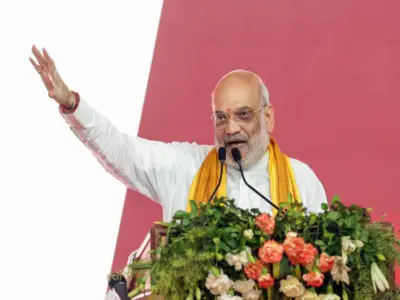

Union Home Minister Amit Shah has established strict 20-day review cycles and a comprehensive plan to establish 59 new sewage treatment plants (STPs) by 2027 as part of efforts to clean the Yamuna river.
During a high-level meeting on the Yamuna rejuvenation project, Shah emphasised the importance of a pollution-free river and called for urgency, accountability, and effective coordination among all stakeholders to achieve visible and measurable results.
He instructed the governments of Delhi, Haryana and Uttar Pradesh to move away from fragmented initiatives and collaborate under a unified action plan, stressing the need to maintain a standard ecological flow in the Yamuna jointly by the three states.
A key issue addressed was pollution from dairy waste. To counter this, a Memorandum of Understanding will be signed between the Municipal Corporation of Delhi and the National Dairy Development Board (NDDB), aiming to prevent untreated dairy waste from entering the river by converting it into biogas and organic manure.
Under the NDDB model, waste from dairies and cow shelters will be transported directly to processing plants, alongside scientific management of waste along the Yamuna’s banks to substantially reduce pollution.
Shah reviewed desilting operations in the drains feeding the river. According to the Ministry of Home Affairs (MHA), 97 per cent of the targeted 2.857 million metric tonnes of silt has been removed in 2026, with the remainder expected by June 15. He directed that the extracted silt be repurposed in construction and manufacturing to prevent it from re-entering the river during the monsoon season.
In terms of infrastructure, Shah noted that 129 STPs are operational across Delhi, Haryana and Uttar Pradesh and reiterated the plan to build 59 additional plants by the end of 2027 to strengthen wastewater treatment capacity.
He highlighted the necessity for stringent monitoring of STPs, industrial discharge and drain outflows, stating, “the focus must shift from routine compliance to achieving precise and outcome-driven results.” All future Common Effluent Treatment Plants for industries and dairy waste treatment facilities should be designed with long-term sustainability in mind.
Shah stressed continuous scientific monitoring of pollution indicators including Biochemical Oxygen Demand, Chemical Oxygen Demand, and total suspended solids in drains and water bodies feeding the Yamuna.
To ensure timely project execution, officials were instructed to develop detailed action plans with fixed timelines and provisions for long-term maintenance. Shah further ordered, “progress be reviewed every 20 days,” signalling a stricter monitoring framework to expedite implementation.
These directives mark an intensified effort by the Central Government to rejuvenate the Yamuna through coordinated action, improved infrastructure, and enhanced accountability, focusing on producing substantive improvements in the river’s health.