
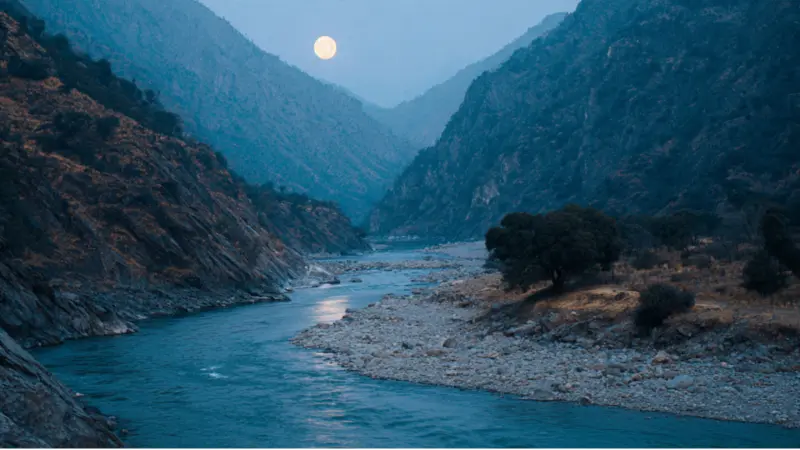

India is a land of rivers, home to hundreds of water systems that shape its geography and culture. Among them, the Chenab River holds a special identity as the moon river of India.
Flowing through the Himalayas and into the plains of Pakistan, it is one of the most powerful rivers in the Indus river system. Its unique origin and ancient name give it a legendary status in Indian geography.
Why Chenab is Called the Moon River
The river is formed by the meeting of two streams:
- Chandra stream (Moon)
- Bhaga stream (Sun-related origin)
These streams merge at Tandi, creating the mighty Chenab River. Because of the "Chandra" (Moon) source, it earned the poetic title moon river of India.
Origin and Course of the Chenab River
It later travels into Pakistan, where it joins the Sutlej and ultimately merges with the Indus River system. This long journey makes it one of the most important rivers in South Asia.
Fascinating Features of the Moon River of India
- Home to the world's highest railway arch bridge
- Known in ancient texts as "Asikni" meaning dark water
- Fed by Himalayan glaciers year-round
- Major source of hydroelectric power in northern India
- Rich in silt that creates fertile plains downstream
- Linked to Alexander the Great's campaign in 325 BC
- One of the highest-discharge rivers in the Punjab system
These facts make the moon river of India a natural wonder of global importance.
The Legendary Chenab Bridge
Mythology and Cultural Significance
The Chenab River truly deserves its title as the moon river of India. From its glacial Himalayan origins to its powerful journey across valleys and borders, it remains one of the most remarkable rivers in the world.
Its history, mythology, and natural strength make it not just a river but a symbol of India's timeless geographical beauty.