
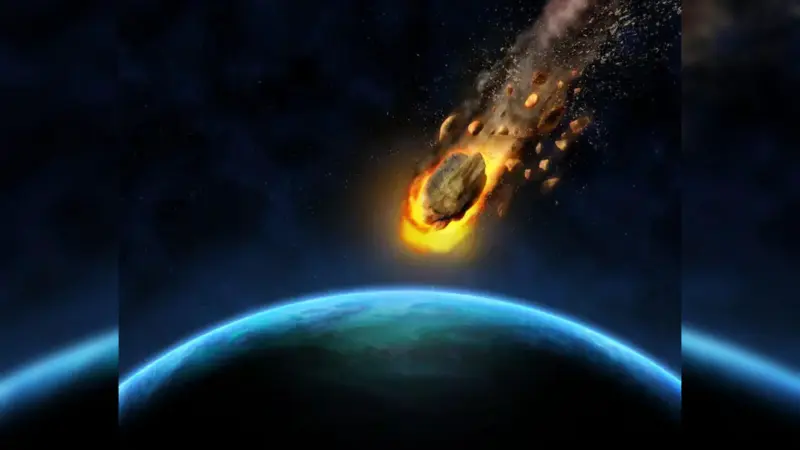

A massive asteroid is heading for an unusually close encounter with Earth in the coming years, giving scientists a once-in-a-lifetime opportunity to study a large space object at close range.
The asteroid, known as Apophis, has attracted global attention because of its size, name and the precision of its predicted flyby.
A Close Pass in 2029
This distance is even closer than many of the satellites that orbit our planet, which usually stay around 22,000 miles above the equator. Despite how dramatic this sounds, scientists have made it clear that there is no threat to Earth.
NASA has stated that the asteroid poses no danger "to Earth, to anyone or anything living on it, or to astronauts or satellites in space."
Why It Is Called the "God of Chaos"
Instead, scientists are focusing on the scientific value of the event. A close pass like this allows researchers to observe the asteroid in detail and collect data that would otherwise be impossible to obtain.
NASA has described it as "an amazing and totally unprecedented opportunity to learn much more about Apophis and similar near-Earth asteroids."
A Rare Event in Space
This makes Apophis a major point of interest for astronomers around the world. The flyby will allow space agencies to study how near-Earth objects behave when they come under the influence of Earth's gravity.
What People on Earth Might See
This makes it not just a scientific event but also a rare skywatching moment that many people may be able to experience without telescopes.
Possible Effects During the Flyby
In some cases, this stress might even trigger small surface movements or landslides on the asteroid. These changes will help researchers understand how space rocks respond to strong gravitational forces.
A Closer Look at Its Origins
The asteroid is estimated to be about 1,115 feet in diameter. It was first discovered on June 19, 2004, by astronomers at Kitt Peak National Observatory in Arizona, with additional observations later confirmed in Australia.
No Risk to Earth
Instead of concern, scientists are viewing the event as a rare chance for discovery and learning. The focus is on using advanced instruments to gather as much information as possible during the flyby.
The 2029 passage of Apophis is not something to fear but something to observe and study. It offers a rare opportunity to learn more about near-Earth objects while also giving people on Earth a chance to witness a remarkable moment in space.
As NASA puts it, it is a unique event that will help deepen our understanding of asteroids and the solar system itself.