




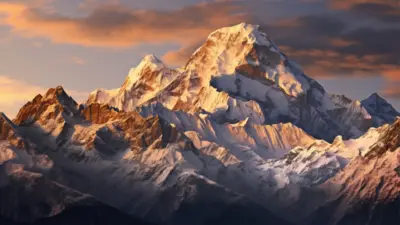

Among the world's most spectacular natural wonders, the Himalayas stand out not only for their height but also for their geological significance.
These mountains are widely recognised as the Young Fold Mountains, a term used by geographers to describe mountain ranges that formed relatively recently in Earth's history through the folding of tectonic plates.
Why Are the Himalayas Called Young Fold Mountains?
The term "fold mountains" refers to the way these mountains were created. When the Indian Plate collided with the Eurasian Plate, massive layers of rock were compressed and folded upward, forming the towering Himalayan range. This geological process is still ongoing, which is why the region experiences earthquakes and continuous uplift.
How Were the Himalayas Formed?
1. Collision of Tectonic Plates
2. Formation of Fold Mountains
3. Mountains Still Rising
Read More: Discover Why Shivling Is Called The Pyramid Peak Of The Himalayas
Fascinating Facts About the Himalayas
Everest Continues to Grow
Home to the World's Tallest Peaks
Source of Major Rivers
Active Geological Region
The Himalayas are called the Young Fold Mountains because they formed through the folding of tectonic plates and continue to rise every year. Their towering heights, dramatic landscapes, and geological activity make them one of the most dynamic mountain ranges on Earth.