




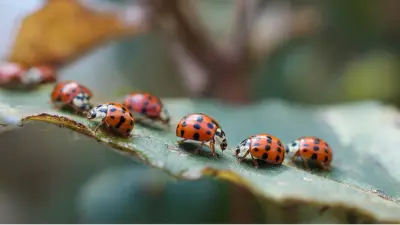

Nature often gives charming names to animal groups, and ladybugs are no exception. A group of ladybugs is beautifully called a "loveliness of ladybugs".
This poetic term reflects their bright colours and the delightful sight they create when gathered together.
Ladybug Collective Noun Explained
This naming tradition dates back to medieval England, where collective nouns were designed to capture the essence and appearance of animals. In the case of ladybugs, their vibrant red shells and black spots inspired a name that celebrates their beauty.
Read More: What Is A Group Of Lions Called? The Story Behind Their Royal Name
Why Are Ladybugs Called a Loveliness?
- Ladybugs have long been associated with good luck and protection.
- In European folklore, they were known as "Beetles of Our Lady", linked to the Virgin Mary.
- Their bright colours and gentle presence make them symbols of positivity and harmony.
Unlike darker collective nouns such as a "murder of crows", the name for ladybugs reflects admiration and warmth.
Why Do Ladybugs Gather in Groups?
Winter Survival Strategy
Safe Shelter
Reproduction and Protection
This seasonal gathering explains why the group of ladybugs called a loveliness is not just poetic but also rooted in science.
Interesting Facts About Ladybugs
- Ladybugs belong to the Coccinellidae family of beetles.
- They are natural pest controllers, feeding on aphids and protecting plants.
- A single ladybug can eat thousands of insects in its lifetime.
- Their bright colours warn predators that they are not tasty.
- Some species can live for up to a year.
A group of ladybugs called a loveliness perfectly captures the beauty and charm of these tiny creatures. Beyond their attractive appearance, their group behaviour plays a crucial role in survival and ecosystem balance.
So, the next time you spot a cluster of ladybugs, remember you are witnessing not just a natural phenomenon, but a true loveliness in nature.