
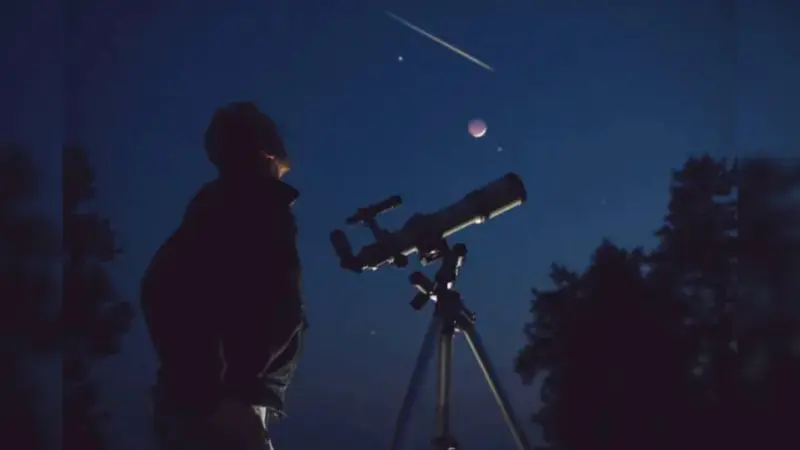

A meteor shower is one of the most fascinating natural events you can witness in the night sky. It fills the darkness with brief flashes of light that look like glowing streaks racing across the sky.
These are often called "shooting stars," but they have nothing to do with real stars.
What Exactly Is a Meteor Shower?
When many of these particles enter the atmosphere during a short time period, the result is a meteor shower. Depending on the intensity, you might see a few meteors per hour or even dozens during peak activity.
Why "Shooting Stars" Appear in the Sky
Most meteors are extremely small, often the size of a grain of sand or a small pebble. Even though they are tiny, they travel at speeds of 11 to 70 kilometres per second. This extreme speed is what creates the bright streaks of light we see from Earth.
Where Do Meteors Come From?
When Earth crosses this trail, the particles collide with the atmosphere and create meteor showers. Each shower appears to originate from a specific point in the sky called the radiant. This is usually named after a nearby constellation.
Are Meteor Showers Dangerous?
Only very large space objects can survive the journey to Earth's surface, and such events are extremely rare.
Why Some Meteors Look So Bright
Fireballs can sometimes light up the sky for a few seconds, making meteor showers even more dramatic and memorable.
The Best Way to Watch Meteor Showers
The best viewing experience comes from:
- Finding a dark location away from city lights
- Allowing your eyes to adjust to the darkness for 15 to 20 minutes
- Lying back and looking at a wide area of the sky
- Avoiding bright screens, which affect night vision
Patience is important, as meteors can appear suddenly and unpredictably.
Why Meteor Showers Matter
A Window into Space
So the next time you look up and see a "shooting star," remember you are watching a small piece of the universe briefly light up the sky before disappearing forever.