
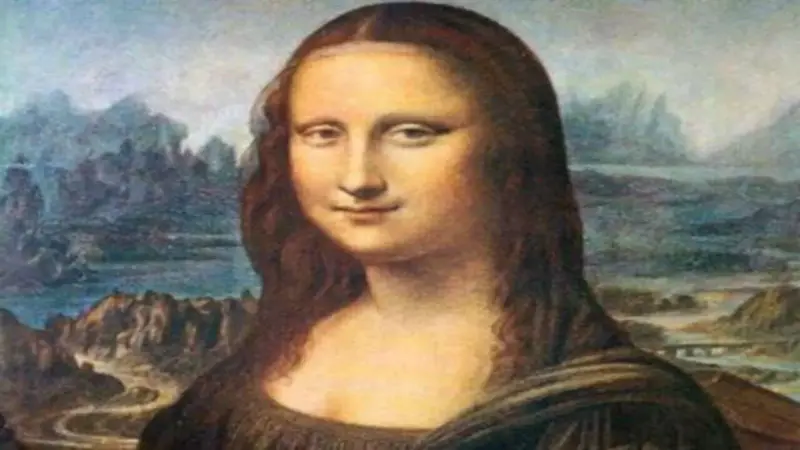

Mona Lisa's Story: An incredible journey-an ordinary woman's portrait, a mysterious smile, a daring theft, and then global fame.
Newstrack Network
History of the Mona Lisa
In the world of art, there are some creations that not only become famous over time but transform into legends. Mona Lisa-the very name conjures the image of a woman with a mysterious smile, captivating millions around the world. But did you know that the Mona Lisa wasn't always this famous? In fact, it was a sensational theft that catapulted this painting into global stardom. In this article, we will explore the surprising event that made Mona Lisa a timeless icon and how an ordinary thief made history.
History of the Painting
The Mona Lisa was painted between 1503 and 1506, although some historians believe Leonardo da Vinci continued refining it until as late as 1517. It is an oil painting on a wooden panel.
Introduction to the Mona Lisa
There are many theories regarding the woman depicted in the painting. The most widely accepted belief is that she was Lisa Gherardini, a woman from Florence and the wife of a merchant named Francesco del Giocondo. Thus, the painting is also known as La Gioconda, meaning "the wife of Giocondo." Regardless of her true identity, the Mona Lisa's allure has always been amplified by the mystery surrounding her and her enigmatic smile.
Leonardo da Vinci's Marvellous Creation
The Mona Lisa was painted by the great Italian artist Leonardo da Vinci between 1503 and 1517. The portrait shows a woman with a subtle, serene smile and eyes that seem to follow the viewer. Its technique, detail, and air of mystery have long fascinated art lovers. However, surprisingly, until the 19th century, the Mona Lisa was not considered the greatest or most famous artwork. At the Louvre Museum, it was just one painting among hundreds. So, what happened that turned it into the most famous painting in the world?
That Historic Day in 1911
On August 21, 1911, staff at the Louvre Museum in Paris noticed that the Mona Lisa was missing. At first, they thought it might have been temporarily removed for photography. But soon, it became clear that the painting had been stolen. Panic spread throughout France. Newspapers flashed the headlines: "La Joconde est Partie!" ("The Mona Lisa is gone!")
Police Chase and False Accusations
The Paris police launched an immediate investigation. Famous poet Guillaume Apollinaire and renowned painter Pablo Picasso were interrogated, as they were suspected of being involved in art thefts at that time. However, the real thief was not a famous figure but a simple Italian workman named Vincenzo Peruggia.
Who Was the Thief?
Vincenzo Peruggia was a glass installer who occasionally worked at the Louvre. He believed the Mona Lisa was Italy's national treasure, wrongfully taken by France during Napoleon's era. Driven by patriotic fervor, he decided to "return" the painting to Italy.
How Was the Theft Done?
The method of the theft was as fascinating as the event itself. One day, Peruggia disguised himself in a Louvre staff uniform, entered the museum early in the morning when it was relatively empty, quietly removed the painting from the wall, hid it under his coat, and walked out unnoticed-because he appeared to be a museum employee.
The Mystery of the Theft
The mastermind behind the theft, Vincenzo Peruggia, had previously worked at the Louvre. He mistakenly believed that the painting had been stolen by Napoleon (although in reality, Leonardo himself brought it to France). Thus, he felt it was his duty to return it to Italy.
Worldwide Sensation
The theft of the Mona Lisa caused a global sensation. Its image appeared in newspapers worldwide. Everyone was eager to know: Who had stolen such a priceless masterpiece? Even Pablo Picasso was questioned during the investigation! For two long years, there was no trace of the Mona Lisa, deepening the mystery surrounding it.
How Was the Mona Lisa Recovered?
In 1913, two years after the theft, Peruggia tried to sell the Mona Lisa to an art dealer in Florence, Italy. Claiming to be a patriot, he sought to "restore" the painting to its rightful homeland. However, the dealer grew suspicious and informed the authorities. Peruggia was arrested, and the Mona Lisa was safely returned to the Louvre. Peruggia received a relatively light sentence of just over a year, as many in Italy sympathized with his nationalist motives.
Where Was the Mona Lisa for Two Years?
Following the theft, rumors and stories exploded across Europe. Every day, newspapers covered new theories:
- Had spies stolen it?
- Did some king or wealthy collector desire it?
In reality, Peruggia had hidden the painting behind a wardrobe in his small Paris apartment, waiting for the right opportunity to smuggle it into Italy.
When the Mona Lisa Returned
In 1913, after trying to sell the painting, Peruggia was arrested, and the Mona Lisa was triumphantly returned to the Louvre Museum. He was prosecuted but, due to the perceived patriotic nature of his actions, received only a one-year and fifteen-day sentence. Many Italians even hailed him as a hero.
Why Did the Theft Make the Mona Lisa So Famous?
Before the theft, the Mona Lisa was respected among art enthusiasts but was not a global sensation. The sensational theft and the subsequent media frenzy propelled it into the realm of legend. When the painting returned, it was treated like a returning champion. The press, art lovers, and the general public eagerly embraced the Mona Lisa's story. It was exhibited across multiple Italian cities before returning to the Louvre, attracting massive crowds. Thus, Mona Lisa transcended being just an artwork-it became a cultural symbol, an identity, and a phenomenon that endures to this day.
The Mysterious Smile of the Mona Lisa
Even before the theft, her enigmatic smile had captivated artists and viewers alike. After the theft, this smile gained even greater meaning-as if she knew she would soon become the most recognized smile in the world.
Many scientists, artists, and psychologists have tried to decode her smile:
- Some interpret it as a fleeting moment between joy and sadness.
- Others credit Leonardo's exceptional painting techniques for the illusion.
Other Mysteries Surrounding the Mona Lisa
Beyond the theft, many other mysteries envelop the painting:
- Eyes that Follow: Her eyes seem to follow the viewer from any angle.
- Fading Colors: Time has dimmed the colors, but conservation efforts keep it alive.
- Various Theories: Some speculate that it might be a disguised self-portrait of Leonardo himself, while others suggest supernatural interpretations.
Today's Mona Lisa
Today, the Mona Lisa is housed behind bulletproof glass at the Louvre Museum. Millions of visitors from around the world come every year just to catch a glimpse of her. She has become a vital part of social media, advertising, literature, and pop culture. Had Peruggia not stolen the Mona Lisa in 1911, it might have remained merely a respected masterpiece among art circles-not the global cultural icon it is today.
Meta Description:
Discover the fascinating story of how the theft of the Mona Lisa transformed a simple painting into a global icon, covering the history, mystery, and legacy behind the world's most famous smile.
Related Searches:
Mona Lisa story, Mona Lisa theft, who stole Mona Lisa, Mona Lisa history, Vinci Mona Lisa, Louvre Museum theft, Mona Lisa mystery, Mona Lisa smile meaning, Vincenzo Peruggia Mona Lisa, why is Mona Lisa famous.