




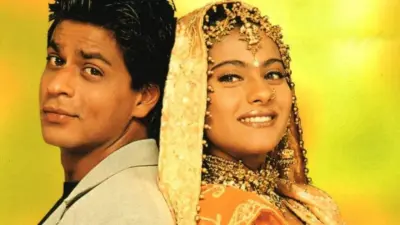

Do you remember that era? When tying a friendship band was the ultimate proof of camaraderie. When songs on audio cassettes were rewound manually to be listened to over and over again.
When the dream of going to college was filled with vibrant campuses, basketball courts, and a blend of English and Hindi. That entire era was defined by a single film, 'Kuch Kuch Hota Hai'.
Karan Johar's Manifesto of Self-Expression
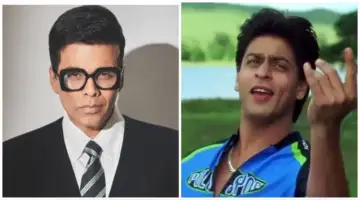
The year was 1998. Karan Johar sat in the director's chair for the very first time. But this was not merely someone's directorial debut; it was the cinematic manifesto of an entire generation. Karan Johar understood that the Indian youth had transformed. MTV had arrived. Cable television had entered households. Branded apparel and English vocabulary had seamlessly woven into everyday life. Old-school romance, villages, traditions, and the maternal aanchal were no longer the vocabulary of that generation.
Yet, one fundamental aspect remained completely unchanged, emotions.
Karan Johar grasped this brilliantly, creating a film that was thoroughly modern on the outside but deeply Indian at its core. This was his greatest creative masterstroke.
A Story Simple on the Surface, Complex Within
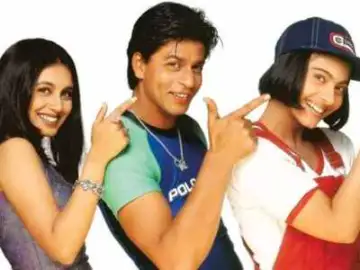
Rahul, Anjali, and Tina, three names. A love triangle. It sounds ordinary enough. However, 'Kuch Kuch Hota Hai' is extraordinary not because its plot is complex, but because it touched upon the most universal human truth: we often recognize the most essential relationship in our lives far too late.
Rahul does not perceive Anjali through the lens of romance. He views her strictly as a friend, trustworthy, humorous, and always standing by his side. Consequently, he remains oblivious to her as a romantic partner. This very emotional blindness is the actual theme of 'Kuch Kuch Hota Hai'. It is not a mere love triangle, but rather a journey toward emotional maturity.
Shah Rukh Khan: A Unique Blend of Charisma and Vulnerability
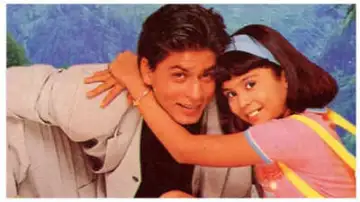
By 1998, Shah Rukh Khan had already established himself as a romantic superstar. 'Dilwale Dulhania Le Jayenge' had transformed him into the lover of a generation.
Yet, 'Rahul' was different. He was charismatic, but emotionally immature. He realizes late that true love resides in trust, not in glamour. This inherent flaw made him deeply human.
Shah Rukh Khan's greatest strength lay in his unique ability to appear vulnerable despite being a massive star. And that is exactly why millions of viewers saw a reflection of themselves in Rahul.
Kajol: The Character That Became a Definition
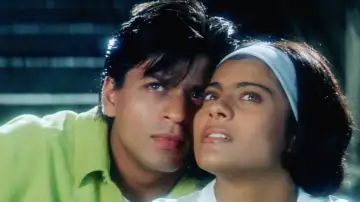
In the history of Hindi cinema, 'Anjali' stands out as one of the most influential female characters. This is not because she was the most beautiful, but because she was the most genuine.
In college, she was a tomboy, mischievous, competitive, and fiercely outspoken. When the same Anjali reappears in the second half of the film, she is mature, serene, and quietly concealing her innermost feelings. The audience instantly senses the immense silent heartbreak she must have endured in the intervening years.
Kajol lived both these contrasting phases of the character seamlessly, without a single note of discord.
Karan Johar later remarked that if it weren't for Kajol, 'Kuch Kuch Hota Hai' would simply not have been the film it is.
Rani Mukerji and the Character That Refused to Become a Villain
Writing the character of 'Tina' was perhaps the most challenging task.
She represented the third angle of the love triangle, a position that Hindi cinema frequently reduces to an antagonistic or villainous role. Karan Johar deliberately broke this stereotype.
Tina is fully aware that something remains beautifully incomplete between Rahul and Anjali. Even after her passing, she endeavors to fulfill that narrative through her daughter.
The profound idea of a woman seeking to complete someone else's love story even after her death elevates the film far above ordinary romance.
Rani Mukerji infused this limited yet vital character with a distinct warmth that makes her unforgettable.
Set Design: A College Existing Only in Dreams
Karan Johar gave his art director a singular instruction: this college must not look realistic. It should look precisely like the idealized place audiences dream a college ought to be.
A kaleidoscope of a campus. Wide, expansive corridors. A bustling basketball court. Fashion-forward youth.
This was not a realistic portrayal of an institution; it was an absolute dreamscape.
And this very dream became the baseline imagination of college life for millions of Indian teenagers.
Santosh Thundiyil's Cinematography
The visual language of 'Kuch Kuch Hota Hai' was guided by a core philosophy: every single frame must be emotionally beautiful.
Cinematographer Santosh Thundiyil crafted a world using soft lighting, warm hues, and deeply romantic framing, a world that felt ethereal yet completely tangible. It was the cinematography of pure memory. Much like old photographs that appear slightly faded and beautifully golden, the frames of this film evoke the exact same nostalgia.
Jatin-Lalit's Music: The Emotional Dialect of a Generation
When the music of 'Kuch Kuch Hota Hai' hit the market ahead of the film's release, massive crowds swamped cassette stores.
Jatin-Lalit delivered precisely what Bollywood music desperately required at that time, a rare, sublime equilibrium between modern soundscapes and soul-stirring melodies.
'Tujhe Yaad Na Meri Aaye' became the definitive anthem for unrequited, incomplete love. 'Koi Mil Gya' perfectly captured the playful transition from friendship to romance. 'Saajan Ji Ghar Aaye' pioneered a brand-new visual and musical vocabulary for Bollywood wedding celebrations.
The vocals of Udit Narayan and Alka Yagnik lent these tracks a profound human touch that goes far beyond mere composition. Above all, the title track 'Kuch Kuch Hota Hai' transcended being just a theme song; it became the ultimate emotional identity of an entire generation.
The Fashion Trend That Invaded Schools
Once the film premiered, a fascinating transformation swept across Indian schools and colleges in the months that followed.
Young girls began adopting a distinctly sporty style. Friendship bands became a staple on boys' wrists. Kajol's tomboy aesthetic and Rani Mukerji's minimal glamour simultaneously became raging trends. This was no longer just the costume design of a film; it had evolved into the identity of a generation.
The Invisible Yet Powerful Emotional Architecture
The monumental technical triumph of 'Kuch Kuch Hota Hai' lay in its "Emotional Visual Design."
Every single cinematic element, lighting, color palettes, costumes, music, and camera movements, worked in perfect synchronization to subtly guide the viewer's emotional state.
During the college phase, the colors are strikingly vibrant, the camera movements are swift and dynamic, and the music overflows with youthful energy. Conversely, when sorrow takes over, the lighting softens, the camera movements decelerate, and silence is allowed to speak volumes.
This emotional rhythm is woven so masterfully that the viewer remains completely unaware of its mechanics; they simply feel it. And this deep, unadulterated feeling is the true power of the film.
Following 'Kuch Kuch Hota Hai', the landscape of Bollywood romance altered permanently.
Every producer strove to recreate that specific blend of youthful glamour packaged with deep-rooted family values. The entire 'Dharma' school of filmmaking, giving rise to movies like 'Kabhi Khushi Kabhie Gham', 'Kal Ho Naa Ho', and 'Mohabbatein', was fundamentally birthed by this single feature.
For the Indian diaspora living abroad, the film carried a profoundly different resonance. The India they had left behind, the language they were beginning to forget, and the emotional sanctuary they constantly yearned for, it was all beautifully encapsulated right here.
Thus, 'Kuch Kuch Hota Hai' established itself as the bedrock of NRI Bollywood culture.
The Incompleteness That Restores Immortality
The second half of the film is essentially a quest to recover lost time. Rahul and Anjali are not merely two individuals crossing paths again; they are journeying back to their unfulfilled youth, their unspoken confessions, and the fragile relationships they had tightly guarded out of sheer fear.
This profound emotional homecoming strikes a chord with anyone who has ever recognized the worth of a relationship a little too late. Every generation has such people, and that is precisely why every generation claims this film as their own.
'Kuch Kuch Hota Hai' is legendary not because it shattered box-office records. It is legendary because it gifted an entire generation its very own emotional dialect.
A dialect where the boundaries separating friendship and love were beautifully blurred. Where understanding the most vital relationship required time.
And where, by the time realization finally dawned, it was late.
But never too late.