
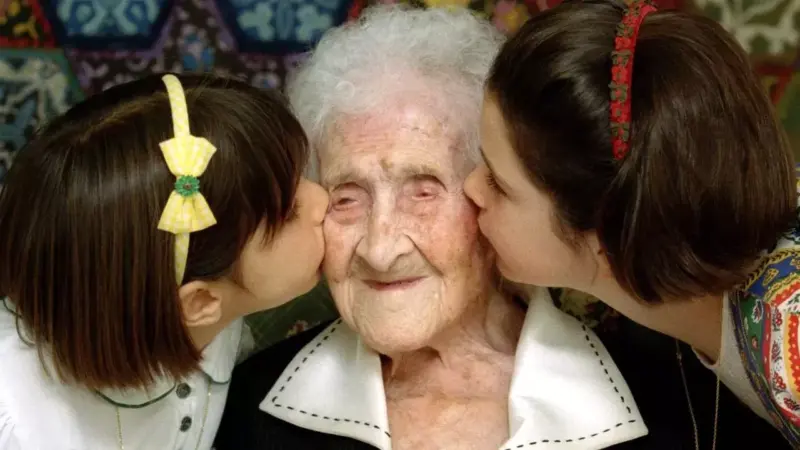

Everyone in the world aspires to live a long and happy life. But is there really a formula for it? A 111-year-old man living in New Jersey, United States, has made a claim that has stirred widespread curiosity online.
Born on December 9, 1914, in Colombia, Luis Cano is today counted among the oldest men in the United States. He has been recognized by LongeviQuest, an organization that tracks longevity records, as one of the world's oldest living individuals, ranking 112th globally.
When asked about the secret behind his long life, his answer was both simple and striking. He advised avoiding excessive alcohol, maintaining good sleep, and staying away from smoking. But what truly caught attention was his additional insight, "be kind and behave well." According to him, being a good human being is also a key to longevity.
While the story of the 111-year-old Luis Cano has left many thinking, there are several individuals across the world who have surpassed expectations of human lifespan. This raises a compelling question, can humans truly live beyond 120 years?
The Longest Lifespan Ever Recorded
The record for the longest human lifespan belongs to Jeanne Calment of France, who lived for an astonishing 122 years and 164 days. Since her death in 1997, no one has been able to surpass this record. It is often said that she regularly used olive oil and lived her life with minimal stress.
Japan's Kane Tanaka lived to the age of 119. She enjoyed mathematics and playing board games, and passed away in 2022. Spain's Saturnino de la Fuente García lived beyond 112 years, following a simple philosophy, stay calm and avoid conflict. Similarly, Sarah Knauss of the United States lived to 119, attributing her longevity to a life free from stress.
Earlier this year, New York's oldest woman, Lucile Randon also known as Sister André, passed away at the age of 113. According to those who knew her, she remained cheerful and lively until her final days.
How Many People Live Beyond 110?
Globally, fewer than 1,000 people are known to live beyond the age of 110. Each year, only a handful manage to cross 115. Those who surpass 120 remain extremely rare in recorded history. Organizations such as LongeviQuest and the Gerontology Research Group play a crucial role in tracking and verifying these remarkable cases.
What Does Science Say?
According to scientists, the natural maximum human lifespan is generally estimated to lie between 120 and 125 years. After the age of 100, the rate of aging slows significantly. Three key factors are believed to influence longevity, genetics, lifestyle, and mental well-being.
A closer look at the lives of these supercentenarians reveals certain common patterns, avoidance of smoking, moderate eating habits, low stress levels, strong family connections, and a positive outlook on life.
The Mystery of Longevity
In today's fast-paced world, where many people struggle with health issues even in their 50s and 60s, the question becomes even more intriguing, how do some individuals remain fit beyond 100 years? Is it purely a matter of habits, or does luck and genetics play a decisive role?
The stories and statistics from around the world make one thing clear, longevity is not a myth, but a mystery. It is a secret everyone wishes to uncover, yet one that remains only partially understood even today.