




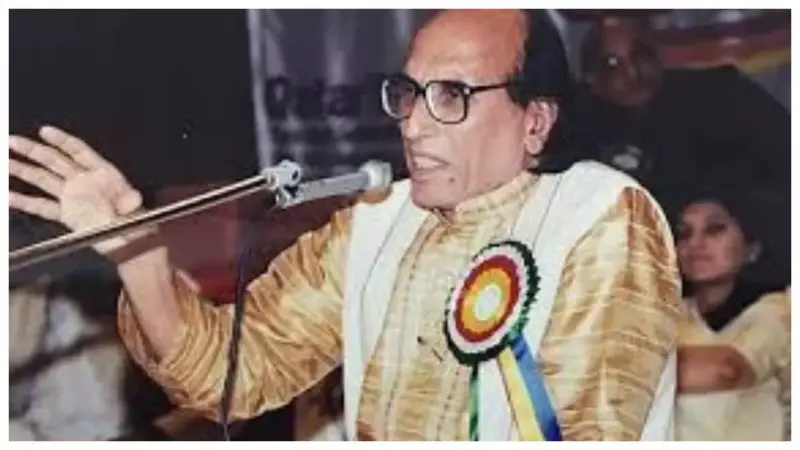

Literature that transcended the dimensions of elitism in language and borders include Bashir Badr and his writings. Born in Ayodhya in 1935, Bashir Badr grew up amidst books and literature.
Having pursued Bachelor of Arts and Masters in the same, he moved on to do a PhD and teach at Aligarh Muslim University. He also served at Meerut College but later left the place for good after a series of communal attacks, including the one that led to the burning of his house in 1987. He also served at the Bihar Urdu Academy as a Chairman.
A man shaped as much by loss as by love, Badr carried the weight of displacement without ever letting it silence his pen. Having been drawn to the softer, more aesthetic lens of life, Bashir started writing at the early age of seven. He wrote multiple ghazals and authored two books of academic nature. He was even widely recognised in Pakistan and one of his collections is published there as well. He worked more towards writing simple ghazals in Devanagari script so as to help the language and emotion develop deeper and reach further to the people.
In doing so, he quietly dismantled the walls that had long kept Urdu poetry the privilege of a select few ; returning it to the streets, the homes and the hearts it always belonged to.
His couplets gained popularity and his widely recognised one was based on the violent attack on his home in Meerut where he lost his personal library, belongings and a large portion of his unpublished work. The words that emerged from those ashes became so popular they were quoted tremendously against political oppression and crime.
"Log toot jaate hain ek ghar banane mein,Tum taras nahi khate bastiyaan jalane mein"
People break themselves into pieces just to build one home in their entire lifespan; and you (the metaphorical violent organisation and people) show no mercy when you burn down entire settlements.
That a poet could lose everything and respond not with silence but with verse that outlived the violence speaks to the rare moral courage that defined Badr's life and art.
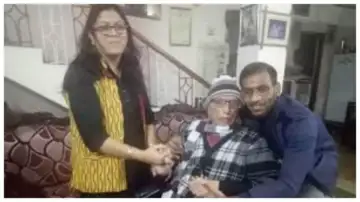
His works have been translated into Gujarati, English and even French. He was a pillar of the community and had a lengthy following of artists. Padma Shri awardee and Sahitya Akademi awardee, Badr suffered a long battle with dementia. He reportedly was robbed of the memory of his Mushaira (poetic symposium) as a result of the disease.
The cruelest irony of his final years was that a man who had given millions the words to remember their own lives could no longer remember his own.
His works reflected deep political thinking and the complexity of human emotions and relationships. He is one of the most quoted shayars in Indian pop-culture, reminding the masses, time and again, of what it does to society when individuals are dedicated to their own causes. He played his own part in this world and became widely recognised because of the severity in his art.
Noted lyricist Javed Akhtar expressed grief over Badr's demise. "Today, our language Urdu has become a little poorer. Bashir Badr, an extremely melodious poet, has departed from our gathering forever. This poet and his poetry will live on in our memories forever," he posted on X.
He passed away on 28 May 2026 at his residence in Bhopal. Survived by his wife and two children, Badr continues to lead the way into the explorations of translations, languages and poetry.
Some voices do not end ;they only find new mouths to speak through.