




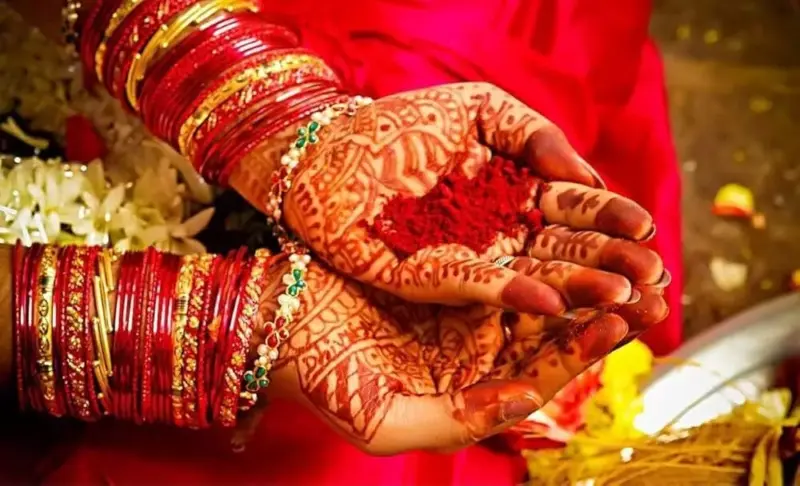

'Sindoor' in Indian tradition is not merely an ordinary red-colored powder. It is a symbol deeply woven into the cultural, religious, emotional, and spiritual fabric of Indian civilization.
In Hindu society, it is regarded as one of the most significant symbols of a married woman. Women adorn it in the parting of their hair, where it is traditionally considered a mark of marriage, the well-being and longevity of the husband, and the sacred commitment of conjugal life.
In Hindu marriage rituals, the ceremony of 'Sindoordaan' or the application of sindoor is considered profoundly sacred. During this ritual, the groom fills the bride's hair parting with sindoor. This very moment grants social and religious recognition to the marriage. From this perspective, sindoor is not merely an ornament of beauty or adornment; it is also a symbol of relationship, responsibility, emotional devotion, and social identity.
The Changing Process of Making Sindoor
The method of preparing sindoor has evolved continuously over time. Traditionally, it was made using natural processes. A red hue was created by mixing turmeric with lime. In many regions, medicinal herbs were also blended into the mixture. Such traditional sindoor was considered comparatively safe and natural.
In modern times, however, chemically produced sindoor has become increasingly common. It often contains 'Mercury Sulfide', commonly known as 'Vermilion'. Some cheaper products may even contain 'Lead', a toxic metal that can be harmful to human health. This is one of the major reasons why the demand for 'Herbal' and 'Organic' sindoor has grown rapidly in recent years.
Different Forms of Sindoor
Today, sindoor is available in several forms. The most traditional form remains 'Powder Sindoor', which has been used for centuries across generations. Apart from this, 'Liquid Sindoor' has also gained popularity. It is usually sold in bottles and applied with the help of a brush or an 'Applicator'.
In contemporary markets, 'Stick Sindoor' and 'Pencil Sindoor' are also widely available. Alongside these, 'Herbal Sindoor', prepared using natural ingredients, is increasingly becoming the preferred choice among consumers. Variations in shades are also visible today, ranging from bright red and deep crimson to orange-toned options.
A History That Goes Back Thousands of Years
The history of sindoor is considered extremely ancient. Evidence connected to its use has reportedly been found in remains associated with the nearly 5,000-year-old Indus Valley Civilization, where traces of red-colored powders have been discovered.
References to sindoor are also found in Vedic literature. Later, it appears in epics such as the 'Ramayana' and the 'Mahabharata'. Goddess Parvati is regarded as the symbol of marital bliss and auspiciousness, and traditions associated with her assign special importance to sindoor. Similarly, references linked to Goddess Sita and ancient marital customs also mention the significance of sindoor in Hindu tradition.
Who Applied Sindoor for the First Time?
History does not provide any clear evidence identifying the first woman who ever wore sindoor. The tradition does not appear to be associated with any one person or singular event. Scholars and cultural historians believe that it emerged gradually through a long civilizational and social process, eventually becoming deeply rooted in Indian society over centuries.
Sindoor and Traditional Beliefs
Indian traditions also associate several spiritual and symbolic beliefs with the application of sindoor. The place where sindoor is applied - the hair parting - is believed to be connected with the body's important energy center known as the 'Ajna Chakra'.
Traditional beliefs suggest that applying sindoor at this point may promote mental peace, concentration, and positive energy. Some customary beliefs even associate it with hormonal balance and emotional stability.
Although modern science does not yet offer sufficient evidence to fully validate these claims, the cultural, emotional, and psychological influence of such traditions cannot be entirely dismissed.
A Symbol of Social Identity
From a social perspective, sindoor has long been regarded as a public symbol of a woman's marital status. Many women see it as a representation of their faith, tradition, cultural identity, and emotional belonging. For many, it also creates a feeling of confidence, emotional security, and spiritual connection.
In Indian society, therefore, sindoor transcends the limits of mere decoration and enters the realm of identity and cultural continuity.
Caution Is Also Necessary
Experts believe that not every sindoor product available in the market is safe for use. Cheap and low-quality products may contain harmful metals and chemicals, which can negatively affect both skin and overall health. Therefore, consumers are advised to use only certified products made from natural or trusted ingredients.
Ultimately, it can be said that sindoor is not just a ritualistic practice. It is a living symbol of Indian history, faith, society, and cultural consciousness. Behind this seemingly simple crimson mark lies thousands of years of tradition, belief, emotional memory, and social significance. This is precisely why, even in the modern age, sindoor continues to preserve its unique and sacred identity within Indian civilization.