
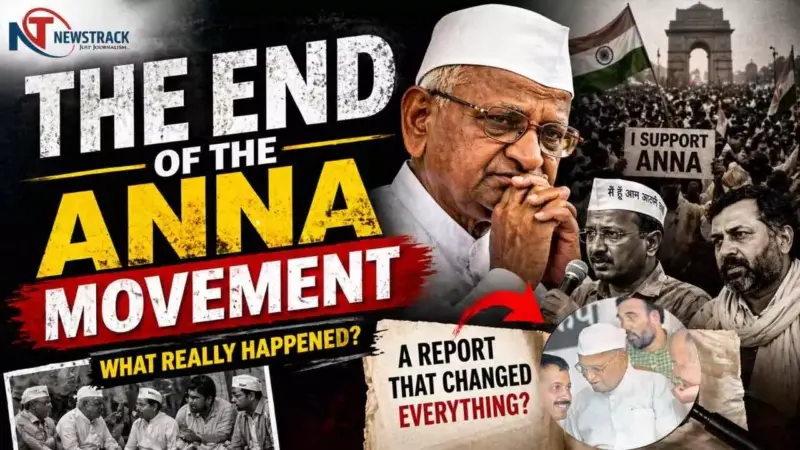

In contemporary Indian political history, the Anna Hazare anti-corruption movement of 2011 stands recorded as an extraordinary mass uprising.
It was not merely an anti-corruption protest, but an eruption of accumulated public frustration, political distrust, and moral outrage of that era. Delhi's Ramlila Maidan became a symbol-of an India that demanded accountability from the system.
However, it is also a rule of history that mass movements which rise rapidly often begin to decline with equal complexity. The Anna movement is a living example of this phenomenon.To understand the end of this movement, attributing it to a single event, individual, or news report would not only be an oversimplification but also an injustice to history.
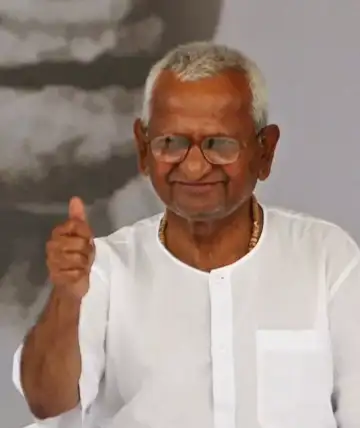
Yet, within this entire sequence of events, a widely discussed report by journalist Yogesh Mishra repeatedly emerges in discussions-and it becomes necessary to examine its impact in a balanced and fact-based manner.The fundamental strength of the Anna movement was its moral credibility, personified by Anna Hazare himself. However, as the movement expanded, diverse tendencies, political ambitions, and strategic differences also began to surface within it. This was natural-every large mass movement carries multiple currents within it. The same occurred within Team Anna. On one hand, figures like Arvind Kejriwal, Kiran Bedi, and others brought organizational energy to the movement, while on the other hand, disagreements over leadership, direction, and political alternatives gradually came to the fore.At this juncture, the role of the media began to shift decisively. In the initial phase, the media acted as a carrier of the movement-it took it to every corner of the country, constructed a narrative, and strengthened it. However, gradually, the same media transitioned from being a "participant" to becoming a "critic."
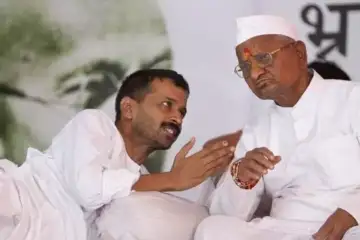
Questions began to be raised-about strategy, transparency, and the direction of leadership. This was the moment when journalism started performing its core function.It is in this context that the report by Yogesh Mishra appeared, bringing certain strategic and structural layers of the movement into public discourse. This report was not a simplistic document of sensationalism or allegations; rather, it raised questions that already existed within the movement but had not entered public discussion. The impact of this report was felt on two levels-first, it challenged the "narrative control" of the movement; and second, it introduced a critical perspective even among its supporters.However, it is important to clarify that no large movement ends due to a single report or media intervention. To call Yogesh Mishra's report a "trigger" would be an exaggeration, but considering it a "contributing factor" is a more balanced assessment. When the strength of a movement rests on its moral image, even partial questions raised about that image can affect its momentum. This is precisely what happened in this case.On the other hand, fatigue within the movement had also begun to surface. In any prolonged mass movement, the depletion of energy is natural. Negotiations with the government, prolonged debates over the Lokpal Bill, and the gradual shift of the movement toward a political alternative-all these factors collectively altered its direction. Eventually, when politics emerged from the movement-resulting later in the formation of the Aam Aadmi Party-it became clear that the original mass movement had effectively ended in its initial form and was transforming into something new.
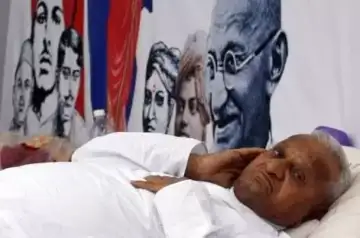
In this entire scenario, Yogesh Mishra's report can be seen as an important point-not because it ended the movement, but because it made the discourse more complex and multi-dimensional. It indicated that no mass movement can remain beyond criticism, and that is the true strength of democracy.From a historical perspective, the end of the Anna movement was not a single event, but a process-where time, internal structure, political pressures, and the media all played their roles.
Yogesh Mishra's report was a part of this process-it helped clear the fog to some extent, but it did not determine the direction.Today, when we look back, it becomes essential to understand that mass movements do not survive merely on slogans and crowds-they rely on trust, organization, clarity of direction, and sustained energy. In the Anna movement, the imbalance of these elements gradually became visible. And when this imbalance entered public discourse-whether through media reports or internal disagreements-it inevitably had an impact.Therefore, the final conclusion remains-The Anna movement did not end because of a single report, but Yogesh Mishra's report made the process of its conclusion more visible, more accelerated, and more public.