
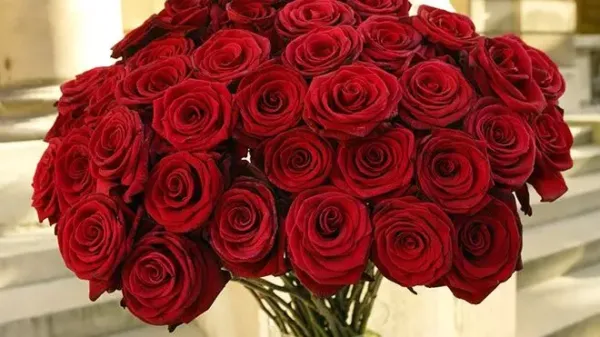

A rose is not merely a flower. It is perhaps the oldest and most beautiful symbol of human emotion. It holds within it love and longing, beauty and separation, politics and religion, science and commerce.
There is hardly any other flower in the world that has found its place in poetry, love letters, gardens, perfumes, medicine, war symbols, royal emblems, and wedding rituals alike.
The story of the rose stretches back thousands of years. It is believed that wild species of roses originally grew naturally across regions of Asia, Europe, North Africa, and North America. Over time, humans brought them into their gardens. They experimented continuously to enhance their color, shape, fragrance, and blooming capacity. This long journey eventually gave birth to the modern roses we see today.
Today, there are hundreds of species and thousands of cultivated varieties of roses across the world. The Royal Horticultural Society classifies roses into various horticultural categories such as ground-cover, shrub, hybrid tea, floribunda, standard, climber, rambler, miniature, and fragrant roses. The history of the rose is as fascinating as it is ancient. In early civilizations, it was regarded as a flower of beauty and love. In ancient Greece and Rome, roses were associated with romance, celebration, and luxury.
Wealthy Roman households and banquets often featured floors adorned with rose petals. Roses were used to create perfumes and rose water. Later, in Persian and Arab cultures, the fragrance of roses acquired a distinct cultural identity. In India, too, the rose has never been merely ornamental. It has been used in rose water, perfumes, religious rituals, welcoming ceremonies, weddings, and expressions of love. During the Mughal era, roses occupied a special place in royal gardens.
The fusion of Persian garden traditions with the Indian climate elevated the rose into a regal flower. Even today, the rose finds its place in temples, in the hands of lovers, in bridal adornment, and in the welcoming of distinguished guests. The oldest and most fundamental category of roses is that of wild roses, known as Species Roses. These are not created by humans but by nature itself. They often have simple five-petaled blooms. Their colors may not always be striking, but their resilience is remarkable. They withstand diseases, endure harsh climates, and have served as the foundation for the development of modern roses. Species such as Rosa gallica, Rosa damascena, Rosa chinensis, Rosa moschata, Rosa rugosa, and Rosa multiflora have profoundly influenced the global tradition of roses. The Damask Rose became famous for its fragrance, forming the backbone of perfume and rose water traditions. The China Rose introduced the remarkable ability of repeat blooming. Earlier European roses typically bloomed only once a year, but the introduction of Chinese varieties transformed this pattern, allowing roses to bloom over extended periods. The world of old roses, known as Old Garden Roses, is equally rich and diverse.
This category includes Gallica, Damask, Alba, Centifolia, Moss, Bourbon, Noisette, Tea, and China roses. Gallica roses are among the oldest European varieties, known for their deep pink, red, and purple hues. Damask roses gained immense popularity for their fragrance. Alba roses are soft white and pale pink, embodying grace and subtlety. Centifolia roses, often called cabbage roses, have densely packed, rounded petals. Moss roses display a moss-like texture on their buds. Bourbon roses carried forward the trait of repeat blooming among old roses. Tea roses offered a delicate tea-like fragrance and elegant blossoms.
Together, these varieties laid the foundation for modern rose breeding. Among modern roses, the most popular category is the Hybrid Tea Rose. This is the rose most commonly seen in flower shops-a long stem, a large bloom, a balanced shape, and a single, striking flower. According to Encyclopaedia Britannica, Hybrid Tea roses are among the most prominent classes in modern gardens and floristry, developed through the cross-breeding of repeat-flowering Tea roses and robust Hybrid Perpetual roses.
The first famous Hybrid Tea variety is considered to be La France rose, developed in 1867 by the French breeder Jean-Baptiste Guillot. This marked a turning point in the history of roses. After this, Hybrid Tea roses dominated the flower market, appearing in nearly every color-red, yellow, pink, white, orange, and cream. Next comes the Floribunda Rose. The very name Floribunda means "abundance of flowers."
Unlike the single large bloom of Hybrid Tea roses, Floribunda roses bloom in clusters. Their purpose is to fill gardens with vibrant color. According to the American Rose Society, Floribunda roses are known for producing large clusters of flowers continuously, offering long-lasting color displays. They were developed by combining Hybrid Tea roses with Polyantha roses. Polyantha roses produced dense clusters of small flowers, while Hybrid Tea contributed form and elegance.
The result was Floribunda-a perfect blend of beauty and abundance. Another important category is the Grandiflora Rose, which acts as a bridge between Hybrid Tea and Floribunda. It combines the height and elegance of Hybrid Tea with the clustered blooming habit of Floribunda. Encyclopaedia Britannica describes Grandiflora roses as relatively newer hybrids developed through this cross-breeding. One of its most famous varieties is Queen Elizabeth rose, developed in 1954 by Dr. Walter Lammerts.
With its graceful pink blooms and strong structure, it became a prestigious rose in horticultural history. Polyantha roses also hold significance. They produce dense clusters of small flowers and are known for their strength. They are ideal for borders and mass planting. Miniature Roses are small in size and perfect for pots, balconies, and compact gardens. Climbing Roses are trained on walls, arches, gates, and pergolas, adding a romantic charm to any garden. Rambler Roses are also climbers but more expansive, often producing large clusters of flowers. Shrub Roses are hardy and bushy, well-suited for natural landscapes.
Ground-cover Roses spread across the ground, enhancing slopes, edges, and open spaces. In the modern world of roses, the name David Austin is held in high regard. He introduced a new identity through English Roses. According to David Austin Roses, English Roses combine the delicate beauty and fragrance of old roses with the broader color range and repeat-blooming ability of modern varieties. David Austin proved that roses are not merely commercial products but works of art.
His first famous variety was Constance Spry rose, introduced in 1961. Later, varieties such as Graham Thomas rose, Gertrude Jekyll rose, Heritage, Mary Rose, and Juliet Rose brought him global fame. The Juliet Rose, with its peach hue, dense petals, and popularity in wedding décor, became especially iconic. Through his work, he united the soul of old English roses with the strength and diversity of modern breeding. When discussing famous rose varieties, the Peace Rose stands out. It is considered one of the most famous roses of the 20th century, developed by Francis Meilland. During World War II, it became a symbol of peace.
Its pale yellow petals with pink edges made it visually distinctive. Mister Lincoln rose is a deep red, highly fragrant Hybrid Tea rose developed by Swim & Weeks. Iceberg rose is a white Floribunda rose created by Reimer Kordes, known for its abundant blooms. Double Delight rose, developed by Swim & Ellis, is famous for its creamy petals with red edges and strong fragrance. Papa Meilland rose is a deep red, intensely fragrant rose. The Queen Elizabeth rose remains historically significant in the Grandiflora class. Gertrude Jekyll and Graham Thomas continue to define the charm of English Roses. These varieties transformed the rose from a simple garden flower into a symbol with identity, personality, and history. Now, let us understand the language of rose colors. The red rose is the most famous, symbolizing love, passion, attraction, and devotion. When someone offers a red rose, they are not merely giving a flower but expressing deep emotion.
Dark red roses signify respect and profound desire, while lighter red tones indicate budding romance. They are most commonly used in weddings, Valentine's Day, and declarations of love. The white rose represents purity, peace, simplicity, and reverence. It is used in weddings as well as in memorials and tributes. It conveys sincerity and truthfulness, free from pretense or deception. In many cultures, it is also associated with remembrance and mourning, symbolizing both the purity of the soul and the sanctity of relationships. The pink rose symbolizes gentleness, admiration, gratitude, and graceful affection. Light pink reflects sweetness and kindness, while darker pink expresses appreciation and thanks. It is ideal for relationships where love exists with dignity and restraint-friendship, respect, and familial affection.
The yellow rose, once associated with jealousy in some cultures, now represents friendship, joy, energy, and positivity. It conveys warmth and happiness rather than romantic intent. It is often given as a gesture of goodwill, encouragement, or wishes for recovery. The orange rose symbolizes enthusiasm, energy, attraction, and achievement. It carries both the warmth of red and the brightness of yellow. It is ideal for celebrating success, new beginnings, and admiration. The peach-colored rose represents humility, gratitude, gentleness, and understated beauty. The Juliet Rose gained special fame for its peach tones. It does not shout for attention but quietly exudes elegance. It is a refined way of expressing thanks and respect. Purple or lavender roses symbolize mystery, enchantment, and love at first sight.
They carry a sense of magic and uniqueness, suggesting that the person they are given to is truly special. The blue rose does not naturally occur, making it a symbol of the impossible, mystery, and unattainable desire. Creating a true blue rose has long been a scientific challenge. While some blue roses in the market are dyed, biotechnological advancements have attempted to approach this color. Still, a naturally deep blue rose remains rare and symbolic of dreams beyond ordinary reality. The black rose is not truly black but an extremely deep red or purple. It symbolizes mystery, farewell, grief, rebellion, or even new beginnings. In literature, it is a powerful symbol-representing both endings and the promise of a new chapter.
The green rose symbolizes life, renewal, balance, and prosperity. It is rare and less romantic, more connected to nature and growth. It conveys freshness, stability, and harmony. The true essence of the rose lies in its dual nature-it is both a flower of science and a flower of emotion. On one hand, scientists shape it through cross-breeding into new colors, fragrances, and forms. On the other, poets transform it into the language of love, pain, and memory. For a gardener, it is the result of soil, sunlight, water, and care. For a lover, it is the heartbeat of emotion. For a व्यापारी, it is a valuable product in the global cut-flower market. For a historian, it is a journey through civilizations. And for an artist, it is one of nature's most balanced creations. That is why the story of the rose never grows old. Every new variety carries within it the memory of ancient civilizations. Every color holds a hidden emotion. Every petal reflects patience.
Every fragrance carries history. Roses like the Juliet Rose remind us that when humans love nature, they do not destroy it-they elevate its beauty into new forms. The rose is special because it teaches us that beauty is not merely something to be seen. It is something to be created, nurtured, and felt. This is why, even after thousands of years, the rose remains the first flower of love, the most natural symbol of reverence, and the most trusted emblem of beauty.