


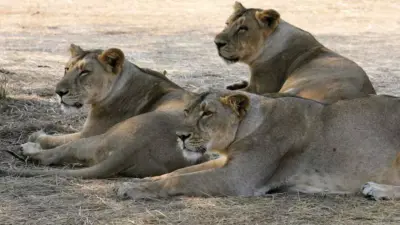

Lions in Gujarat's Gir forest are dying because of dangerous diseases, deadly infections, territorial fights and accidents linked to human activity.
Experts say the growing lion population inside one limited forest area is increasing the danger even more. Diseases spread faster, fights happen often and many lions now move closer to villages, roads and railway tracks.
Why Gir Forest Is So Important
Gir forest in Gujarat is the only natural home of Asiatic lions in the whole world. That alone makes this place extremely sensitive.
The lion population has increased strongly in recent years. While this sounds like good news, it also created pressure inside the forest. More lions means more competition for food, water and territory.
When animals stay packed inside one ecosystem for too long, risks rise quickly.
Deadly Diseases Becoming A Big Threat
One major reason behind lion deaths is infection.
The most dangerous one is Canine Distemper Virus, also called CDV. This virus spreads mainly from stray dogs and other infected animals around forest zones. Once lions catch it, the disease attacks their lungs, nerves and body systems badly.
A few years back, CDV caused serious lion deaths in Gir and worried wildlife experts across India.
Another dangerous issue is Babesia infection. This tiny parasite spreads through ticks. It attacks the blood cells of lions and causes weakness, fever and severe anemia.
Lion cubs suffer the most because their immunity stays weaker.
Territorial Fights Are Turning Brutal
Gir now has a bigger lion population than before. Because of that, adult male lions fight heavily to control land and mating areas.
These clashes sometimes become deadly.
Forest officers say many adult lions and even cubs die during violent territorial fights. Injuries from claws and bites often become fatal later due to infections too.
This is a completely natural reason, but the crowded habitat has made such fights more frequent now.
Human Activity Is Also Killing Lions
Sadly, several lions die due to accidents connected with human structures near the forest.
Many lions fall into open agricultural wells while moving through villages or farms at night. Some suffer electrocution from illegal electric fencing placed near fields.
Train accidents and road hits have also been reported in the Greater Gir region.
As lion movement expands outside protected zones, the risk keeps increasing every year.
What Gujarat Forest Department Is Doing
The Gujarat Forest Department has increased surveillance across Gir forest and nearby areas. Sick lions are isolated quickly so infections do not spread widely.
Officials also run de-ticking campaigns to reduce parasite spread. Veterinary teams monitor lion health regularly and rescue injured animals when needed.
Many open wells near lion movement routes are also being covered slowly to prevent accidental falls.
Why Experts Still Feel Concerned
Wildlife experts believe one major issue still remains unsolved. Almost the entire Asiatic lion population depends on one region only.
If a very large disease outbreak happens again, thousands of lions could come under danger together.
That is why conservationists keep demanding creation of a second safe habitat outside Gir. According to them, spreading the population into different protected forests may help save Asiatic lions in the long run.
For trusted and latest news updates, viral stories, and trending news of various categories like entertainment news, India news, World news, sports news, technology news, astrology news, health news, Uttar Pradesh news, and lifestyle news, stay tuned with English Newstrack.