




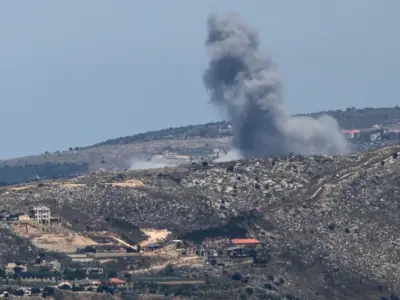

Israel and Hezbollah have reached a ceasefire agreement. According to the U.S. official, Israel and Hezbollah have reached a ceasefire after major Israeli airstrikes in southern Lebanon that have resulted in 47 deaths of people, the Lebanese government says.
The ceasefire came as fears that the ongoing confrontations in Lebanon for example, where Hezbollah killed four Israeli soldiers, could jeopardize efforts to resolve the conflict between the U.S. and Iran.
The Israeli military said that operations would continue to "eliminate immediate threats" and Sheikh Naim Qassem, the secretary general of Hezbollah, said "the project to eliminate Hezbollah has failed."
Ceasefire Under Strain
But rescue workers in Nabatieh informed the BBC of at least 12 airstrikes since the ceasefire took effect at 16:00 local time (13:00 GMT).
That is now the indication that Donald Trump does not have total control over Iran as well.
The MoU of 1985 also announced a ceasefire both in Lebanon and between the U.S. and Iran; however, an agreement has not brought real conditions on the ground and Tehran is accusing Trump of failing to restrain Israel.
Trump has fueled those claims by making accusations against Israeli Prime Minister Benjamin Netanyahu that he is recklessly targeting civilians in his campaign against Hezbollah.
The recent violence in southern Lebanon presents further challenges.
Although the White House maintains that a ceasefire is still in place, Israel's far-right National Security Minister, Itamar Ben Gvir, reacted to the loss of Israeli soldiers by declaring that "Lebanon must burn. For every tear shed by an Israeli mother, 1,000 Lebanese mothers must weep."
In response, Iran’s Foreign Minister Abbas Araghchi accused Israel of pursuing "permanent war," and said any violation of commitments outlined in the memorandum would be blamed on the U.S.
Trump's deal depends on both sides restraining hardliners and exercising caution something that's not occurring yet.
Netanyahu is under domestic pressure to continue military operations against Hezbollah, and the Iran-backed group has said it will continue to attack as long as Israel's assault continues.
Following the ceasefire announcement, Israeli military spokesperson Effie Defrin said that Israel would “continue to eliminate immediate threats, respond to violations by Hezbollah and take necessary measures to safeguard our civilians.”
Though Hezbollah has not yet formally recognized the ceasefire, Sheikh Naim Qassem declared: "The project to eliminate Hezbollah has failed; Israelis will retreat from every last inch of our territory."
The clashes started when Hezbollah claimed responsibility for ambushing an Israeli unit in southern Lebanon, destroying three tanks with guided missiles and attacking troops with rockets and artillery. Four soldiers were killed, including a battalion commander.
Heavy Toll on Civilians
Lebanon's health ministry reported that Israeli airstrikes killed 47 people including women and children and injured 97 others.
In different districts in Nabatieh, nine people died in Harouf, seven in Haboush, and six, including one child, in al-Duweir. The state news agency said Thursday night's bombardment across Nabatieh was one of the most intense episodes of this conflict.
There is skepticism about the ceasefire among displaced Lebanese citizens who doubt whether Israel will live up to any peace agreement. One person said this to Reuters: "The agreement is good; we all desire peace but I don't think Israelis will necessarily respect it. How many times have they made agreements? More than once-they don't."
Lebanon became involved in this conflict quickly after it started when Hezbollah retaliated to an attack that resulted in Iran’s supreme leader being killed by firing rockets into Israel. Israel conducted extensive bombing campaigns throughout Lebanon and occupied roughly 5% of southern territory to repel Hezbollah fighters from its northern border.
Since hostilities have resumed recently, over 3,900 people have died women and children among them with over 11,600 wounded according to Lebanon’s health ministry data. About one million people are displaced and many communities in southern regions are completely destroyed.”
Why Iran Has Shut Strait of Hormuz Again Despite Ceasefire In Place | Explained