




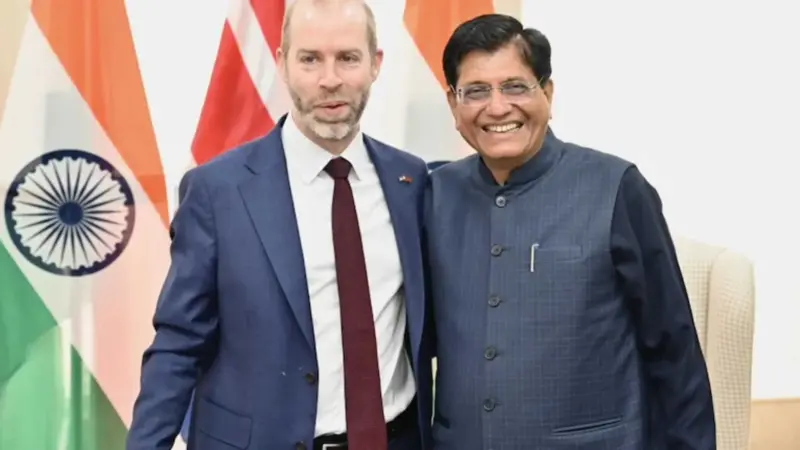

India and the United Kingdom on Tuesday officially signed their much-anticipated free trade agreement (FTA), a deal that is expected to strengthen economic ties between the two nations.
The announcement followed a telephonic conversation between Indian Prime Minister Narendra Modi and UK Prime Minister Keir Starmer. The agreement was signed against the backdrop of rising concerns over US President Donald Trump's tariff warnings, which have stirred uncertainty in global trade relations.
Prime Minister Modi's Statement
Prime Minister Modi hailed the signing of the agreement as a "historic milestone" for both countries. Speaking about the significance of the deal, he emphasized that the FTA would not only deepen the comprehensive strategic partnership between India and the UK but also act as a catalyst for trade, investment, growth, job creation, and innovation in both economies. "This agreement marks a new chapter in our relationship with the United Kingdom, and it will provide new opportunities for businesses and entrepreneurs in both nations," Modi added.What is a Free Trade Agreement (FTA)?
A Free Trade Agreement (FTA) is a treaty between two or more countries designed to facilitate trade by reducing or eliminating tariffs, duties, and other trade barriers. FTAs are structured to encourage open and competitive international markets, allowing member countries to trade goods and services more freely. Typically, an FTA will either eliminate tariffs entirely from day one or phase them out over a specified period of time. FTAs cover a wide array of areas, including the exchange of goods and services, intellectual property, investment, and regulatory measures. The primary goal of an FTA is to foster economic cooperation and ensure that businesses can access international markets in a more cost-effective and efficient manner.Benefits of Free Trade Agreement
The signing of this agreement between India and the UK carries significant benefits for both countries.- Reduced Tariffs: One of the most prominent advantages of FTAs is the reduction or elimination of tariffs on imports and exports. By lowering tariffs, businesses are able to offer more competitive prices, which can lead to increased market share and sales.
- Market Access: The FTA will open up new markets for Indian and UK businesses, making it easier for them to reach foreign customers. This improved access to international markets will create fresh opportunities for business expansion and growth.
- Increased Competitiveness: The removal of trade barriers allows companies to lower their operating costs, optimize supply chains, and deliver products at more affordable prices. As a result, businesses will be better positioned to compete on the global stage.
- Economic Growth: By facilitating trade and investment, FTAs contribute to economic growth in both countries. As businesses expand their operations and increase exports, they generate more revenue, create jobs, and bolster the overall economy.
- Diversification of Markets: FTAs also help reduce reliance on any single market, thus mitigating risks associated with economic fluctuations in one region. The ability to tap into a diverse range of markets offers businesses greater resilience against global uncertainties.
Who Stands to Benefit from the FTA?
The trade agreement offers a range of benefits for various stakeholders:- Exporters: Companies seeking to expand their customer base will benefit from reduced barriers to entry in the UK market, enabling them to increase exports.
- Importers: Businesses that rely on imported goods will benefit from lower tariffs and reduced costs, which can improve profit margins.
- Investors: The deal includes provisions to protect investments and intellectual property, making it safer and more attractive for businesses to invest in either country.
- Consumers: Ultimately, consumers will gain access to a broader range of goods and services at more affordable prices. The increased competition is likely to drive improvements in product quality as well.