
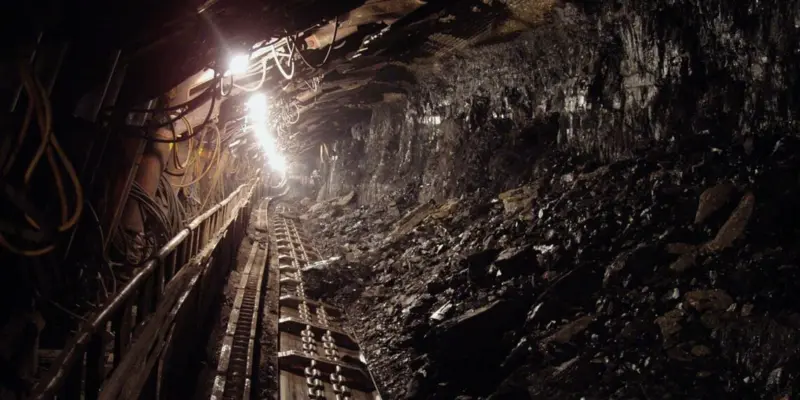

Shillong: Raising concerns over the worsening economic situation in the coal-dependent belt of East Jaintia Hills, NPP legislator Santa Mary Shylla on Tuesday warned that the district is "slipping back to 2014" due to the prolonged restrictions on coal mining.
Highlighting the deep reliance on the sector, Shylla said coal remains the backbone of the local economy, with most families depending on it either directly or indirectly.
The continued disruption, she noted, has left thousands struggling financially and intensified calls for government intervention.
According to the legislator, residents have already submitted memoranda to the Chief Minister and both Deputy Chief Ministers following a rally held on April 7, urging authorities to expedite a workable solution.
She stressed that the current framework of open-cast mining is proving impractical for the region.
"The existing open-cast leases are too expensive and not feasible for our area," she said.
Pointing to the long-standing practice of rat-hole mining, Shylla said people are seeking a more affordable and quicker alternative within the ambit of legality.
"We have been practicing rat-hole mining for a very long time, and people want that. We need to find the best solution - one that is low-cost and can be implemented quickly," she stated.
She further observed that despite earlier provisions such as coal transportation through challan and auction mechanisms, the overall situation has continued to decline.
Referring to the impact of the National Green Tribunal ban imposed in 2014, Shylla said livelihoods have been affected for years, but the current phase is even more severe.
"It has been affecting people since 2014, but now it is worse. It feels like we are going back to that time again. At present, everything is completely shut as the government is strictly adhering to law and order," she said.
While acknowledging that efforts toward scientific mining have been underway since 2018 and have seen some progress, Shylla maintained that high costs remain a major obstacle.
She urged both the state and central governments to develop a low-cost, alternative model of scientific mining that would allow people to resume work legally without bearing prohibitive expenses.