




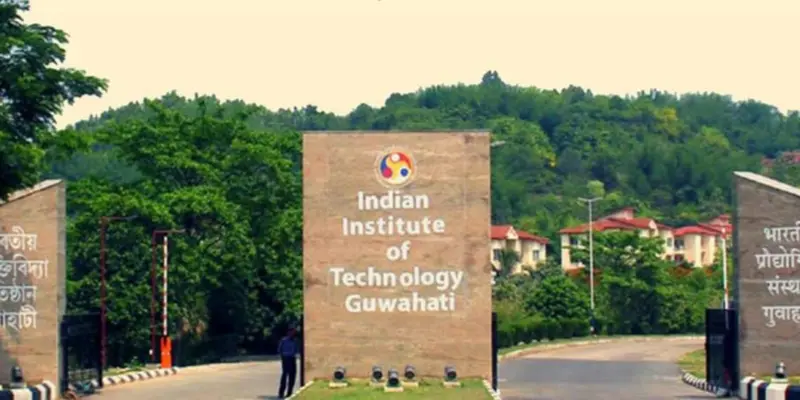

The Indian Institute of Technology (IIT) Guwahati has entered into a partnership with Hyderabad-based Kaashyap Cleantech Innovations Pvt Ltd to commercially scale up a bio-methanol production technology aimed at reducing greenhouse gas emissions and promoting clean energy solutions.
The collaboration was formalised through a Memorandum of Understanding (MoU) focused on the large-scale deployment of a technology developed by researchers at IIT Guwahati using chemoautotrophic bacteria for bio-methanol production.
According to the institute, the process converts methane and carbon dioxide - two major greenhouse gases - into bio-methanol, which can be used as a cleaner fuel as well as an industrial solvent.
Methane is considered significantly more harmful than carbon dioxide in terms of global warming impact.
The institute said conventional chemical methods used to convert these gases into liquid fuel are often costly, energy-intensive and generate harmful by-products, limiting their wider application.
In contrast, the IIT Guwahati research team has developed a biological and catalyst-free process that operates under comparatively mild conditions.
The technology was developed by a research group led by Prof Debasish Das and doctoral scholar Krishna Kalyani Sahoo from the Department of Biosciences and Bioengineering.
The process involves a two-stage bioconversion system using specialised microbial catalysts.
Researchers said tests conducted on diesel engines using diesel-methanol blended fuel showed notable environmental gains, including a sharp reduction in emissions such as carbon monoxide, hydrocarbons, hydrogen sulphide and smoke compared to conventional diesel fuel.
The blended fuel also demonstrated improved fuel efficiency and engine performance while maintaining mechanical efficiency levels similar to diesel.
Apart from its use as fuel, bio-methanol can also serve as a raw material for manufacturing industrial chemicals such as formaldehyde and acetic acid.
IIT Guwahati Director Devendra Jalihal said the initiative reflects the institute's commitment to developing sustainable technologies that address environmental challenges while supporting cleaner energy generation and carbon reduction efforts.
Kaashyap Group Managing Director Kiran KK described the technology as a significant advancement in sustainable fuel production, noting that it simultaneously enables clean fuel generation and carbon capture, potentially supporting carbon credit initiatives and long-term net-zero goals.