




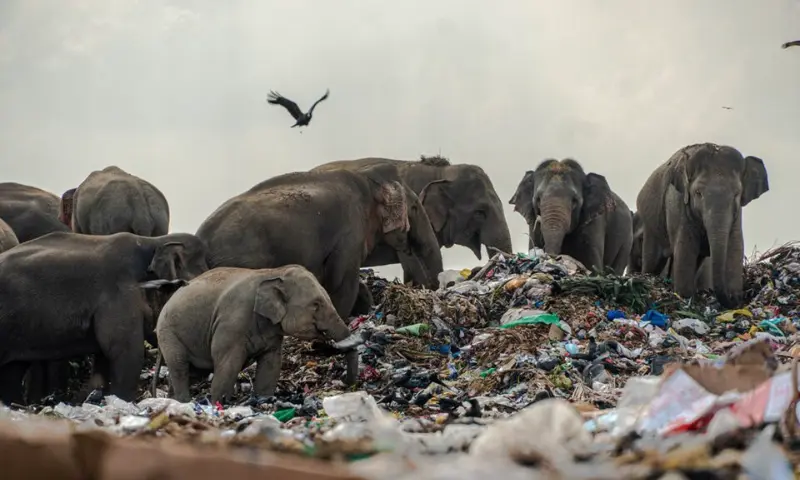

Guwahati: An alarming incident in Assam's Golaghat district has brought renewed focus on the impact of human-generated pollution on wildlife, after a young wild elephant died from ingesting plastic waste.
The incident occurred on January 12 at Numaligarh Tea Estate, located near the ecologically sensitive Deopahar Reserve Forest and Nambor-Doigrung Wildlife Sanctuary, but came to light following a Right to Information (RTI) query filed by activist Dilip Nath.
According to the post-mortem report, the eight-year-old elephant showed no external injuries or signs of physical trauma. However, it had consumed large quantities of plastic waste, leading to severe gas formation and disruption of its digestive system, ultimately resulting in a painful death.
Experts attributed the death to prolonged ingestion of plastic, which caused digestive blockage and internal complications. Officials linked the incident to unchecked dumping of garbage, particularly along roads skirting forest areas.
Environmentalists have described the case as rare and deeply concerning, warning that it highlights the growing threat posed by plastic pollution to wildlife.
Reports indicate that stretches along highways have witnessed indiscriminate dumping of waste, including plastic, due to negligence by both authorities and local residents. Concerns have also been raised over the forest department's failure to enforce strict anti-littering measures in ecologically sensitive zones.
Activist Apurba Ballav Goswami cautioned that such incidents may become more frequent as elephants are pushed out of shrinking habitats in search of food. He noted that the Deopahar-Numaligarh-Nambor region, intersected by a busy highway, has become particularly vulnerable due to persistent dumping of waste near elephant corridors.
Assam remains one of India's key elephant habitats, but experts point out that habitat loss has reached critical levels. Over the past four decades, a significant portion of elephant habitats has been lost to deforestation, agriculture, tea plantations, and infrastructure expansion, forcing animals into human-inhabited areas.
The incident has also raised questions about the effectiveness of conservation initiatives such as the Gaja Mitra Scheme, which aims to mitigate human-elephant conflict through habitat restoration and community engagement. Experts warn that without urgent steps to curb waste dumping and restore ecosystems, such tragedies are likely to continue.