

Indian poetry has long served as a mirror to the country's shifting cultural, emotional, and philosophical landscapes moving seamlessly from devotional lyricism to sharp modern introspection and it is reflected deeply in some best poetry books.
Across decades, poets have captured everything from spiritual yearning and nationalist fervour to urban alienation and feminist assertion, making Indian poetry one of the most diverse and evolving literary traditions in the world. The following selection of ten essential poetry books offers a curated journey through this rich terrain, blending the timeless with the contemporary.
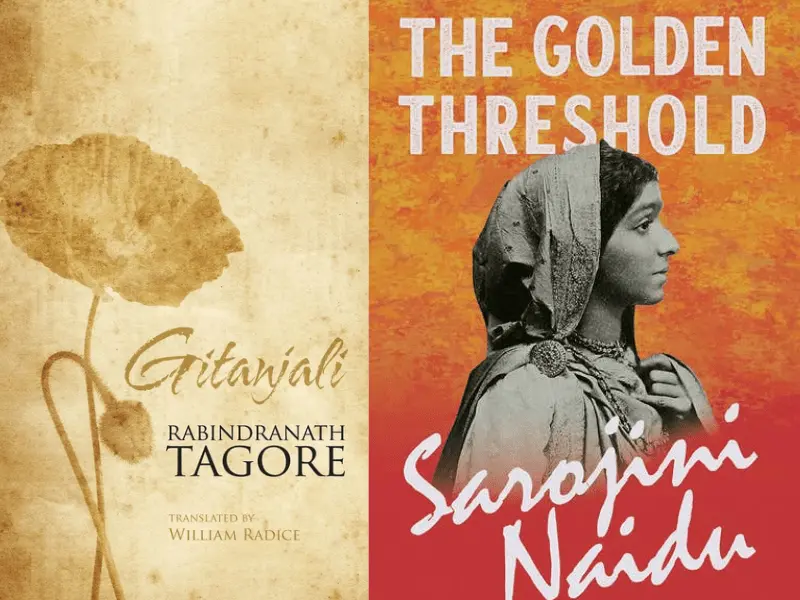
At the heart of Indian poetry lies Gitanjali by Rabindranath Tagore, a seminal work that transcends borders with its meditative reflections on spirituality, devotion, and the human condition. Equally evocative is The Golden Threshold by Sarojini Naidu, where lyrical elegance meets nationalist spirit, painting India in sensuous imagery and musical cadence.
As Indian poetry moved into the modern era, voices became sharper and more experimental. Jejuri by Arun Kolatkar stands as a landmark, transforming a seemingly ordinary pilgrimage into a layered meditation on faith, doubt, and everyday life through spare, striking verse. In a similarly modern vein, Collected Poems by Nissim Ezekiel captures the rhythms of urban India with wit, irony, and remarkable clarity, marking a shift toward a distinctly Indian English poetic voice.
Confessional and deeply personal poetry also found powerful expression in India through works like The Keeper of the Dead by Kamala Das, where themes of love, identity, and mortality are explored with raw honesty and emotional intensity. This introspective tone continues in The Descendants by Eunice de Souza, whose crisp, often ironic verses dissect societal norms and personal identity with sharp intelligence.
Contemporary Indian poetry, meanwhile, has embraced global themes while remaining rooted in lived experience. When God is a Traveller by Arundhathi Subramaniam reimagines mythology and spirituality through a modern, introspective lens, offering poetry that feels both intimate and expansive. Girls Are Coming Out of the Woods by Tishani Doshi, on the other hand, confronts gender, violence, and resilience with a fierce and haunting voice that speaks directly to contemporary realities.
A more minimalist, globally resonant style emerges in I Will Go with You by Rupi Kaur, where themes of love, healing, and selfhood are distilled into accessible, emotionally direct verses that have redefined poetry for a digital generation. Finally, The Penguin Book of Indian Poets brings together a diverse range of voices across eras, offering a comprehensive glimpse into the evolution of Indian poetry.
Together, these works illustrate how Indian poetry continues to reinvent itself, balancing tradition with experimentation, and intimacy with universality. Whether rooted in spirituality, shaped by modernity, or driven by contemporary discourse, these books affirm that poetry in India is not just a literary form, but an ever-evolving expression of identity, emotion, and imagination.