
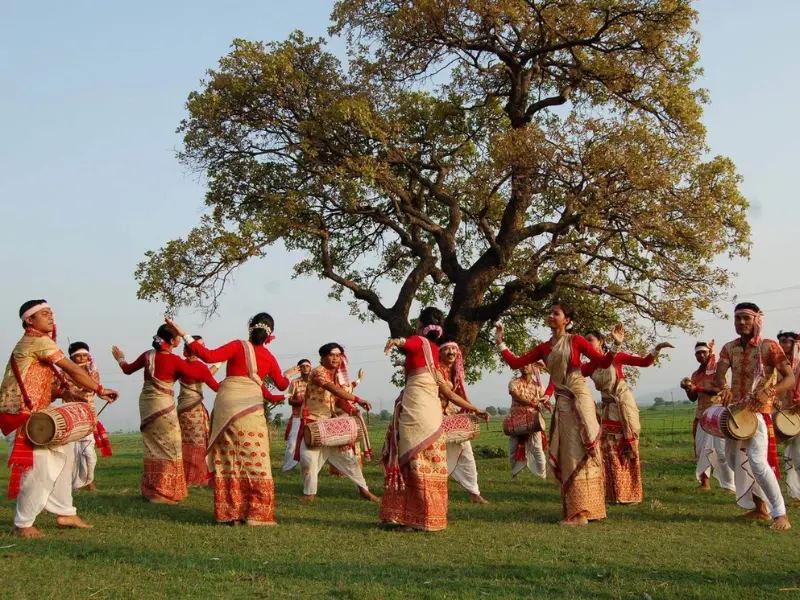

Bohag Bihu, also known as Rongali Bihu, marks the Assamese New Year and the arrival of spring, symbolizing renewal, fertility, and joy and Assam witness vibrant traditions come alive in full fervour among its tribal communities during this time of the year.
Celebrated with unmatched enthusiasm across Assam, the festival transcends communities, uniting diverse ethnic and tribal groups through a shared spirit of celebration-while still preserving distinct cultural expressions.
Among the Assamese-speaking communities, Bohag Bihu begins with rituals like Goru Bihu, where cattle are bathed, decorated, and honored for their role in agrarian life. This is followed by Manuh Bihu, when people wear new clothes, exchange greetings, and seek blessings from elders. Traditional Bihu dance and music, accompanied by instruments like the dhol and pepa, form the cultural heartbeat of the festivities.
The Bodo tribe celebrates a parallel festival called Bwisagu, which coincides with Bohag Bihu. Marking the onset of the agricultural season, Bwisagu includes rituals of cattle worship, community feasting, and energetic dances performed to the rhythm of traditional instruments like the kham. The celebrations emphasize harmony with nature and community bonding.
Similarly, the Mishing tribe observes Ali-Aye-Ligang around the same time, a sowing festival that celebrates agriculture and fertility. Though distinct in identity, its themes closely align with Bohag Bihu. The Mishings perform the Gumrag dance, where men and women in traditional attire move in rhythmic patterns, celebrating youth, love, and seasonal change.
Among the Karbi tribe, the spring festival Rongker reflects similar sentiments of prosperity and protection. While not identical to Bihu, it often overlaps seasonally and culturally, involving rituals to appease deities and ensure a good harvest. Community gatherings, feasts, and dances form an integral part of their celebrations.
The Deori tribe celebrates Bohag Bihu with unique rituals rooted in their spiritual traditions. Their dances and songs are more ritualistic, often performed in sacred spaces, reflecting a deep connection between agriculture, spirituality, and community life.
Despite these variations, a unifying thread across all communities is the celebration of nature's abundance and the agrarian cycle. Music, dance, traditional attire, and communal feasting serve as shared expressions of joy and identity. The Bihu dance itself, now globally recognized, has evolved by incorporating influences from multiple tribal traditions, making it a symbol of Assam's cultural synthesis.
In contemporary times, Bohag Bihu has also become a platform for cultural exchange, with urban celebrations showcasing performances from various tribes, reinforcing inclusivity while preserving heritage.
Ultimately, Bohag Bihu is not just a festival it is a living mosaic of Assam's diverse tribal traditions. Each community adds its own color and rhythm, creating a vibrant cultural landscape that reflects unity in diversity, rooted deeply in land, tradition, and collective celebration