
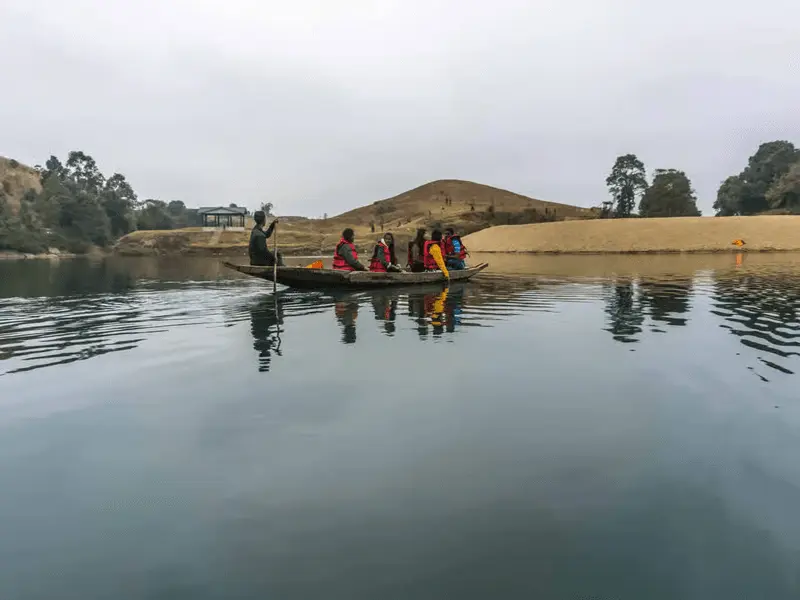

Tucked away in the serene landscapes of Meghalaya, the Nongkhnum River Island stands as one of Northeast India's most captivating yet lesser-known natural treasures.
Located in the West Khasi Hills district, about 14 kilometres from Nongstoin, this island is the largest river island in the state and spans roughly 20-25 square kilometres, offering a rare blend of untouched beauty and tranquil isolation.
Formed by the bifurcation of the Kynshi River locally known as Wah Kynshi into the Phanliang and Namliang rivers, Nongkhnum presents a fascinating geographical phenomenon. These twin channels encircle the landmass before reuniting downstream, creating a natural island that feels both remote and pristine. The island's landscape is defined by sandy riverbanks, lush green meadows, and crystal-clear waters, offering visitors an experience that is both raw and immersive.
What sets Nongkhnum apart from more popular destinations in Meghalaya is its remarkable sense of solitude. Unlike tourist-heavy locations such as Cherrapunji or Dawki, this island remains largely unexplored due to limited infrastructure. This relative inaccessibility has helped preserve its natural charm, making it an ideal destination for travellers seeking peace, quiet, and a deeper connection with nature.
One of the island's most striking features is its expansive sandy beach, formed at the point where the river splits. This natural riverside stretch offers a unique inland beach experience, where visitors can relax, sunbathe, or simply enjoy the soothing sound of flowing water. The clarity of the river enhances the visual appeal, often revealing pebbles beneath the surface and reflecting the surrounding hills in tranquil stillness.
Beyond its beaches, Nongkhnum is also home to two notable waterfalls Weina Falls and Langshiang Falls. These cascades add dramatic flair to the otherwise gentle landscape. Langshiang Falls, in particular, is known for its impressive height and scenic surroundings, making it a rewarding trek for adventure enthusiasts. The island's terrain also supports activities such as camping, fishing, boating, and nature walks, all of which allow visitors to engage with the environment at a slow, mindful pace.
The island is not entirely uninhabited; small Khasi villages dot parts of the interior, where locals engage in agriculture and maintain traditional ways of life. This adds a subtle cultural dimension to the visit, offering glimpses into the indigenous lifestyle of the region without disrupting its ecological balance.
Reaching Nongkhnum requires a bit of effort, typically involving a road journey to Nongstoin followed by a ferry crossing or seasonal wading through shallow river sections. While this may deter casual tourists, it enhances the sense of discovery for those who make the journey.
For travellers willing to venture off the beaten path, it offers a rare opportunity to witness Meghalaya in its most unspoiled form