
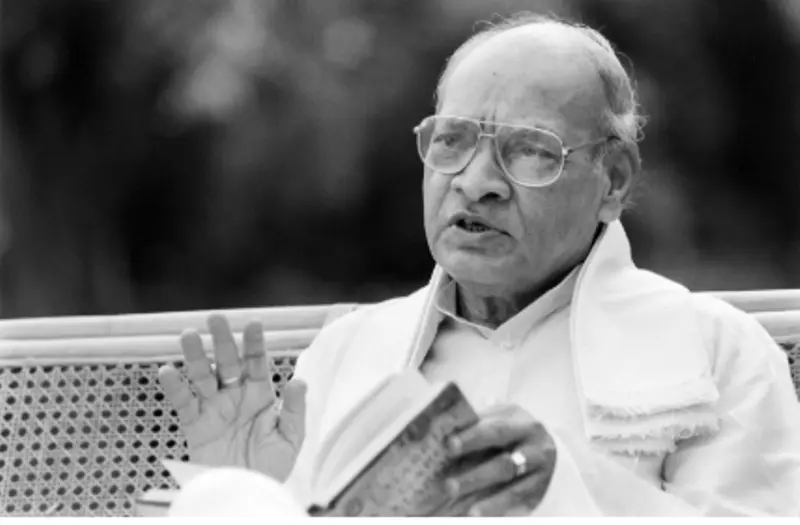

P. V. Narasimha Rao is often described as India's first "accidental" Prime Minister. Not only did he become Prime Minister unexpectedly, even earlier he had assumed office as the Chief Minister of Andhra Pradesh in a similar manner.
In 1991, no one imagined that Rao would become the Prime Minister of India. Likewise, few had expected him to emerge as Chief Minister in Andhra Pradesh politics. Yet, after coming to power, the reforms he introduced permanently changed the future of Andhra Pradesh and the entire country.
Rao was a calm but determined rebel who never accepted the status quo. He believed in dialogue, strategy, and careful planning rather than open confrontation. Like a skilled diplomat, he began reforming rigid systems from within. This is why he is often described as a quiet, inward-looking strategist. He had no blind followers or powerful political lobby to defend him, which later resulted in him being denied the recognition he truly deserved.
As Chief Minister of Andhra Pradesh, Rao weakened the economic dominance of the powerful landlord class. Despite coming from a landlord family himself, he implemented land reforms that pushed surplus rural capital towards trade and industry. This gave a fresh direction to the state's economy and completely transformed its economic structure. His silent yet powerful actions proved that real change does not need loud slogans or grand displays.
After becoming Prime Minister, Rao introduced major reforms such as liberalisation, privatisation, and globalisation in India's economy. Moving away from rigid socialist policies, he placed India on a new economic path. Interestingly, he presented these historic changes as a continuation of Nehru's and Rajiv Gandhi's vision to avoid opposition within the Congress party. The foundation of today's strong Indian economy was laid by Narasimha Rao. No government, regardless of political party, has been able to reverse the reforms he began.
Even during the Emergency, Rao expressed his disagreement while remaining within the Congress party. He wrote several articles under a pseudonym, strongly defending democratic values. He also showed his liberal mindset by stating that leaders of opposition parties like the BJP-then considered politically untouchable-were also elected through the same constitutional process. Rao successfully handled complex issues in Punjab, Assam, and Kashmir, yet he never claimed credit for these achievements.
A scholar who knew nearly 17 languages, Rao never built a vote bank or a group of personal loyalists. As a result, after his death, even his own party neglected him. There was no one to praise his successes or to criticise his failures. However, in recent years, efforts have begun to restore his rightful place among the architects of modern India, especially through the celebration of his birth centenary. How effective these efforts will be remains to be seen in the coming days.