
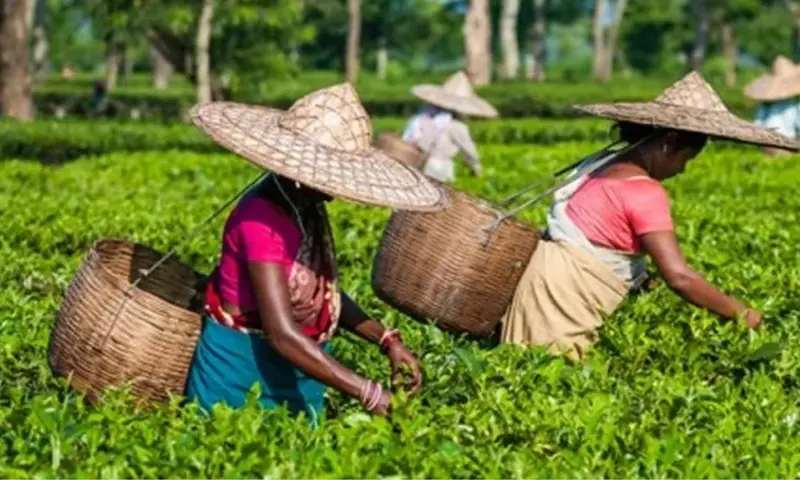

Guwahati: In a fresh push to reimagine tea's role beyond the teacup, the Tea Research Association (Tocklai) is launching a hands-on workshop to train women in Assam to turn tea leaves into marketable food products, from pickles to condiments, opening up new livelihood avenues in the region.
The two-day programme, to be held on March 19-20 at the Tocklai Tea Research Institute, is being organised in collaboration with the ICAR-Indian Council of Agricultural Research and the National Institute for Plant Biotechnology (NIPB).
At a time when the tea sector is grappling with oversupply and pricing pressures, the initiative positions tea, especially green leaf, not just as a beverage crop but as a versatile raw material for value-added food innovation.
Turning tea into enterprise
The workshop will focus on training women from Jorhat district in producing tea leaf-based condiments and pickles, a niche but promising segment with growing consumer curiosity around functional and artisanal foods.
Participants will receive hands-on training in processing and product development, exposure to standardised techniques for quality and safety, guidance on certification, financial schemes, and market access, and direct interaction with scientists, industry experts, and institutions.
The initiative is particularly significant for Assam and the Northeast, where tea is deeply embedded in both the economy and culture. By introducing non-conventional uses of tea, the programme aims to reduce dependence on bulk tea markets while empowering women-led micro-enterprises in rural areas.
Officials said the effort aligns with a broader shift in the tea sector, from volume-driven production to innovation, diversification, and value addition.
Redefining tea's future
The organisers emphasised that the future of tea lies in expanding its economic possibilities, especially in regions like Assam, where small-scale, decentralised enterprises can transform rural incomes.
If successful, the model could pave the way for a new category of tea-based food products, positioning the Northeast not just as a producer of tea but as a hub of tea innovation and entrepreneurship.