




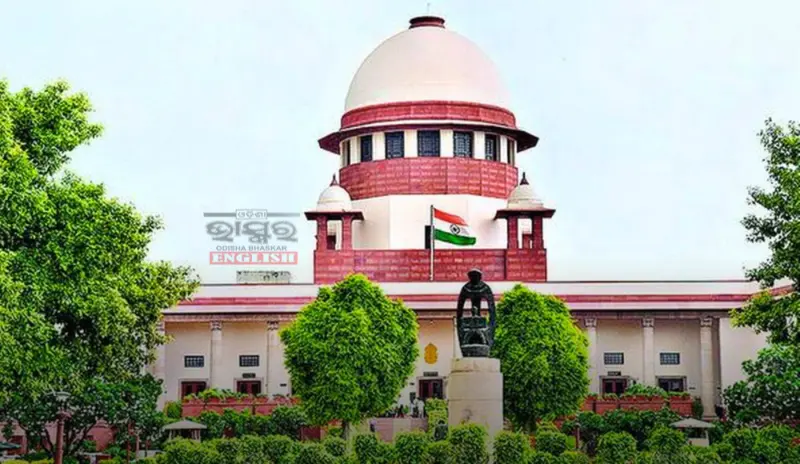

New Delhi: The Supreme Court on Friday questioned whether children of OBC families who have climbed the social ladder through reservation should continue to enjoy its benefits, making pointed observations about creamy layer exclusion.
“If both parents are IAS officers, why should they have reservations? With education and economic empowerment, there is social mobility. So then again to seek reservation for the children, we will never get out of it,” Justice BV Nagarathna said.
The bench of Justices Nagarathna and Ujjal Bhuyan was hearing a petition filed by a Kuruba community candidate from Karnataka, who was denied a caste validity certificate after authorities found his family’s annual income at Rs 19.48 lakh exceeded the creamy layer threshold. Both his parents are state government employees. He had been selected as assistant engineer (electrical) in the Karnataka Power Transmission Corporation under the reserved category.
His counsel Shashank Ratnoo argued that salary income cannot be the determining criterion for creamy layer exclusion among government servants and that only income from business or other non-salary sources should be considered. He added that divergent judicial views on the issue warranted a deeper examination.
Justice Nagarathna, however, stressed that social mobility follows economic and educational progress and that reservation benefits must have a logical endpoint.
The case arises from a Karnataka High Court division bench ruling that the state’s creamy layer policy, unlike the Centre’s, does not exclude salary income from income assessment.