




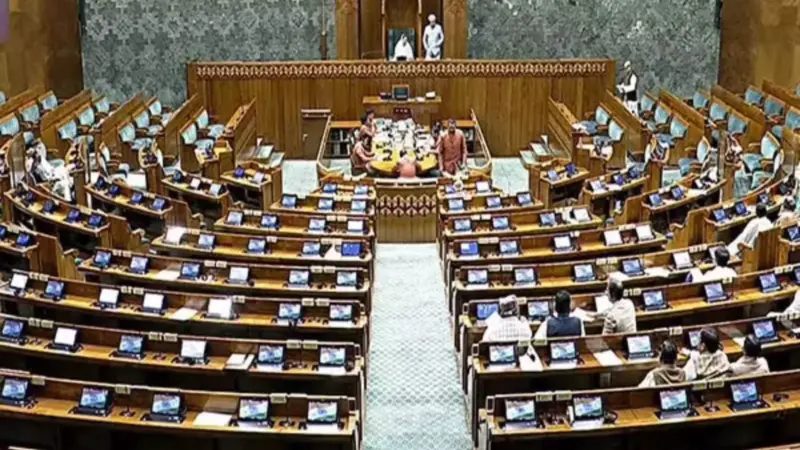

The government on Wednesday introduced the Central Armed Police Forces (General Administration) Bill, 2026 in the Rajya Sabha, clearing its introduction through a voice vote despite strong objections from Opposition members.
The proposed legislation aims to establish a uniform legal framework for personnel across the five Central Armed Police Forces (CAPFs), replacing the existing system of separate service rules governing each force.
What the CAPF Bill Seeks to Change
The bill is designed to streamline administration by bringing all CAPF personnel under a single legal structure. Currently, different forces operate under distinct service regulations, leading to inconsistencies in governance and service conditions.
Introducing the bill, Minister of State for Home Affairs Nityanand Rai sought to address concerns about its scope. He clarified that the legislation would not alter the fundamental governance structure or operational mandates of the forces.
"The CAPF does not influence or change the system of governance under Section 312," he said, adding that duties and powers would remain intact.
Government Defends Parliament's Legislative Authority
Union Parliamentary Affairs Minister Kiren Rijiju strongly defended Parliament's authority to legislate, criticising Opposition members for invoking judicial rulings to challenge the bill.
"How can we take away the legislative competence of this House?" Rijiju asked, asserting that Parliament, empowered by the Constitution, has the authority to enact laws and should not abdicate that responsibility.
Opposition Raises Constitutional and Federal Concerns
The introduction of the bill triggered sharp reactions from Opposition leaders, who questioned both its intent and constitutional validity.
Jairam Ramesh demanded more time for discussion, while Derek O’Brien staged a symbolic protest by observing silence, calling the bill "anti-federal."
Ajay Maken cited multiple Supreme Court rulings and raised concerns over the financial implications of implementing the new framework.
Legal and structural concerns were also highlighted by Vivek Tankha, who warned that the bill could undermine constitutionally protected rights of thousands of service officers.
Meanwhile, Tiruchi Siva argued that the legislation appeared to override Supreme Court judgments related to IPS deputation in paramilitary forces, raising questions about the separation of powers.
John Brittas echoed these concerns, terming the bill a case of "fundamental infirmity of legislative competence."
Proceedings Marked by Tension in the House
The debate saw procedural friction as Deputy Chairman Harivansh initially limited speaking time for Opposition members. After protests, members were allowed one minute each to present their objections, in line with parliamentary precedents.
Despite the protests, the government proceeded with the bill's introduction, signalling its intent to push ahead with reforms in CAPF administration.
Debate Reflects Larger Questions on Lawmaking and Judiciary
The controversy surrounding the CAPF Bill 2026 highlights a broader debate over the balance between legislative authority and judicial oversight. While the government maintains that the bill will bring administrative clarity and efficiency, critics warn it may set a precedent affecting federal principles and constitutional safeguards.