

NEW DELHI - As the Persian Gulf remains a volatile theater of the US-Iran war, the Indian Navy has launched a high-stakes maritime protection mission to secure the nation's energy jugular.
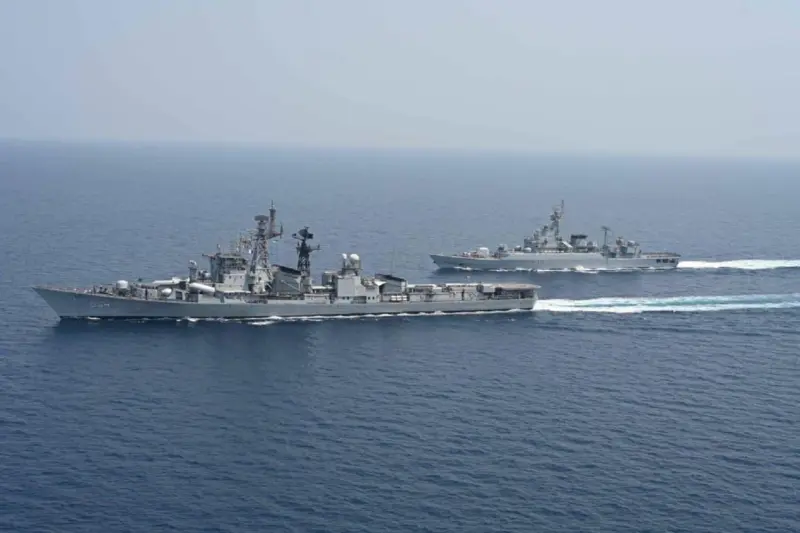
On Monday, March 23, 2026, two critical LPG carriers and a crude oil tanker began their journey toward Indian ports under the watchful eye of the Indian Navy's most advanced warships.
The gravity of the shipping crisis-marked by constant missile and drone fire-led Navy Chief Admiral Dinesh Tripathi to cancel his scheduled bilateral visit to Australia and New Zealand. He remains in New Delhi to oversee the security of the 10 million Indian nationals in the region and the steady flow of fuel to the domestic economy.
1. The LPG “Convoy” from the UAE
Following diplomatic clearances from Tehran, two Indian-flagged vessels were permitted to transit the sensitive Strait of Hormuz on Monday evening.
- The Vessels:MV Jag Vasant and MV Pine Gas departed UAE ports at 6:00 AM IST, sailing just five nautical miles apart for mutual protection.
- The Cargo: Combined, the ships are carrying 92,612.59 metric tonnes of LPG, a critical supply as India manages a domestic cooking gas crunch.
- Arrival Schedule: * Jag Vasant is expected at Kandla Port on March 26.
- Pine Gas is scheduled for New Mangalore on March 28.
- Security Protocol: Once in the Gulf of Oman, Kolkata-class destroyers will provide a 24-hour close-proximity escort to shield the 60 Indian seafarers on board from potential aerial or surface threats.
2. Crude Oil Reinforcements from Saudi Arabia
To further bridge the energy gap, a Panama-flagged crude carrier, MT Kallista, is currently loading at the Saudi port of Yanbu.
- Route: The vessel will depart Tuesday for Paradip Port via Jeddah.
- Gulf of Aden Watch: The Indian Navy, in coordination with the Petroleum Ministry, will provide an armed escort through the Gulf of Aden, a zone currently plagued by regional spillover from the conflict.
3. Diplomatic Friction: No Warships in the Strait
While India has successfully negotiated the passage of its tankers without paying the rumored $2 million “transit fee,” significant operational constraints remain:
- Escort Restrictions: The Iranian Revolutionary Guard Corps (IRGC) continues to deny Indian warships permission to enter the Strait of Hormuz to escort merchant vessels.
- Strategic Ambiguity: The Iranian Embassy in New Delhi officially denied reports on Monday that Tehran is seeking specific payments for transit, though ship owners remain on high alert.
- Moral Support: With crews operating under extreme stress in the war zone, the Navy and ship owners are maintaining constant satellite communication with captains to boost morale and provide real-time intelligence.
4. India's Defensive Posture
The Narendra Modi government has authorized the deployment of Kolkata-class destroyers across the Gulf of Oman and the Gulf of Aden. These vessels are equipped with advanced surface-to-air missiles and electronic warfare suites specifically designed to intercept the types of drones and cruise missiles currently being used in the conflict.
Energy Transit Tracker (March 23-24, 2026)
| Vessel Name | Cargo Type | Destination | Est. Arrival | Crew |
| MV Jag Vasant | LPG | Kandla, Gujarat | March 26 | 33 Indians |
| MV Pine Gas | LPG | New Mangalore | March 28 | 27 Indians |
| MT Kallista | Crude Oil | Paradip, Odisha | TBD | Mixed |