





As scorching summer temperatures soar between 45°C and 50°C across the plains of North India, millions of people are fleeing to the hills in search of relief.
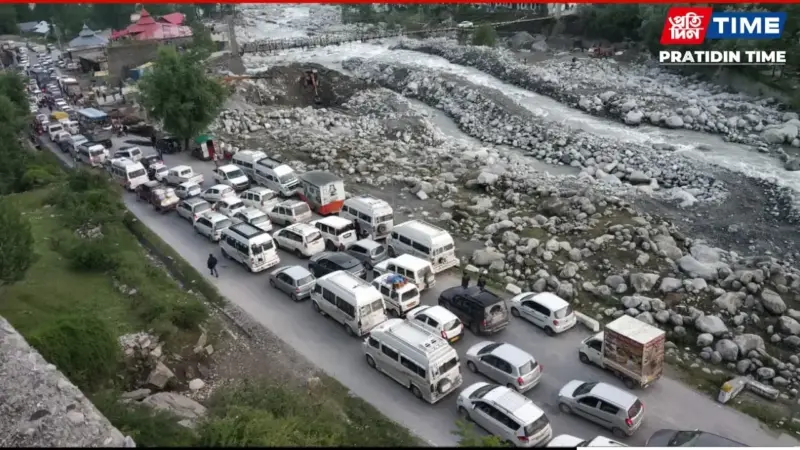
However, this seasonal escape has now turned into a logistical nightmare, with major tourist destinations witnessing unprecedented overcrowding and crippling traffic jams.
Popular hill stations like Manali, Rohtang Pass, Nainital, Badrinath, Hemkund Sahib, Auli, and Joshimath are packed with tourists and pilgrims. While these regions offer cool weather, occasional rainfall, and even snow, the sheer number of visitors has pushed local infrastructure to its limits.
The situation is particularly difficult on the Manali–Rohtang route. A journey of just 50 kilometres is now taking up to 7–8 hours due to massive traffic congestion. On Saturday, vehicles were stuck in a jam stretching nearly five kilometres.
Tourists blamed poor traffic discipline and a lack of proper parking facilities. “We were stuck for nearly four hours. Authorities need stricter traffic management,” said a visitor from Kolkata. Local tour operators pointed out that the absence of designated parking areas between Marhi and Gramphu has forced vehicles to line up along roadsides, worsening the chaos.
Nainital is overflowing with tourists
The lake city of Nainital is also witnessing a massive surge in visitors. Areas like Mall Road, Snow View, Nainital Zoo, and Cave Gardens are overcrowded, with long queues forming for boating on the lake.
Hotels, guest houses, and homestays are operating at full capacity, bringing a boom to local businesses. Restaurant owners and hotel operators say this is one of the busiest seasons in recent years.
However, the surge has overwhelmed city's infrastructure. Major roads, including Mall Road, Bhowali Road, and Kaladhungi Road, are facing constant traffic jams, making daily commuting difficult for locals.
The situation has worsened due to a large number of devotees heading to the Kainchi Dham shrine for its Foundation Day celebrations, further adding pressure on the already congested roads.
In Uttarakhand’s Chamoli district, traffic congestion has reached alarming levels. Gridlocks of 15 to 20 kilometres have been reported on key routes like Marwari–Govindghat and Joshimath–Selang.
Even with one-way traffic systems in place, commuters are forced to wait for hours, sometimes up to 2–3 hours, just to pass through transit points.
Despite heavy rain and occasional snowfall in higher regions, the enthusiasm of pilgrims remains strong. Footfall at Badrinath Dham has already crossed 7.25 lakh, with total Char Dham Yatra numbers exceeding 24 lakh this season.
At Hemkund Sahib, devotees are navigating snow-covered paths with the help of security personnel and volunteers, forming human chains to ensure safety.
Tourism boom brings health risks
While the surge in visitors has boosted the local economy, benefiting hotels, transport services, and small businesses, it has also brought new challenges.
Medical issues are increasingly being reported among tourists travelling to high-altitude regions. Many visitors from cities like Delhi and Mumbai are facing breathing problems, fatigue, and symptoms related to low oxygen levels.
Doctors advise tourists to spend a few days at lower altitudes to adjust to the conditions before heading to higher regions like Badrinath or Hemkund Sahib.
Experts and locals believe that better infrastructure is the only long-term solution to the growing crisis. Improved roads, proper parking facilities, public toilets, and stricter traffic management systems are urgently needed to handle the rising tourist inflow.
For now, while the hills continue to offer relief from the extreme heat, the journey to reach them is becoming increasingly exhausting and chaotic for travellers.
Traffic Chaos in Hill Stations of India as Heatwave Fuels Tourist Rush to Mountains