




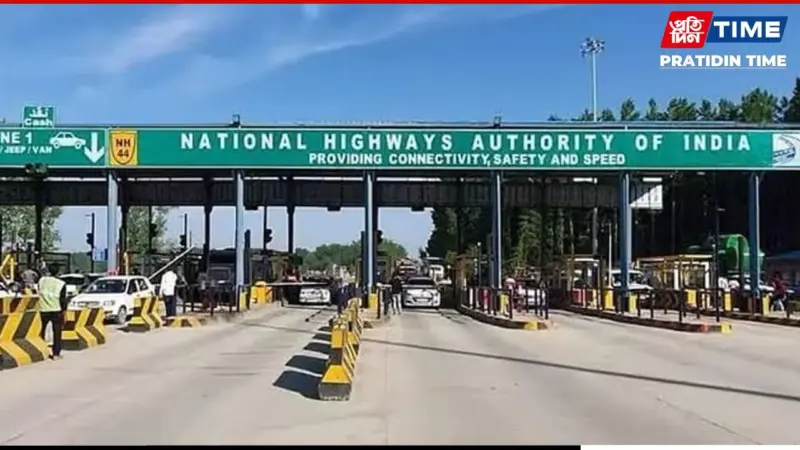

The Ministry of Road Transport and Highways has announced that cash payments at toll plazas on national highways will be discontinued starting April 10, marking a significant step toward fully digital toll collection across the country.
According to the report, vehicles without a valid FASTag can still pay tolls via Unified Payment Interface (UPI), but at a surcharge of 1.25 times the standard toll fee for that vehicle category. The move aims to streamline traffic flow, reduce long queues at toll gates, and ensure smoother journeys for commuters.
The report, said the National Highways Authority of India (NHAI), explained that FASTag will remain the primary method of toll collection, while UPI will serve as a backup for vehicles arriving without a working FASTag. The notification further stated that vehicles refusing to pay via the prescribed digital methods will be dealt with under relevant rules, ensuring compliance and accountability.
The adoption of digital tolls is already seeing rapid growth. NHAI recently reported surpassing 50 lakh subscribers for its FASTag annual pass, which allows up to 200 toll crossings annually for Rs 3,000. Since its launch on August 15, over 26.55 crore transactions have been recorded through these passes, reflecting the growing acceptance of cashless payments.
With more than 1,150 toll plazas across national highways and expressways nationwide, authorities are confident that the move will significantly reduce congestion, improve efficiency, and accelerate the country’s shift toward digital infrastructure.
Why Cash is Being Phased Out
The move toward a cashless tolling system is part of the government’s push for efficiency, transparency, and smoother highway travel. Manual cash handling has historically caused:
- Long queues and traffic congestion at toll plazas
- Delays in transactions
- Disputes over payments
Digital tolling aims to eliminate these issues. With FASTag and UPI-based payments:
- Vehicles can pass through tolls faster with minimal stoppage
- Transactions are automatically recorded and auditable
- Leakages, fraud, and disputes are significantly reduced
The policy aligns with broader digital infrastructure goals and encourages seamless, automated highway travel.
FASTag is Now Essential for Every Highway Trip
Under the new rules, FASTag is mandatory for all vehicles. Travellers without a valid FASTag will face higher toll charges via UPI and risk enforcement action if they refuse compliant payment. The system is designed to make FASTag the cheapest, fastest, and most convenient method of toll payment.
UPI as a Backup Option
UPI payments will only serve as a fallback, not a replacement for FASTag. The 1.25x surcharge ensures that UPI remains an emergency option, discouraging its regular use.
- Standard toll: Rs 100
UPI without FASTag: Rs 125
Consequences of Non-Compliance
- Ignoring the rules can trigger strict measures:
- Penalties under Rule 14
- Restricted entry at toll plazas
- Additional charges, including double toll, for delayed payments
For daily commuters and frequent travellers, maintaining a functional FASTag is the only practical way to avoid extra costs and delays.
Steps to Take Before April 10
To ensure uninterrupted travel:
1. Install and activate FASTag on your vehicle.
2. Maintain sufficient balance in your FASTag account.
3. Use UPI only in emergencies.
4. Verify that your FASTag is valid and operational before highway entry.
With the April 10 deadline approaching, authorities urge commuters to comply, emphasising that digital tolling is now the standard, not optional, across all national highways.