




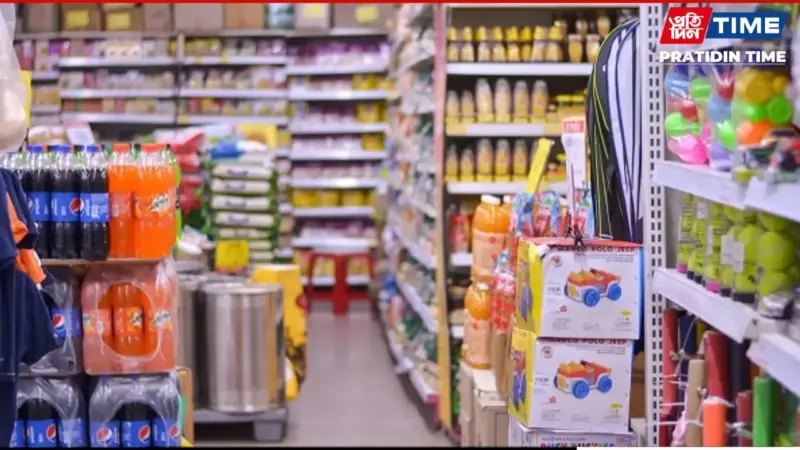

Daily-use essentials from soaps and detergents to biscuits, packaged foods, and beverages are set to become costlier as FMCG companies prepare for calibrated price hikes across India. The move comes amid rising crude-linked inflation, higher packaging expenses, and increased fuel costs triggered by ongoing geopolitical disruptions, which are squeezing profit margins across the sector.
Executives from leading FMCG firms, many of which have already implemented price increases of 3 to 5 per cent in recent months, indicated during their latest earnings calls that further hikes remain likely. They cited persistent inflationary pressures driven by volatile crude oil prices, escalating logistics costs, currency depreciation, and continued global supply chain disruptions.
What is Driving FMCG Price Hike?
The inflationary impact is being felt across categories, including food, personal care, beverages, and household products. Companies are increasingly relying on a mix of direct price hikes and "shrinkflation", reducing pack sizes while retaining popular price points such as Rs 5, Rs 10, and Rs 15, to sustain demand without sharply affecting consumption volumes.
While firms are attempting to cushion the blow through internal efficiencies such as cutting discounts, optimising inventory, and streamlining supply chains, industry leaders acknowledge that consumers will inevitably bear part of the burden through higher prices or reduced product quantities.
Dabur India Global CEO Mohit Malhotra said the company is already grappling with nearly 10 per cent inflation this fiscal. "We have already implemented a 4 per cent price increase across different parts of the business to partly mitigate this impact. We are also undertaking cost rationalisation initiatives," he said, adding that growth is expected to remain in double digits, driven by both price-led value growth and volumes.
Britannia Industries has also flagged imminent price increases as it faces a nearly 20 per cent surge in fuel and packaging costs due to geopolitical developments. Managing Director and CEO Rakshit Hargave said the company is exploring both price hikes and grammage reductions.
"Yes, selectively, we will have to take price increases. This includes both grammage adjustment and some packs above Rs 10," Hargave said, noting that larger pack sizes are more likely to see price increases. He highlighted that rising laminate costs and dependence on LPG and PNG are significantly impacting operating expenses.
Hindustan Unilever Ltd (HUL) has echoed similar concerns. CFO Niranjan Gupta said the company has witnessed material cost inflation of 8 to 10 per cent so far. "Against that, we have already taken a price increase to the extent of 2 to 5 per cent depending on portfolio," he said, adding that further pricing actions remain on the table depending on how costs evolve.
Gupta pointed out that crude-linked supply chains have been disrupted, pushing up commodity prices, while currency depreciation has added to input cost pressures. "We will continue to evaluate the cost environment and undertake further pricing interventions if required," he said.
Impact Across Sectors, What Lies Ahead
Pidilite Industries, which has already raised prices twice this year, is preparing for another round of hikes to offset a steep 40 to 50 per cent increase in input costs. Managing Director Sudhanshu Vats said the company will continue to pass on the impact "in a calibrated fashion" while maintaining its EBITDA targets.
In the beverages segment, Varun Beverages Chairperson Ravi Jaipuria said companies have begun reducing discounts rather than immediately raising prices. "If fuel prices go up, then we will further reduce our discounting," he said, flagging gasoline prices as a key vulnerability.
Marico MD & CEO Saugata Gupta noted that while softer copra prices have provided some relief, the company has already taken price hikes of 6 to 7 per cent in its value-added hair oils segment to manage costs.
Tata Consumer Products CEO Sunil D'Souza also pointed to rising packaging and LPG-linked expenses, though he maintained that margins remain manageable due to portfolio diversification.
Meanwhile, Nestlé India Chairman and Managing Director Manish Tiwary warned of continued uncertainty. "Times are volatile and difficult for anyone to predict what's going to happen even two months down the line. That is something which we have to be ready for," he said, describing the outlook as a "yellow flag" for the near future.
As cost pressures persist across the board, the FMCG sector appears poised for further calibrated price adjustments, signalling a broader inflationary impact on everyday consumption in the months ahead.
PM Modi Urges Restraint in Fuel Use Amid West Asia Crisis, Oil Shock