

Canva AI 2.0 brings agentic intelligence to the design platform, promising to automate complex creative workflows rather than just generate single images.
The upgrade was unveiled at the Canva Create 2026 event at Hollywood Park in Los Angeles and will roll out globally to subscribed users over the coming weeks.
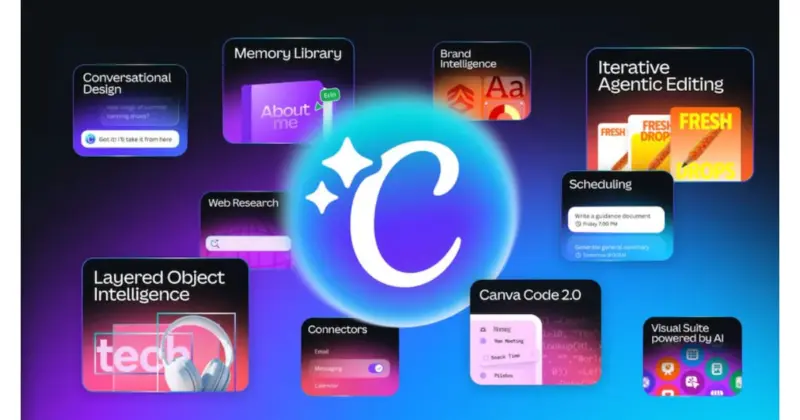
At the heart of Canva AI 2.0 is an agentic system that understands layered designs and can carry out multi-step tasks through a conversational interface. Users can describe a campaign in text, speak a brief, or upload a rough sketch, and the Canva AI assistant selects the right tools across the platform to turn that idea into presentations, social posts and other formats. Backed by the Canva Design Model, the system interprets layout, hierarchy and styling so that generated content remains fully editable, not just a flat image.
The update also deepens support for multi-channel design. Canva's chatbot can now generate entire campaign packages from a single prompt, producing assets tailored to different platforms without repeatedly re-entering the same instructions. Features such as Magic Layers and what Canva calls layered object intelligence allow users to adjust individual elements, like fonts, backgrounds or lighting, while keeping the rest of the design intact.
A new Memory Library gives Canva AI 2.0 persistent memory, enabling it to remember brand guidelines, preferred fonts and past choices to keep future designs on-brand by default. Canva says the assistant becomes more useful over time as it learns from each project, surfacing suggestions and layouts that better fit a team's style. Brand intelligence tools extend this further by automatically applying connected brand assets and updating existing work when guidelines change.
To fit into daily workflows, Canva AI 2.0 introduces connector-based integrations with services including Slack, Gmail, Google Drive, Google Calendar, Notion, Zoom and HubSpot. These connectors let the system pull context from messages, files and meetings, then generate items such as newsletters, sales decks or meeting summaries directly inside Canva. A scheduling feature allows users to set recurring tasks, like weekly batches of social posts, that Canva AI runs in the background, even when they are offline.
Canva AI 2.0 also adds a web research tool that gathers information from the open internet and inserts it into designs in structured, editable form. Alongside improvements to Canva Code and Sheets AI, the company is positioning the suite as part of a broader shift from a simple design website to an AI-powered creative operating system. For businesses, marketers and educators, that could mean faster asset creation, closer brand control and less manual work stitching together different apps.
The move underscores how rapidly agentic AI is moving into mainstream productivity tools, not just specialist software. If Canva AI 2.0 delivers on its promise of reliable automation across campaigns, it is likely to intensify pressure on rival platforms to offer similar end-to-end, memory-driven design assistants.