

The Hindu New Year of 2026, referred to as Nutan Varsh Prarambha, will commence on Thursday, March 19, heralding the start of a new cycle in the Vikram Samvat calendar, one of the most ancient traditional calendars in India.
This new Vikram Samvat year will last until approximately March-April 2027.
In the regions of Maharashtra and Goa, this day is celebrated as Gudi Padwa, which signifies the first day of the Chaitra month in the Hindu lunar calendar. This festival is widely recognized as the Marathi and Konkani New Year, symbolizing fresh starts, prosperity, and hope.
Gudi Padwa also aligns with the onset of spring and the harvesting of rabi crops, making it a significant seasonal festival for agricultural communities. The event highlights the deep connection between traditional festivals, nature, and farming cycles.
According to Hindu mythology, this day is thought to represent the moment when Lord Brahma created time and the universe, rendering it a spiritually meaningful beginning to the year.
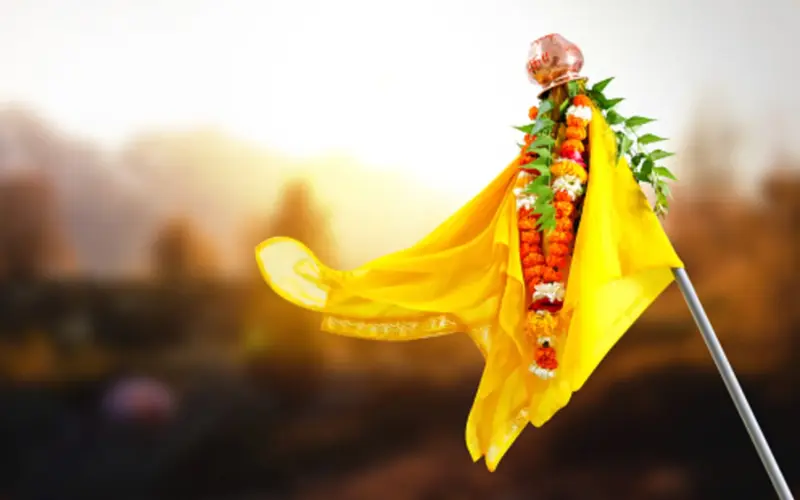
The celebration involves raising a 'Gudi', a decorative flag-like structure that is placed outside homes or on balconies. Typically, it consists of a vibrant cloth tied to a bamboo pole, embellished with neem leaves, mango leaves, flowers, and an inverted silver or copper pot at the top. The Gudi is viewed as a symbol of victory, prosperity, and good fortune.
Families commemorate the day with special prayers, festive meals, and traditional rituals. Homes are cleaned and adorned with rangoli, and many individuals kick off the new year with cultural gatherings and community festivities.
Thus, Gudi Padwa signifies not just the start of a new calendar year but also a celebration of renewal, prosperity, and the essence of new beginnings.