




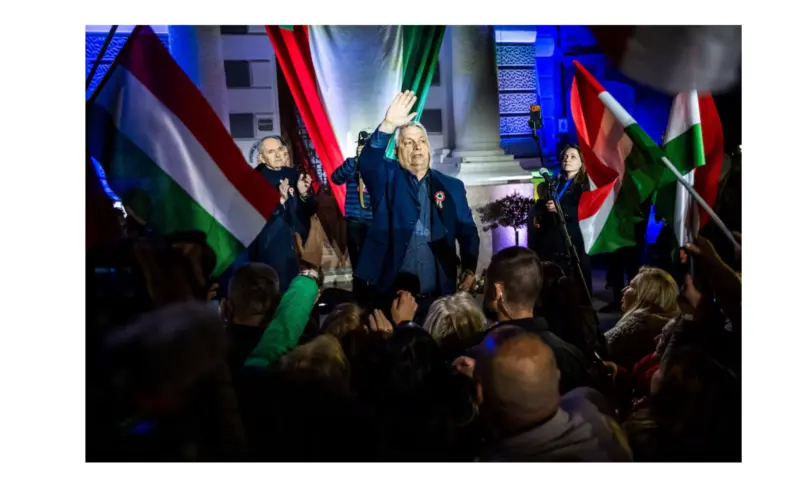

Hungary is preparing for possibly its most significant election in over a decade, with Prime Minister Viktor Orbán facing the greatest political challenge he's faced since assuming office in 2010. Following 16 years of virtually uninterrupted rule, recent opinion polls are showing that the opposition Tisza party, headed by former government official Peter Magyar, is capable of beating Orbán's long-established Fidesz party.
This election is being closely monitored not only in Hungary, but also throughout the greater European and American societies due to Orbán serving as one of the world's top leaders in the current world conservative political movements. A defeat for Orbán would have ramifications that extend well beyond Hungary and may serve as a blow to many of Europe's other right-wing populist political parties.
Opinion polling for the last few months indicates an enormous shift in public sentiment in Hungary, with many citizens now trusting that it is possible to see a political change within Hungary for the fist time in several years. Many analysts attribute voters' ongoing dissatisfaction with the government related to the rising economic costs of living, widespread allegations of governmental corruption, and concerns regarding democratic institutions as a significant factor in driving the opposition's growing popularity.
The major themes in Orbán's campaign are stability; nationalism; and peace. He argues that countries such as Ukraine can only be resolved through himself and that he is the only one who can keep Hungary away from the larger world affairs that come with living near them.
Orbán has focused on prioritising energy and political relationships with Russia. This support has resulted in Hungary often being on the opposite side of France and Germany as well as with the rest of the Nato alliance.
The main focus of the campaign for Magyar, who is leading the Opposition, is domestic issues like healthcare; education; public services; and eliminating corruption. After previously being part of Orbán's team, he shows himself to be a reformer who seeks to return democracy to Hungary and restore Hungary's positive relationship with the European Union.
Based on the outcome of the election, it will be clear to see whether or not Hungary remains on its current path or shifts towards a pro-European and reform-centred government. In addition, as polling continues to tighten and the amount of campaigning takes place throughout both rural and urban areas, this election may serve as the turning point not only for Hungary but for all of Europe.