
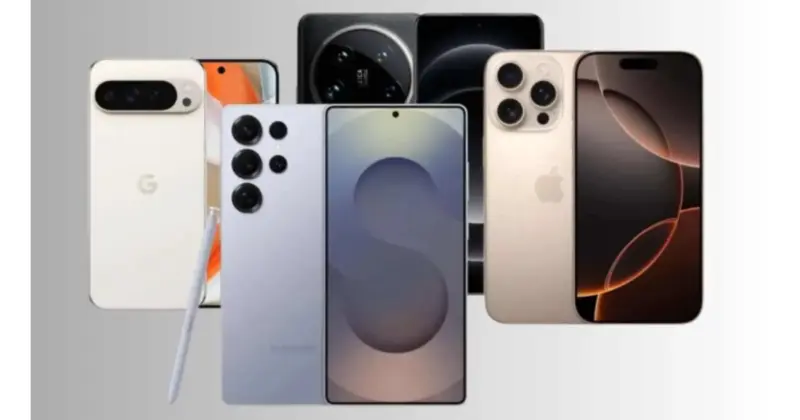

India smartphone shipments Q1 2026 fell to their weakest first-quarter level in six years, underscoring a market under clear pressure even as a few brands buck the trend.
India's smartphone shipments declined 3 percent year-on-year in the first quarter of 2026, marking the weakest January-March performance since 2020, according to Counterpoint Research's Monthly India Smartphone Tracker. The research firm links the drop to rising memory prices, broader component cost inflation, price hikes across segments and muted consumer demand, particularly at the entry level. To cope with higher input costs and currency fluctuations, roughly one-third of planned new launches were moved into the quarter, but this did little to lift overall volumes.
Vivo (excluding its iQOO sub-brand) emerged as India's top smartphone vendor in Q1 2026 with a 21 percent market share, helped by a busy launch calendar, strong mid-premium demand for its latest V-series models and tighter control over retail channels. Samsung took second place, supported by discounts on Galaxy A-series phones such as the Galaxy A07, A36 and A56 and robust early demand for the new Galaxy S26 flagship range, particularly the Galaxy S26 Ultra. Oppo retained third position with a 14 percent share, driven by its budget A and K series and the Reno line-up, and was the fastest-growing among the top five with 8 percent year-on-year growth.
Xiaomi, including its Poco sub-brand, ranked fourth as double-digit growth in the Rs. 10,000-20,000 price band lifted its share; Xiaomi accounted for 7.9 percent of shipments while Poco held 4.8 percent. Realme finished fifth with 11 percent, backed by strong online sales and demand for models like the Realme P3 Lite and Narzo 80 Lite. Apple secured a 9 percent share thanks to sustained interest in the iPhone 17 series, further consolidating its premium position.
Nothing (including CMF) stood out as the fastest-growing brand overall, posting 47 percent year-on-year growth on the back of aggressive offline expansion, its first exclusive store in India and the popularity of the Phone 4a series. Google recorded the quickest growth in the premium segment above Rs. 45,000, with shipments rising 39 percent year-on-year. OnePlus, meanwhile, dominated the affordable premium band between Rs. 30,000 and Rs. 45,000 on Amazon with its Nord series and the new Nord 6. On the silicon side, MediaTek powered 49 percent of all smartphones shipped, while Qualcomm led the premium Android tier with more than half of shipments.
Counterpoint estimates that more than 80 smartphone models saw an average price increase of around 15 percent in Q1 2026 alone, and it expects prices to rise by a further 15-20 percent in the second quarter as memory and other component costs continue to climb. Research director Tarun Pathak warns that the market is likely to see a double-digit shipment decline in Q2 2026 amid elevated memory prices and weak demand at the lower end. He projects that India's smartphone market will contract by about 10 percent for full-year 2026, noting that memory prices have already quadrupled over the past three quarters and are lengthening replacement cycles as devices become less affordable for many buyers.
Despite the downturn, the latest India smartphone shipments Q1 2026 data shows that brands with focused portfolios, strong retail execution and clear price-performance propositions can still grow even as the broader market shrinks. For consumers, the squeeze on affordability is likely to persist in the near term, but intensified competition in mid-range and premium segments may translate into richer features, more capable chipsets and longer software support as manufacturers fight harder for every upgrade.