





OpenAI Erdos breakthrough is the phrase echoing across maths and AI circles after the company said one of its internal reasoning models had cracked a famous 80-year-old geometry puzzle.
OpenAI claims its model has produced a new proof that overturns the planar unit distance problem, a conjecture first posed by Hungarian mathematician Paul Erdős in 1946.
The problem asks a deceptively simple question: for a given number of points on a flat plane, how many pairs can sit exactly one unit apart.
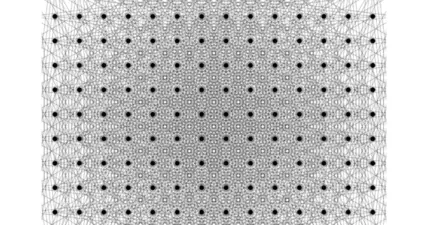
For decades, mathematicians believed the best arrangements looked roughly like square grids, and that the number of such "unit distance" pairs grew only slightly faster than linearly with the number of points.
OpenAI says its model has now found a completely different, infinite family of configurations that creates significantly more unit distances, disproving that long-held belief.
According to the company, this OpenAI Erdos breakthrough is "the first time AI has autonomously solved a prominent open problem central to a field of mathematics".
The result was later compressed into a shorter, human-verified proof by mathematicians including Noga Alon, Melanie Wood and Thomas Bloom.
The OpenAI Erdos breakthrough arrives after a bruising episode in 2024, when former OpenAI vice-president Kevin Weil claimed that GPT-5 had solved 10 previously unsolved Erdős problems.
Researchers, among them Thomas Bloom, showed that the system had in fact rediscovered existing solutions buried in the literature rather than proving anything new, and the post was later deleted.
That controversy prompted sharp criticism from senior AI figures such as Yann LeCun and renewed calls for caution around scientific claims made via social media.
This time, OpenAI has stressed that outside experts have examined the new argument and that the model in question is a general-purpose reasoner, not a tool built specifically for geometry.
Beyond the headline, mathematicians say the OpenAI Erdos breakthrough is intriguing because the model tackled a geometric puzzle using deep ideas from algebraic number theory, far from the problem's original framing.
It appears to have linked distant areas of maths in a way that human researchers had not tried, before specialists refined and formalised the argument.
Bloom has described AI as helping scholars explore "the cathedral of mathematics we have built over the centuries", and the OpenAI Erdos breakthrough will be seen as an early test of that promise.
If the proof continues to hold up under scrutiny, it will not only close a long-standing chapter in discrete geometry but also sharpen debates over how far AI should be trusted as a creative partner in future scientific discovery.