
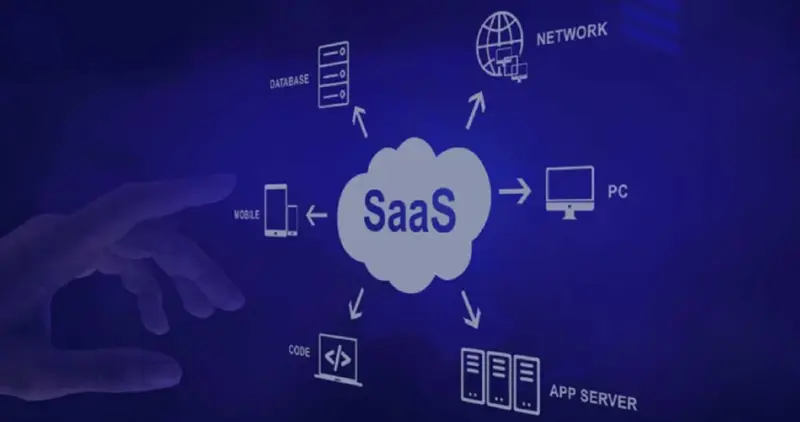

Oracle, Salesforce and others argue proprietary data-and rapid AI adoption-will determine which software companies survive the generative-AI era
Executives across the software industry are pushing back against growing fears that artificial intelligence could wipe out traditional software companies.
The latest response came from Mike Sicilia, a senior executive at Oracle, who told analysts the rise of AI coding tools does not signal the end of software-as-a-service (SaaS) companies.
"You've all heard that new companies coding quickly using AI will spell the death of SaaS," Sicilia said during a conference call. "I don't agree with that at all."
Instead, he argued the real risk would be failing to adopt AI quickly-something Oracle claims it is already doing.
Investor anxiety surged last month after AI startup Anthropic introduced plugins for its Claude Cowork agent, a digital assistant designed to automate business tasks such as organizing customer data and guiding workflows.
The announcement triggered a sharp selloff that erased nearly $1 trillion in value from software stocks, raising fears that AI agents could replace many traditional enterprise applications.
Since then, software CEOs have used earnings calls to reassure investors that AI will reshape their products-not replace them.
Oracle executives say their strategy is not simply adding AI features to existing products but using AI to build entirely new automated business processes.
The company also benefits from extensive enterprise datasets spanning finance, supply chains and human resources, which analysts say are difficult for AI startups to replicate.
According to Rebecca Wettemann, Oracle's flexible cloud strategy also strengthens its position.
Its database technology can run across multiple cloud platforms, giving companies more freedom as the AI ecosystem evolves.
The market appears to be responding: Oracle shares jumped about 10% after the company forecast that AI demand would boost revenue for several quarters.
Meanwhile, Salesforce CEO Marc Benioff has framed the moment as a transformation rather than an existential threat.
Benioff dismissed fears of a so-called "SaaS-pocalypse," arguing Salesforce has evolved into an enterprise platform that builds and governs AI agents.
The company's defense lies in its vast troves of proprietary data. Salesforce's platform manages more than 50 trillion records of customer and sales-process information, data that AI systems alone cannot easily recreate.
Its Agentforce service-designed to deploy and manage AI agents inside companies-is still a small business but central to Salesforce's long-term strategy.
Even Jensen Huang, chief executive of Nvidia, recently dismissed the idea that AI will eliminate software entirely, calling the argument "illogical."
Many analysts believe the companies most likely to withstand AI disruption are those with large, exclusive datasets.
"Proprietary data is the deepest moat by far," said James St. Aubin.
Businesses that own years of financial, legal, technical, or operational data can use it to train specialized AI systems competitors cannot easily replicate.
Another protective factor is switching costs. Many enterprises have built their internal workflows around tools like Salesforce, making it expensive and risky to replace them.
Still, analysts warn that some software firms face greater risk than others.
Human-resources software company Workday, for example, relies heavily on HR and payroll data-datasets that often follow standardized formats across industries.
Because that information is more uniform, AI tools may find it easier to replicate applications built around it.
Workday recently reinstated founder Aneel Bhusri as CEO to guide the company through what it called a rapidly evolving AI era. The firm's shares have fallen more than one-third this year, reaching a five-year low after a weak sales outlook.
Bhusri maintains that decades of embedded business processes inside Workday's systems remain difficult for AI to reproduce.
"AI… reasons, predicts and recommends based on patterns and likelihoods," he told analysts. "It is not yet a system that follows the same steps and gets the same result every time."
Despite the recent market panic, some investors believe the software sector could emerge stronger.
Higher productivity from AI tools could ultimately increase hiring, innovation, and demand for enterprise platforms, creating opportunities for established players to reinvent themselves.
"I would not write the obituary for some of these companies just yet," said Ocean Park's Aubin.
The real question may not be whether AI replaces software companies-but which ones evolve fast enough to survive the shift.