
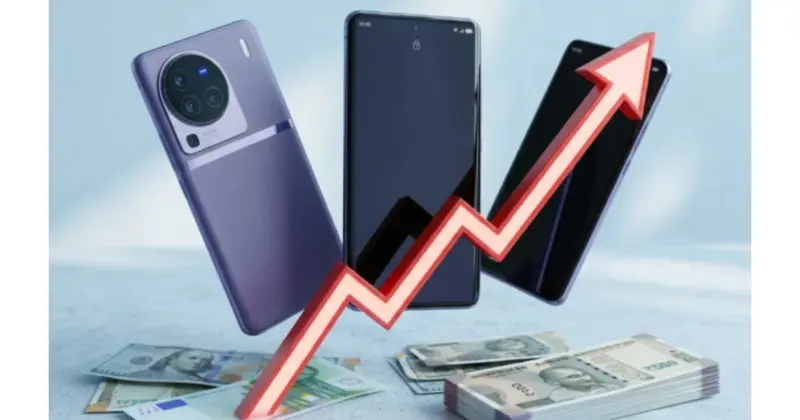

Smartphone price hike India is becoming hard to ignore for buyers walking into stores this month. A global crunch in memory chips, used for RAM and storage, is pushing brands to quietly raise tags across budget and mid-range devices.
Analysts say a worldwide memory shortage that began in late 2025 has sent DRAM and NAND prices sharply higher, as chipmakers prioritise lucrative AI data centres over mass-market phones and PCs. Counterpoint Research data shows memory prices jumped by as much as 40-50 per cent in the final quarter of 2025 and could climb further through early 2026, lifting the overall cost of building each device.
In practice, that means more of a smartphone's bill of materials is now swallowed by RAM and storage alone, especially on models with 16GB RAM or higher. Industry trackers warn that entry-level buyers in markets such as India may feel the squeeze most, as brands either cut specifications or pass on the smartphone price hike India directly to consumers.
Realme has revised prices across a wide spread of models, roughly between ₹10,000 and ₹40,000, with most variants getting a ₹1,000 increase and some P-series phones up by as much as ₹3,000. For instance, the Realme C83 5G 4GB + 64GB variant now costs ₹14,499, compared with a launch price of ₹13,499 in early March, while the 6GB + 128GB option has moved to ₹18,499 after a ₹1,000 hike.
Xiaomi's Redmi 15C 5G, Redmi 15 5G and Redmi Note 15 5G lines have also seen increases of between ₹1,500 and ₹3,000 per variant, effective from 1 April 2026. In parallel, OnePlus has raised the price of its OnePlus 15R in India by about ₹2,500, taking the 12GB + 256GB version to roughly ₹50,499 and the 12GB + 512GB model to about ₹55,499.
Even newer challenger brand AI+ has introduced modest revisions, with entry-level Ai+ Pulse and Ai+ Nova 5G smartphones now up by ₹500 to ₹1,000 across 4GB to 8GB RAM variants. These changes keep sticker prices under ₹12,000, but they underline how wide the smartphone price hike India has spread, from established players to budget-focused newcomers.
For now, there is little sign of quick relief: researchers expect memory supply to remain tight into 2027, suggesting that price-sensitive buyers may need to shop more carefully, wait for promotions, or accept lower memory configurations as the new normal.