


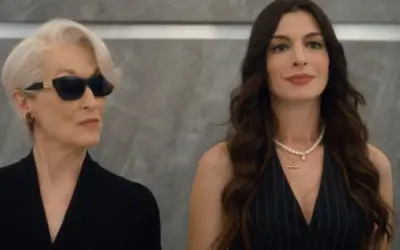

Having a tough boss means living under a very demanding expectations perhaps they expect you to anticipate their every need most importantly the ones they never verbalize maybe they expect you to work long hours at great personal cost to the rest of your life, may be they expect you to have a great fashion sense, a really swanky fashion sense, one that in some cases can never rise to actual expectations themselves because your boss, The Devil wears Prada 2.
The Devil Wears Prada hit the theatres 20 years ago and the sequel is finally here with the same cast. The Devil Wears Prada 2 released on 1st of May, written by Aline Brosh Mckenna m, directed by David Frankel starring the legendary Chameleonic Meryl Streep, Anne Hathaway and Emily Blunt. It is the follow up of The Devil Wears Prada, a 2006 film about a reporter named Andy Sachs who gets a job at Runaway magazine as an assistant to Miranda Priestly played by Meryl Streep - an impassive ruthless boss. As an assistant Andy works alongside Emily Charlton played by Emily Blunt. It's a fish out of water story and at the end Andy parts her way with the Runaway magazine.
After diminishing a smart girl's faith in herself with a single, glacial blink, Miranda Priestly makes a triumphant comeback in a sequel that is less of a continuation and more of a viciously sophisticated autopsy of the contemporary digital landscape. Twenty years after Andy Sachs left Runway in a Parisian courtyard, the narrative resumes. She is now a well-known investigative journalist-that is, until a text message during an awards ceremony eliminates her entire workplace, which is, to be honest, the most 2026 thing imaginable. Miranda Priestly, meanwhile, is dealing with her own issue after neglecting to screen a puff piece for a company that was found to be exploiting sweatshop labor. In an attempt to protect the magazine's reputation, Irv Ravitz pushes Andy back into Runway's orbit as features editor without Miranda's consent. What sets this apart from the typical nostalgia-driven sequel is its sincere exploration of something genuine. Creating a 2026-set fairy tale about a spirited individual who stumbles into the glamorous, carefree world of glossy magazines would have been impossible-because that world no longer exists. Instead, the film tells a poignant story about a group fighting to save something already on the brink. There's a bittersweet undertone to this premise that the 2006 original never had to face, and the script cleverly allows that emotion to resonate.
Naturally, the main character is Streep. The 2026 Miranda is a traditional professional with a passion for magazines, no longer only a stock dragon-lady. She will fight to the death if her world is dying, and despite her extraordinary calm, Streep does a fantastic job of capturing that passion. It's one of her more subtly heartbreaking performances; instead of being imperious for its own sake, it's imperious because she sincerely believes in something that is worth preserving. Miranda's anguish over perhaps losing her job and the devaluation of everything she's created, even the artistry and beauty she genuinely felt she supported, are the most poignant emotional moments.
Although Hathaway is endearing and captivating in the role of Andy, she is still a little too dreamy and wide-eyed to be completely convincing. Stanley Tucci's Nigel continues to be the most subtly heartbreaking character in the room-someone who knows exactly what's being lost and laments it silently-while Emily Blunt, playing Emily Charlton again as a luxury-group executive, contributes the film's sharpest comedic timing.
There are clear structural problems with the weaknesses. The story doesn't have enough tension to keep the movie going, and while the cast pretends to care about "serious journalism," their beliefs fall apart too quickly when they see Manhattan real estate that no real reporter's salary could afford. The ending is the movie's biggest flaw: it's strange to have a billionaire come in to "save" the future of the free press. After two hours of dealing with the sad truth of the media industry's collapse, going back to a corporate fairy tale feels like a lack of courage.
The Devil Wears Prada 2 is still much better than a sequel than it had any right to be . It doesn't have the sharp, sour bite of the original. Instead, it's warmer, more elegiac, and maybe a little too comfortable in its own Armani Privé jumpsuit. But seeing Streep and Hathaway go around the same orbit again is a real, undeniable pleasure. The movie's emotional impact comes from its skillful writing. Flowers for spring? Not at all revolutionary. But you still enjoy the view when the arrangement is this complicated.