
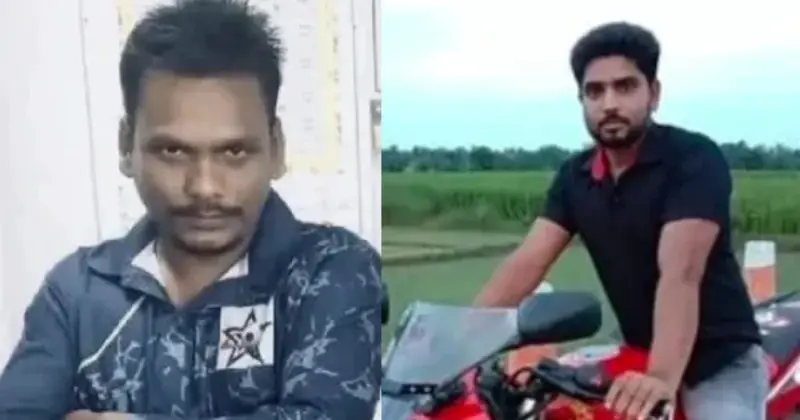

The killings of Hindu men across Bangladesh in December 2025 are not isolated incidents but reflect a recurring pattern of vulnerability faced by the country's Hindu minority.
In less than a month, at least twelve Hindus lost their lives, many in incidents involving mob violence and extrajudicial punishment. The speed and frequency of these attacks demonstrate how quickly minorities become exposed when political instability intersects with religious radicalism and weak institutional safeguards.
Those killed included Dipu Chandra Das, Amrit Mondal (also known as Samrat), Dilip Bormon, Prantosh Kormokar, Utpol Sarkar, Zogesh Chandra Roy, Suborna Roy, Shanto Das, Ripon Kumar Sarkar, Pratap Chandra, Swadhin Chandra and Polash Chandra. While officials have treated each case as an independent criminal matter, the broader pattern suggests systemic insecurity rather than coincidence.
Related Articles
The situation points to a deeper strain of radicalism embedded within segments of Bangladesh's socio-political landscape. Communal hostility, often reinforced by sustained anti-India rhetoric, has gradually eroded the sense of safety among minorities. Increasingly, hostility toward Hindus is framed not as extremism but as ideological resistance, blurring the line between political mobilisation and communal intimidation. Narratives of reform and student-led activism have, in some instances, provided cover for more radical agendas, enabling extremist mobilisation while positioning Bangladesh in rhetorical opposition to India's expanding global profile. In this environment, domestic minorities have borne the consequences.
Several of the December killings were triggered by blasphemy allegations-accusations that often emerge without formal complaints or evidence but are sufficient to incite mob violence. In other cases, victims were accused of criminal activity, yet the outcome remained consistent: vigilante punishment replaced lawful arrest and judicial process.
The case of Dipu Chandra Das illustrates this pattern. A garment worker in Mymensingh district, he was accused of making derogatory remarks about Islam during a workplace event. A mob assaulted him, tied him to a tree, hanged him and set his body on fire. Investigators later reported finding no direct evidence of blasphemy, underscoring how quickly unverified claims can escalate when state protection fails.
Similarly, Amrit Mondal was beaten to death in Rajbari district. Authorities later highlighted his alleged criminal background, downplaying any communal dimension. Yet regardless of the accusations, his death at the hands of a mob rather than through due process reinforced the perception among many Hindus that legal safeguards are inconsistently applied when minorities are involved.
These incidents occurred amid broader political unrest and protests that strained law enforcement across multiple districts. As in previous periods of instability, Hindu communities appeared disproportionately exposed-targeted either through organised hostility or because they lacked political backing.
Religion has increasingly been instrumentalised in political mobilisation. Radical Islamist factions and affiliated student groups have relied on religious nationalism to consolidate support, particularly in politically charged periods. In the absence of substantive governance agendas, identity-based politics has flourished, with Hindus often cast as convenient targets.
The interim administration led by Mohammad Yunus has condemned the violence and reiterated its opposition to mob justice. While arrests have been made in some cases, post-incident responses offer limited reassurance to affected communities. Genuine protection depends on prevention, swift intervention and consistent accountability-areas where repeated failures have deepened mistrust.
The persecution of Hindus in Bangladesh is marked by repetition: repeated accusations, repeated mob mobilisations, repeated killings and repeated official assurances that fail to prevent recurrence. These events are not anomalies but part of a recurring pattern in which political unrest, radical mobilisation and geopolitical rhetoric converge, leaving minorities acutely vulnerable. Without firm commitment to due process and equal protection under the law, such cycles are likely to persist.