
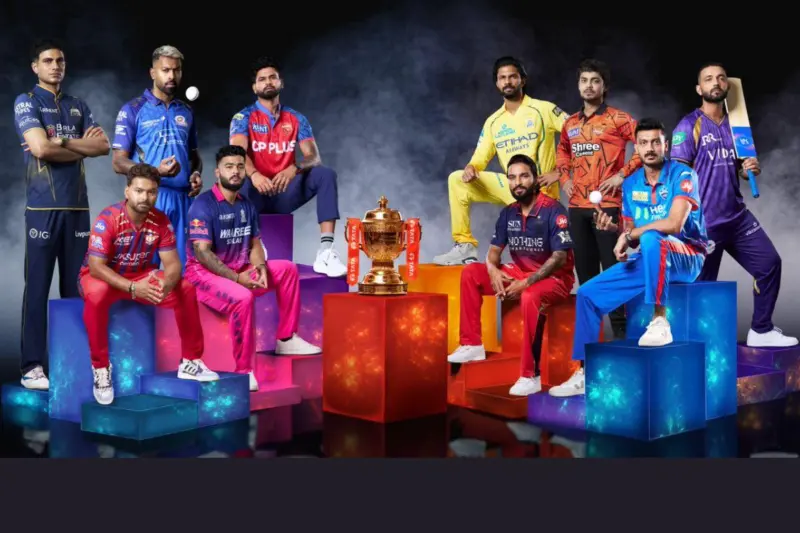

'When we go into the next cycle of bilaterals, we will try to see whether we can get a bigger window, so we can go from 74 to 94 games.'
IMAGE: Time is the only barrier to the Indian Premier League's billion-dollar rise, says Arun Dhumal. Photograph: BCCI
Key Points
- IPL expansion to 94 matches depends on a larger global calendar window.
- Bilateral cricket schedules remain the biggest constraint until 2027.
- Franchise leagues are reshaping global cricket structure.
- Player workload and burnout are rising concerns across formats.
At the helm of the Indian Premier League, the world's richest cricket league, Arun Singh Dhumal is overseeing a property that has redefined the economics of the sport. The IPL, whose current media rights alone are worth about $1.24 billion a season, continues to grow in scale, influence and ambition.
Yet, the IPL's next phase of expansion is not constrained by demand, but by time, Dhumal says.
in a wide-ranging conversation with the Financial Times newspaper, Dhumal laid out the IPL's biggest challenge: Navigating an already saturated global cricket calendar.
The calendar crunch behind IPL expansion
The IPL currently operates within a tightly defined window between mid-March and the end of May -- a constraint shaped as much by weather as by international commitments.
Responding to questions about expanding beyond 74 matches, Dhumal explained to the Financial Times: 'For the IPL to move from 74 to 94, we really need a bigger window. What we have seen in this Future Tours Programme cycle is that most of the international calendar is already spoken for by bilateral series between national teams, so we do not have much room.'

IMAGE: Indian Premier League Chairman Arun Dhumal says there are no immediate plans to add teams despite strong investor interest. Photograph: ANI Photo
Even stretching the schedule within the current timeframe presents challenges, Dhumal explained. 'If we try to go from 74 to 94 games in the current window, we will end up having more double-headers... That does not work well for broadcasters. We have to look at their interests too. That is why we have restricted ourselves to 74 games.'
The solution, he suggested, lay in reshaping the broader ecosystem.
'When we go into the next cycle of bilaterals, we will try to see whether we can get a bigger window, so we can go from 74 to 94 games.'
A shifting global cricket landscape
Dhumal saw the IPL's constraints as part of a wider transition in cricket, where traditional bilateral series are gradually replaced by franchise leagues.
'There is definitely less interest in some bilateral games,' he told the Financial Times. 'That is why countries are coming up with their own leagues... The Hundred, the Big Bash League, the UAE's ILT20, SA20 and the Caribbean Premier League.'
This shift, he saif, could ultimately benefit the IPL.
'If this is the trend, then every country will want fewer bilaterals... and then there is scope to enlarge the IPL window. We are hoping for more discussions with all the countries and colleagues. If that works out, it should work out for everyone.'
Despite strong investor interest, expansion in terms of franchises is not imminent.
'That is also why we are not thinking of extending the number of teams right now. With the current number of teams, you can still increase the number of matches.'
Player workload and the 'new world order'
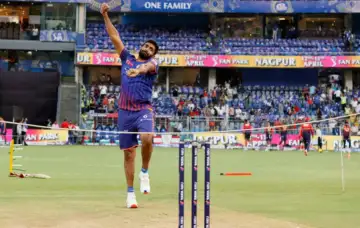
IMAGE: India and Mumbai Indians' Jasprit Bumrah has been at the centre of the workload management debate. Photograph: BCCI
The rise of leagues has also intensified pressure on players juggling multiple formats and competitions.
'Cricket is the only major sport where you have three formats... If a player is playing all these formats and all the tournaments, it will eventually lead to burnout,' Dhumal told the Financial Times.
'Those who want to play all formats and all tournaments will have to decide what formats to pick up and what tournaments to prioritise,' he said.
Balancing global and domestic priorities
The IPL's dominance raises broader questions about balance -- from overseas player limits to Indian participation in foreign leagues.
'The IPL is primarily Indian, so most of the playing 11 should be Indian. We also want to maintain a balance for world cricket.'
On Indian players participating abroad, he cited scheduling realities.
'If an Indian player is committed to all formats and tournaments, where is the time to go and play other leagues?' he asked.