
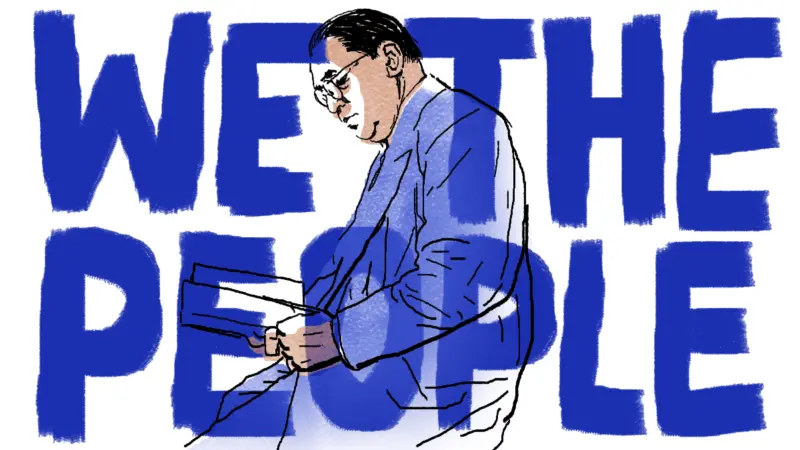

'A genuine tribute to Dr Ambedkar does not lie in selective invocation. It lies in asking a harder question: Is the Constitution still doing its job -- restraining even assertive majorities?' asks Manoj Mohanka.
Illustrations: Dominic Xavier/Rediff
Key Points
- Ambedkar balanced stark social realities with a Constitution designed to restrain divisions, prioritising individual rights over religious or community blocs.
- Modern comparisons of India with theocratic States overlook the deliberate Constitutional choice of secular, citizen-driven sovereignty embedded by framers.
- Rising Hindu majoritarian sentiment raises concerns, but Constitutional structures and institutions continue to function without fundamental alteration.
- Policies like CAA and Article 370 spark debate, yet have not changed the core framework of citizenship or sovereignty.
- Ambedkar's concept of Constitutional morality remains critical as societal behaviour increasingly shapes the gap between law and lived reality.
On Dr B R Ambedkar's 135th birth anniversary, we keep falling into the same trap: Squeezing today's India into neat historical analogies that the Constitution was deliberately built to resist.
Dr Ambedkar never sugar-coated anything. If anything, he called a spade a shovel. In Pakistan or the Partition of India, he laid out the Hindu-Muslim divide with raw honesty -- the kind that still makes people shift or squirm uncomfortably in their seats.
He doubted whether one nation could survive when two communities saw themselves as separate political blocs. His take on Muslim separatism was blunt. Really blunt. The sort you couldn't possibly post on social media today without sparking a fierce argument.
But when it came time to frame the Constitution, he showed real steel and balance. He refused to let those fears harden into rigid rules.
He saw the fractures clearly -- in caste, religion, and community -- yet did not simply mirror them in the document. He built restraints against them.
No Hindu State. No religious test for citizenship. Rights for individuals -- not blocs. For him, a Constitution wasn't a snapshot of society's worst habits. It was a full-fledged check on them.
That choice still matters when we judge where India stands today.
Whenever communal anxieties run high -- as they increasingly do -- it becomes tempting to map India onto Pakistan, Afghanistan, Iran's theocracy, or Bangladesh's state religion.
The fear is familiar: That the Constitutional vision of the Republic could be gradually supplanted by a more explicitly religious -- specifically Hindu -- conception of nationhood.
But those parallels, however intuitive, are incomplete.
To see why, we need only turn to the Constitution itself.
The Constituent Assembly chose a different path with deliberation. Sovereignty would rise from 'We, the People', not from any faith, in what was -- and remains -- a deeply religious yet fractured country.
Citizenship and rights would rest with the individual. That was no accident. It was a conscious civiliSational decision.
The Constitution names no State religion. Legitimacy flows upward from citizens, not downward from any theology. Rights are framed in universal terms, and courts are the institutions meant to guard them.
The basic framework has held -- messy, contested, and far from perfect, but still standing.
Hindu Majoritarianism And Constitutional Limits
Much of today's discomfort centres on the rise of assertive Hindu majoritarianism, particularly under the ruling party at the Centre, the BJP.
In a democracy as diverse as ours, such impulses are probably inevitable. The real question isn't whether they exist. It's whether they have rewritten our Constitutional rulebook.
Dr Ambedkar remains a steadfast guide here. He opposed the communal politics that led to Partition. He warned just as forcefully against Hindu majoritarianism.
'If Hindu Raj does become a fact,' he wrote, 'it will, no doubt, be the greatest calamity for this country... Hindu Raj must be prevented at any cost.'
He also flagged the dangerous idea of the 'divine right of the majority' -- where majority dominance is recast nationalism and minority safeguards dismissed communalism.
He understood that such impulses arise naturally in diverse societies. The Constitution's task was not to erase them, but to contain them through law and institutions.
The more difficult challenge lies outside formal structures -- in everyday public life. When political rhetoric, cultural signalling, and social pressures quietly shrink space for dissent or impinge on minority trust, something more insidious begins to take hold.
This is where Dr Ambedkar's idea of Constitutional morality becomes critical. He insisted that it was not natural; 'it has to be cultivated.'
Democracy in India, he had warned, was only 'a top-dressing on an Indian soil which is essentially undemocratic.'
Seventy years after Dr Ambedkar's passing, we are not witnessing a Constitutional collapse. But if majoritarian sentiment drifts from electoral politics into administration, culture, and daily life without restraint, the gap between Constitutional text and lived reality widens.
Remaining alert to that drift is not alarmism -- it is integral to Dr Ambedkar's realism.
On specific policies, debate often turns shrill. The Citizenship (Amendment) Act fast-tracks citizenship for persecuted non-Muslims from certain Muslim-majority countries.
Critics argue it introduces religion into citizenship logic. Supporters see it as correcting past oversights for vulnerable refugees.
Whatever one's view, it has not altered the rights of existing citizens or the basic source of sovereignty.
The abrogation of Article 370 involved questions of security and integration that extend beyond religion or demography.
Waqf reforms and laws regulating religious bodies follow a long-standing Indian principle: Religion does not sit above the State -- it remains subject to legislation and judicial scrutiny.
Courts continue to intervene when provisions overreach and infringe.
The Basic Structure doctrine continues to safeguard secularism, democracy, the rule of law, and judicial review.
But Constitutional doctrine alone cannot sustain a republic. Dr Ambedkar understood that the deeper challenge lies in society internalising Constitutional morality.
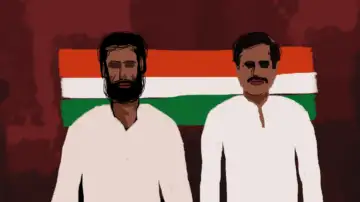
Constitutional Test
Public displays of religiosity -- mega temple events with participation by those holding public office, symbolic assertions -- are often read as signs of structural transformation.
The real test is narrower: Has the State's Constitutional identity shifted? Is citizenship now graded by faith? Do courts still exercise meaningful authority? Does ultimate power still flow from the people?
For now, the Constitution holds.
Prejudice, bureaucratic bias, and communal friction remain real. Dr Ambedkar never expected society to suddenly align with Constitutional ideals.
That is precisely why institutional guardrails were built -- and why they have endured decades of amendments and political change.
India remains loud, divided, and contradictory -- the kind of complex democracy Dr Ambedkar anticipated in a country of this scale and diversity.
Governments still lose elections. Laws are still challenged in court.
Public debate remains vigorous. A 'thousand mutinies' may simmer, and the whole enterprise can at times appear chaotic. But it remains within a Constitutional order.
The Republic is not flawless. Yet it is still recognisably Constitutional -- noisy, argumentative, and in constant need of vigilance against majoritarianism seeping into everyday life.
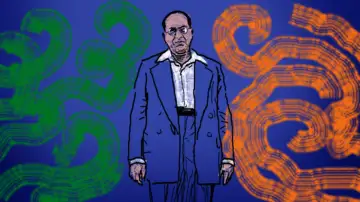
A genuine tribute to Dr Ambedkar does not lie in selective invocation. It lies in asking a harder question: Is the Constitution still doing its job -- restraining even assertive majorities?
As long as citizenship remains faith-neutral, courts retain real authority, and legitimacy rests with 'We, the People', the foundation that Dr Ambedkar gave us endures.
The long-delayed Uniform Civil Code, too, returns us to his central insight: That law must treat citizens as individuals, not as members of competing cultural blocs.
And yet, the tension he warned about persists. As Dr Ambedkar cautioned in the Constituent Assembly on November 25, 1949: 'On the 26th of January 1950, we are going to enter into a life of contradictions. In politics we will have equality, and in social and economic life we will have inequality... How long shall we continue to live this life of contradictions?'
That question still hangs over the Republic.
Manoj Mohanka serves on several corporate boards and think-tank boards and writes on religion, politics, defence and geopolitics. He has also been running a scholarship for the education of underprivileged Muslim girls for over two decades.
Feature Presentation: Aslam Hunani/Rediff