
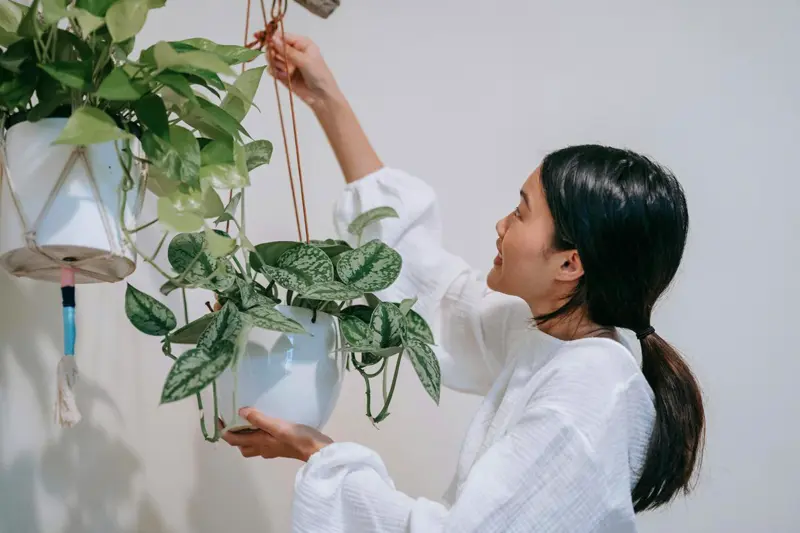

On World Health Day 2026, discover plants that improve health naturally, boost immunity, purify air and enhance well-being.
Photograph: Kind courtesy Sasha Kim/Pexels
Most of us are breathing 'second-hand' air filtered through dusty AC vents, recycled across open-plan offices and stagnant in high-rise apartments.
On World Health Day, the most effective prescription might not be a gym membership or a new supplement but a trip to that roadside nursery you drive past every morning.
Indoor plants are no longer just decor; they are functional biological tools that can filter toxins, sharpen focus and bolster your immune system.
Here is how you can turn your home into a natural sanctuary using plants that thrive in India.
Why plants are essential for better health and well-being
In an increasingly digital world, biophilia -- our innate tendency to seek connections with Nature -- is more important than ever.
Integrating greenery into your living space is no longer just about making it look good.
Natural humidity: Plants release roughly 97 per cent of the water they take in, acting as natural humidifiers that prevent dry skin and respiratory irritation in air-conditioned apartments.
Carbon offsetting: They absorb carbon dioxide and release fresh oxygen, keeping your home environment fresh and energising.
Healing environment: Studies show that the presence of greenery can lower blood pressure and reduce cortisol -- the primary stress hormone -- levels.
Top plants that boost immunity and purify air naturally
You can prioritise these plants:
Aloe vera: While its gel is known for healing skin burns and inflammation, the plant itself acts as a natural air monitor.
Its leaves will actually develop brown spots when the volume of harmful chemicals in your home becomes too high.
Snake plant: Unlike most plants, the snake plant converts CO2 into oxygen at night rather than during the day.
This makes it the ideal companion for the bedroom to improve sleep quality and nighttime breathing.
Holy basil (Tulsi): It's a staple in Indian households for a reason.
Consuming its leaves can help the body cope with stress, boost immunity and fight off minor respiratory infections.
Spider plant: One of the most resilient choices for beginners, the spider plant is a powerhouse at scrubbing the air.
It is particularly effective at eliminating formaldehyde and xylene from your living environment.
Peace lily: Beyond its elegant white blooms, the peace lily is a functional air cleaner.
It is one of the few plants capable of removing mould spores and complex airborne toxins like ammonia and benzene.
The NASA standard: Tropical air filters for Indian homes
While indoor gardening is an ancient practice, the modern 'green pharmacy' is backed by space-age science.
The landmark NASA Clean Air Study proved that certain tropical plants -- many of which are native to or naturalised in India -- are the most efficient tools for scrubbing 'volatile organic compounds' from urban apartments.
The 'root' of the matter
NASA discovered that it is not just the leaves doing the work; the root systems and soil microbes in your planters are actively breaking down pollutants found in floor cleaners, paints and new furniture.
The Indian 'clean air' trio: For the best results in our climate, prioritise these three high-performance species:
Areca palm: A staple in Indian office lobbies, this plant is a powerhouse at removing formaldehyde (found in plywood and carpets).
Money plant: It's exceptionally hardy and specifically targets benzene, a common toxin found in detergents and plastics.
Bamboo palm: It thrives in the shade of Indian apartments and is top-rated for filtering out trichloroethylene, often found in lacquers and adhesives used in home renovations.
How indoor plants improve mental and physical health
The benefits of indoor gardening extend beyond the physical air we breathe; they touch the mind and soul:
Enhanced productivity: Research suggests that having plants in your home office can increase concentration and productivity by up to 15 per cent.
The nurture effect: The act of caring for a living thing provides a sense of purpose and routine, which is a proven combatant against minor anxiety and depression.
Sound absorption: Large-leafed plants like the fiddle leaf fig can actually help dampen background noise, creating a quieter, more peaceful sanctuary.
Medicinal plants for instant relief
Beyond cleaning the air, certain plants serve as a living first-aid kit.
Having these within arm's reach allows you to manage minor ailments using natural, home-grown remedies:
Ajwain (Carom seeds plant): Extremely easy to grow in India, the leaves are a powerhouse for gut health.
Chewing on a leaf can provide quick relief from acidity or indigestion.
Lemongrass: This hardy grass contains antibacterial and antifungal properties.
Inhaling the scent of crushed lemongrass can help lower anxiety and lemongrass tea is a traditional remedy for reducing fever.
Giloy (Heart-leaved moonseed): Known in Ayurveda as Amrita, this climbing vine is a legendary immunity booster.
A decoction made from its stem is frequently used to manage chronic fevers and improve platelet counts naturally.
The strategic green map: Best spots for your indoor plants
To maximise air purification and medicinal potency, follow this room-by-room placement guide:
The bedroom: Place snake plants and aloe vera within your 'breathing zone' (approximately 6 to 8 square feet from your pillow) to improve sleep quality.
The home office: Peace lilies and money plants are excellent for reducing electronic-related stress.
The kitchen: Tulsi, ajwain and lemongrass thrive on a sunny windowsill.
These herbs love the natural humidity of a kitchen but need 4 to 6 hours of sunlight to maintain their essential oils.
The bathroom: Spider plants and English ivy absorb airborne mould and mildew, making them perfect for damp environments.
Easy ways to grow health-boosting plants at home
You don't need a massive balcony or a 'green thumb' to get started.
Follow these simple steps to kickstart your wellness garden:
Start with 'indestructibles': If you're a beginner, start with a snake plant or ZZ plant.
They thrive on neglect and low light.
The 'golden rule' of watering: Most indoor plants die from overwatering.
Check the soil; if the top inch is dry, it’s time to hydrate.
Grouping for humidity: Group plants together to create a 'micro-climate' that helps them -- and your lungs -- stay hydrated.
This World Health Day, stop looking for wellness in a bottle. Look for it in a pot.
Disclaimer: All content and media herein is written and published online for informational purposes only. It is not a substitute for professional medical advice. It should not be relied on as your only source for advice.
Please always seek the guidance of your doctor or a qualified health professional with any questions you may have regarding your health or a medical condition. Do not ever disregard the advice of a medical professional, or delay in seeking it because of something you have read herein.
If you believe you may have a medical or mental health emergency, please call your doctor, go to the nearest hospital, or call emergency services or emergency helplines immediately. If you choose to rely on any information provided herein, you do so solely at your own risk.