



'The shooters have no idea who hired them, who their target is until the last moment and have little idea of being used as utility and disposable items.'
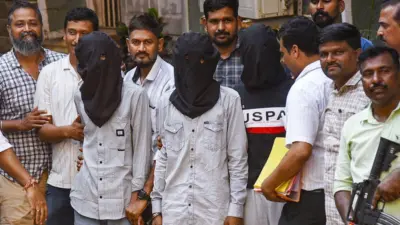
IMAGE: The Mumbai police take three accused from Esplanade court after being remanded to police custody in connection with the Tiger Shroff firing case, October 21, 2026. Photograph: ANI Photo
The attack on actor Tiger Shroff on October 18, 2026, has once again brought the Lawrence Bishnoi gang into focus.
The incident follows the firing outside movie superstar Salman Khan's Mumbai home in April 2024, the politician Baba Siddiqui's murder in October that year and the shooting at actor Disha Patani's family home in Bareilly in September 2025.
The gang has also been linked by investigators to the 2022 Punjabi singer Sidhu Moosewala's killing.
In these cases, members or associates of the Bishnoi gang have been accused of involvement, and gang members have claimed responsibility for some attacks via social media.
The shooters who allegedly targeted Tiger Shroff were young and appeared inexperienced, according to Mumbai Crime Branch officers investigating the case. One shooter's pistol jammed during the incident. Police have alleged that the attack was linked to the Bishnoi network, though the allegations are yet to be established in court.
Key points
- Exploitation of Vulnerable Youth: The gang systematically targets impoverished, unemployed young men and minors from states like Punjab, Bihar, and Haryana using false promises of money, protection, and notoriety.
- Digital Recruitment: Social media platforms such as Instagram and Facebook serve as primary hunting grounds, where recruiters identify targets and leverage curated images of patriotism and influence to attract recruits.
- The Jail & Bail Trap: Gang operatives spot petty offenders languishing in prison without bail support, arrange their release through proxies, and pull them into deeper obligations that lead to violent assignments.
- Decentralised and Disposable Structure: Recruits operate through cutouts and intermediaries, usually unaware of the wider network or masterminds, ensuring the leadership remains insulated while foot soldiers face arrest or death with minimal financial payoff.
Who are these young men, and how does Bishnoi's criminal network draw them in, turn them into shooters and use them for violent assignments?
How The Bishnoi Network Recruits
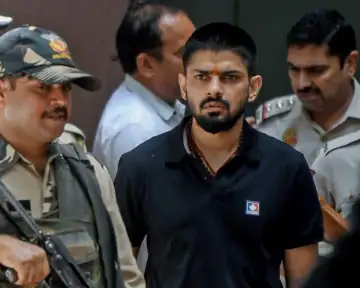
IMAGE: Gangster Lawrence Bishnoi
The recruitment pitch begins with promises of money, glamour, notoriety and protection, aimed at boys who are poor and some often not yet adults.
A nine-count US indictment returned on July 1, 2026, against Lawrence Bishnoi and eight others describes a criminal organisation that allegedly recruited from "vulnerable, disadvantaged populations in India" (external link).
It says the network used promotional videos and social media messages and allegedly targeted minors from impoverished parts of Punjab because they faced lighter sentences for violent crimes. Recruitment coordinators allegedly promised money, notoriety and protection. The allegations have not been tested in court.
Shirish Inamdar, a former additional deputy commissioner of police with Maharashtra's State Intelligence, says this follows an old pattern. He does not claim specific knowledge of Bishnoi's gang, but describes how gangs generally work based on 38 years of policing experience: "Spot the vulnerable element. Use his talent, support him. Oblige him, indoctrinate him, blackmail him and recruit him."
The raw material, he says, is "unemployed youth, especially from the lower stratum of society" with "neither education, nor family background, nor resources", and an "inbuilt anger and envy" towards the rich.
Some have already been written off at home. They become, in Inamdar's words, "like a kite with a broken string, and these gangs catch hold of that string."
The National Intelligence Agency's May 23, 2025, press release identifies the recruitment of young people (external link) as part of an alleged conspiracy by criminal gangs to raise funds and carry out criminal activities.
"Go to Punjab, Bihar, Haryana, Madhya Pradesh, Rajasthan and find out from where these criminals actually come from," says a police officer in the know of the Tiger Shroff investigation.
"That's the reason why Mumbai police don't have much information about these young kids who are recruited from poorer families in these states," the police officer adds
Social Media As The Front Door
Both the US indictment and Inamdar point to the Internet. "From there (social media posts on Instagram and Facebook), they judge the character of the person, and they contact him," Inamdar says.
A Delhi police investigation into one case found that the journey from poor homes to shootouts began on mobile phones, through an associate of gangsters Anil Pandit and Lawrence Bishnoi.
In a 2020 Chandigarh case, a 23-year-old hotel-management student contacted an aide through Facebook, hoping to join the gang, and then carried out a firing outside a businessman's house.
In its July 7, 2026, announcement, the US department of justice said prosecutors alleged that Bishnoi cultivated an image as a 'patriot', 'nationalist' and deeply religious individual through social media posts and interviews with news organisations. That public image was allegedly used to attract members and associates in India and abroad.
The Jail Pipeline
Jail is another channel.
Inamdar says boys held for petty offences often "languish" because "there is nobody to release them on bail". Gang members already inside watch them and "show sympathy". During visits, they tell outside contacts "to tap this boy".
Relatives arrange bail and, after release, he says, "they take him under their wings", then push him into an offence and help him stay in hiding.
The cop in the know of the Tiger Shroff investigation describes the same pool of recruits: "The (Bishnoi) gang hires people with petty cases. Check their backgrounds. Most of them are petty criminals with a few having cases involving shootings. They are as good as toilet paper to the masterminds."
Tightening The Hold
Once a recruit is in, Inamdar says, the gang raises the stakes: "The gravity of the offence increases... bail becomes hard, so his need for support also grows... When he comes under obligation, blackmail becomes easy."
Money keeps him loyal. "They send money to his parents. They start investing in him," he says, for a sister's wedding or farm work.
The US indictment describes new recruits in India receiving 'minimal compensation' for crimes committed for the enterprise. The detail reinforces the contrast between the inducements offered to recruits and the limited rewards they may receive for carrying out violent assignments.
Disposable, Decentralised By Design
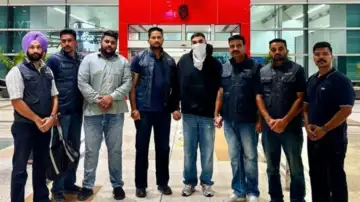
IMAGE: Punjab police's Anti-Gangster Task Force takes Karamveer Singh, fourth from right, a close associate of gangster Lawrence Bishnoi, into custody at Delhi airport following his deportation from Canada, September 15, 2026. Photograph: Punjab DGP X/ANI Photo
The US indictment says membership was decentralised: Apart from the leaders, members often knew little about one another's identities. This allegedly insulated the organisation from the crimes of its foot soldiers and limited what an arrested member could reveal.
Inamdar describes the same logic: Gangs "never create proximity" and work through cutouts, "so even if police interrogate them... they reach a dead end".
For the foot soldiers, the outcome is often bleak. "They do one firing for their own needs, then they get arrested or they die. The boss doesn't care," says the cop.
The 2024 Salman Khan firing case offers a reported example of the alleged use of hired shooters. The two accused from Bihar, Vicky Gupta and Sagar Pal, reportedly told police they were hired by Bishnoi's brother Anmol, paid around Rs 1 lakh upfront and promised another Rs 3 lakh.
Ritik Kurmi alias Roshan, one of the shooters allegedly involved in Tiger Shroff shooting originally belongs to Begusarai, Bihar.
These accounts are consistent with the cop's description of a system operating through intermediaries.
"The shooters have no idea who hired them, who their target is until the last moment and have little idea of being used as utility and disposable items," he says.
Inamdar, who has no direct knowledge of the specific case, says the underlying system is old and that the pool of young men with few options keeps it running. As he puts it, recruitment "has to do with the socio-economic and cultural fault lines of our society".