

Nayagam PP, career counsellor and founder of EduJobs360, explains how traditional engineering choices are being replaced with flexible, future-ready career paths that align with industry requirements.
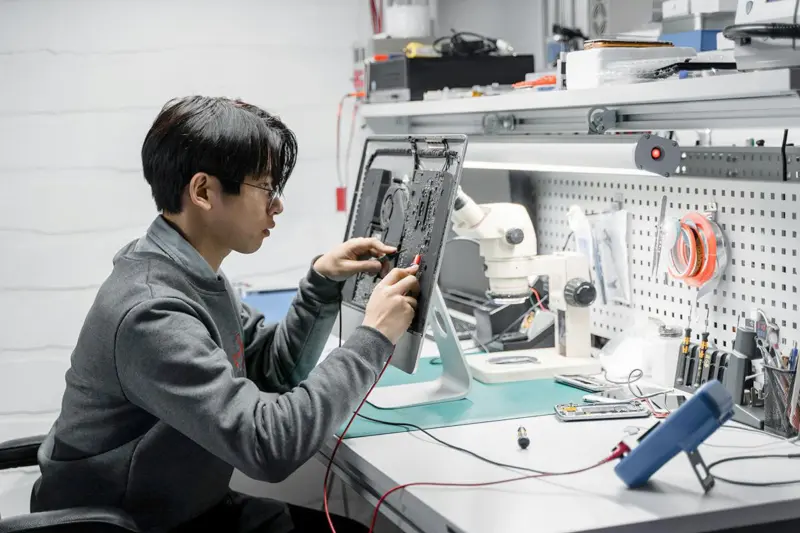
Kindly note the image has been posted only for representational purposes.Photograph: Kind courtesy Tima Miroshnichenko/Pexels
Choosing the right engineering branch in 2026 is a critical career decision after class 12.
A common question most parents and students ask is which branch of engineering is best for them.
Should they choose electronics engineering or artificial intelligence?
Which branch offers better prospects -- computer science or machine learning?
It is important to understand that there is no single 'best branch' for everyone.
Every engineering discipline holds value when it aligns with a student’s interests, aptitude, passion and long-term career goals.
In fact, students who genuinely enjoy what they study tend to perform better and build stronger, more fulfilling careers.
At the same time, the decision cannot be made in isolation from the changing realities of the job market.
Rapid technological advancements, evolving industry demands and the impact of automation are reshaping career opportunities.
As a result, some engineering branches are currently showing stronger growth potential and wider career prospects.
Based on industry trends, research insights and future employment patterns, certain branches stand out for their relevance, adaptability and long-term scope.
Engineering is a dynamic field
The world of engineering is undergoing a significant transformation.
Traditional boundaries between disciplines such as mechanical, civil and electrical engineering are gradually fading.
Today's engineers are expected to go beyond core technical knowledge and develop cross-disciplinary skills in areas like artificial intelligence, data analytics, sustainability and problem-solving.
This shift is further reinforced by employability data.
Studies indicate that nearly 40 to 55 per cent of graduates are not job-ready, mainly due to a lack of practical skills and industry exposure.
At the same time, global workforce reports suggest that around 38 per cent of current job skills will change by 2030, with new roles emerging and others becoming obsolete.
Choosing an engineering branch today is not just about studying a subject; it is about preparing for a dynamic and evolving future. Students must therefore focus on branches that not only provide strong foundational knowledge but also offer adaptability, interdisciplinary exposure and long-term relevance in a rapidly changing world.
Based on these trends, here are five engineering branches recommended for aspirants in 2026:
1. Computer Science Engineering (CSE)
Why it is recommended
Computer science engineering remains the most preferred and in-demand branch due to rapid digital transformation.
Almost every industry today depends on software, data and digital platforms.
With India producing one of the largest tech workforces globally and being a leading hub for IT services, CSE provides strong career security and global opportunities.
AI adoption, cloud computing, cybersecurity and digital platforms are expanding across sectors like banking, healthcare, retail and government services.
Employers are increasingly hiring based on digital skills rather than just degrees.
Key advantages
- High employability across industries
- Strong salary growth potential
- Global career mobility
Future scope
Roles such as software developers, AI engineers, cybersecurity analysts and cloud architects will continue to grow rapidly.
2. Artificial Intelligence and Data Science
Why it's recommended
Artificial intelligence and data science are among the fastest-growing domains globally.
India is already ranked among the top countries in AI skill penetration, with more than 1 million projected AI workforce opportunities.
Government initiatives like the IndiaAI Mission, and the significant investment in AI infrastructure, further strengthen this field.
Over 1,700+ AI start-ups in India and billions in funding indicate a strong market demand.
AI is being applied in sectors such as healthcare, finance, agriculture and manufacturing.
Key advantages
- Direct alignment with future technologies
- High demand for data-driven roles
- Strong innovation opportunities
Future scope
Some of the promising careers you can consider would be that of a data scientist, an AI engineer, a machine learning specialist and an analytics consultant.
3. Electronics and Communication Engineering (ECE)
Why it's recommended
ECE plays a critical role in communication, electronics and embedded systems. With the growth of 5G, IoT, robotics and semiconductor industries, this branch is becoming increasingly important.
India's focus on semiconductor manufacturing and digital infrastructure is creating new opportunities in this field.
The rise of smart devices, connected systems and automation is increasing the demand for engineers who understand both hardware and software integration.
Key advantages
- Strong core engineering foundation
- Opportunities in telecom, electronics and IT sectors
- Flexibility to move into software roles
Future scope
Potential careers include embedded systems engineers, communication engineers, IoT specialists and robotics engineers.
4. Mechanical Engineering (with Emerging Technology Integration)
Why it's recommended
Mechanical engineering remains an evergreen branch but its role is evolving. It is now closely linked with automation, robotics and smart manufacturing.
Industries are shifting towards Industry 4.0 where machines, data and automation work together.
Manufacturing sectors are increasingly using predictive maintenance, automation and robotics, creating demand for engineers with both mechanical and digital skills.
Key advantages
- Strong core engineering base
- Opportunities in multiple industries
- Integration with robotics and automation
Future scope
Those interested in mechanical engineering can pursue roles such as that of an automation engineer, a robotics specialist or a manufacturing systems engineer.
5. Civil Engineering (with Sustainability Focus)
Why it's recommended
Civil engineering continues to be essential due to infrastructure development and urbanisation. However, the focus is now shifting towards sustainability and smart cities.
Government initiatives in infrastructure, housing and urban development are seeing an increase in demand for civil engineers.
Large-scale projects in smart cities, renewable infrastructure and green buildings are creating new opportunities.
Key advantages
- Stable demand in public and private sectors
- Opportunities in infrastructure and construction
- Growing importance of sustainability
Future scope
Careers options include structural engineering, urban planning, environmental engineering and being a smart city specialist.
How to pick the right engineering branch
While choosing your engineering branch, it is important not to follow trends blindly. Instead, make an informed decision based on your interest and future opportunities.
While all branches have value, the recommended fields offer stronger alignment with emerging technologies, industry demand and long-term growth.
Students must also focus on building skills, gaining practical exposure and staying adaptable.
The future belongs to those who can learn continuously and apply their knowledge effectively.
Engineering is not just a fancy degree that will help you secure a six-digit salary; it is about solving real-world problems.
With the right choice and preparation, students can build meaningful and successful careers in the evolving global landscape.