
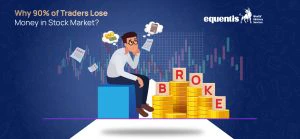

The stock market attracts millions of people every year with the promise of wealth creation and financial freedom.
With the rise of online trading platforms and easy access to financial information, more individuals are entering the market than ever before. However, despite the excitement and opportunities, the reality is that a large percentage of traders experience stock market loss instead of profits.
Many studies and market experts often highlight that nearly 90 percent of traders fail to make consistent profits in the market. This statistic may sound alarming, but it reflects common mistakes, emotional decisions, lack of knowledge, and poor risk management practices.
Understanding why traders lose money is extremely important for anyone who wants to succeed in the market. When investors recognize the common causes of stock market loss, they can avoid these pitfalls and build a more disciplined investment strategy.
Understanding Stock Market Loss
A stock market loss occurs when an investor or trader sells a stock at a price lower than the purchase price or when the market value of a stock declines after buying it. Losses are a natural part of investing and trading, but excessive losses often result from poor decision making.
Stock market losses can happen for several reasons such as market volatility, economic downturns, incorrect analysis, panic selling, and overtrading. During periods like a stock market crash, losses can become widespread because prices fall sharply across sectors.
While losses are inevitable in trading, professional investors focus on minimizing losses rather than eliminating them completely. This is where proper strategy and guidance from a SEBI registered investment advisory can make a difference.
Lack of Proper Knowledge and Education
One of the biggest reasons traders face stock market loss is the lack of financial education. Many beginners enter the market after hearing success stories on social media or from friends without fully understanding how markets work.
Successful trading requires knowledge about fundamental analysis, technical analysis, market cycles, and risk management. Without proper understanding, traders often make decisions based on rumors or speculation.
Markets are influenced by economic data, corporate earnings, global events, and investor sentiment. Without studying these factors, traders are more likely to make mistakes that lead to losses.
Emotional Trading
Emotions play a major role in trading decisions. Fear and greed often push traders to make irrational choices.
When prices rise rapidly, traders may feel the fear of missing out and buy stocks at high prices. When the market declines, panic selling becomes common. Both situations often result in stock market loss.
Professional traders follow a disciplined approach and stick to predefined strategies rather than reacting emotionally to short term market movements.
Lack of Risk Management
Another major reason why traders lose money is poor risk management. Many traders risk a large portion of their capital on a single trade.
Without setting stop loss levels or position limits, even a small market move against the trader can lead to significant losses. Risk management strategies such as stop losses, diversification, and proper position sizing are essential to protect capital.
Investors who follow structured risk management practices reduce the chances of large stock market losses.
Overtrading
Overtrading is a common problem among new traders. The excitement of frequent buying and selling often leads traders to take unnecessary positions in the market.
Each trade involves brokerage charges, taxes, and the risk of loss. Frequent trading without a strong strategy can quickly erode capital.
Experienced traders understand that patience and selectivity are crucial in the stock market.
Following Tips and Rumors
Many traders rely on tips from social media, messaging groups, or unofficial sources. These tips often lack proper research and may be driven by speculation.
Buying stocks based on rumors rather than research can result in unexpected price declines and stock market loss.
Investors should rely on credible research and insights from professionals such as a SEBI registered investment advisory before making investment decisions.
Ignoring Market Trends
The stock market moves in cycles that include bull markets, corrections, and crashes. Traders who ignore broader market trends often struggle to make consistent profits.
For example, during a stock market crash, even strong stocks can experience sharp declines due to panic selling and negative sentiment.
Understanding market trends and macroeconomic indicators helps traders make more informed decisions.
Lack of a Trading Plan
A well defined trading plan is essential for success in the stock market. Many traders enter the market without clear entry and exit strategies.
Without a plan, traders tend to react impulsively to price movements. This leads to inconsistent decisions and higher chances of stock market loss.
A proper trading plan should include entry criteria, exit targets, stop loss levels, and capital allocation rules.
Unrealistic Expectations
Another reason traders lose money is unrealistic expectations. Some individuals believe they can double their money within a short period.
While such gains are possible in rare cases, they are not sustainable or predictable. The stock market rewards patience and long term discipline rather than quick profits.
Setting realistic goals and focusing on gradual wealth creation can help investors avoid unnecessary risks.
The Role of Market Volatility
Market volatility is an inherent characteristic of equity markets. Prices fluctuate due to economic data, corporate announcements, geopolitical developments, and investor sentiment.
Volatility can create opportunities for traders, but it can also lead to significant stock market loss if positions are not managed properly.
Understanding volatility and adapting strategies accordingly is essential for long term success.
Learning From Market History
History shows that markets experience periods of rapid growth followed by corrections or crashes. Events such as financial crises, economic recessions, or global disruptions can trigger a stock market crash.
Investors who study historical market behavior gain valuable insights into how markets react during different phases.
This knowledge helps traders stay calm during volatility and avoid panic driven decisions.
Importance of Professional Guidance
For many investors, navigating the complexities of the stock market can be challenging. Professional research and advisory services can help investors make informed decisions.
A SEBI registered investment advisory follows regulatory guidelines and provides research backed insights to help investors manage risks and identify opportunities.
Such advisory services help investors avoid common mistakes that often lead to stock market loss.
Building a Sustainable Investment Approach
Successful investing is not about avoiding losses completely but about managing them effectively. Experienced investors focus on long term strategies rather than short term speculation.
Diversification across sectors, proper asset allocation, and disciplined investing can significantly reduce the risk of stock market loss.
By combining knowledge, patience, and strategic planning, investors can improve their chances of long term success in the stock market.
Conclusion
The statistic that 90 percent of traders lose money highlights the importance of discipline, education, and risk management in the stock market. Losses often occur due to emotional trading, lack of knowledge, unrealistic expectations, and poor strategy.
Understanding the reasons behind stock market loss can help investors develop better trading habits and avoid common mistakes.
With proper research, risk management, and guidance from a SEBI registered investment advisory, investors can build a more structured approach to trading and investing.
While the market will always involve risks, informed decisions and a long term perspective can help investors navigate volatility and create sustainable wealth.
Frequently Asked Questions
1. Why do most traders face stock market loss?
Most traders face stock market loss due to lack of knowledge, emotional trading, poor risk management, and following unverified tips.
2. Is it true that 90 percent of traders lose money?
Many industry reports suggest that a large percentage of traders struggle to generate consistent profits because of behavioral and strategic mistakes.
3. Can beginners avoid stock market loss?
Beginners can reduce losses by learning market fundamentals, managing risk, and following disciplined investment strategies.
4. How does a stock market crash cause losses?
During a stock market crash, prices fall rapidly due to panic selling and negative market sentiment, which leads to widespread losses.
5. What is the biggest mistake traders make?
The biggest mistake traders make is trading without proper research and relying on emotions rather than strategy.
6. How important is risk management in trading?
Risk management is extremely important because it helps protect capital and prevents large losses in a single trade.
7. Can professional advisory services help reduce losses?
Yes, professional services such as a SEBI registered investment advisory provide research based insights that can help investors make informed decisions.
8. Why do traders panic during market volatility?
Traders panic during volatility due to fear of losing money and uncertainty about future market movements.
9. What role does discipline play in trading?
Discipline helps traders follow their strategy consistently and avoid impulsive decisions that lead to losses.
10. Do experienced traders also face losses?
Yes, experienced traders also face losses, but they manage them effectively through risk control and disciplined strategies.
11. How does overtrading lead to losses?
Overtrading increases transaction costs and exposes traders to unnecessary market risks, which can result in losses.
12. Why should traders avoid following market rumors?
Market rumors often lack credible information and can lead to poor investment decisions.
13. Can diversification reduce stock market loss?
Yes, diversification spreads risk across multiple investments and reduces the impact of losses from a single stock.
14. How can traders control emotional decisions?
Traders can control emotions by following a predefined trading plan and setting stop loss levels.
15. What is the importance of market research?
Market research helps traders understand company fundamentals, industry trends, and economic conditions.
16. Why do traders buy at high prices?
Traders often buy at high prices due to fear of missing out when a stock is rapidly rising.
17. How can investors survive a stock market crash?
Investors can survive a crash by maintaining diversification, avoiding panic selling, and focusing on long term investments.
18. Is long term investing safer than trading?
Long term investing is generally considered less risky because it allows investors to benefit from market growth over time.
19. What role does patience play in investing?
Patience helps investors stay invested through market fluctuations and achieve long term financial goals.
20. Can learning from past mistakes improve trading performance?
Yes, analyzing past mistakes helps traders refine their strategies and avoid repeating the same errors.
Disclaimer Note: The securities quoted, if any, are for illustration only and are not recommendatory. This article is for education purposes only and shall not be considered as a recommendation or investment advice by Equentis - Research & Ranking. We will not be liable for any losses that may occur. Investments in the securities market are subject to market risks. Read all the related documents carefully before investing. Registration granted by SEBI, membership of BASL & certification from NISM in no way guarantee the performance of the intermediary or provide any assurance of returns to investors.