
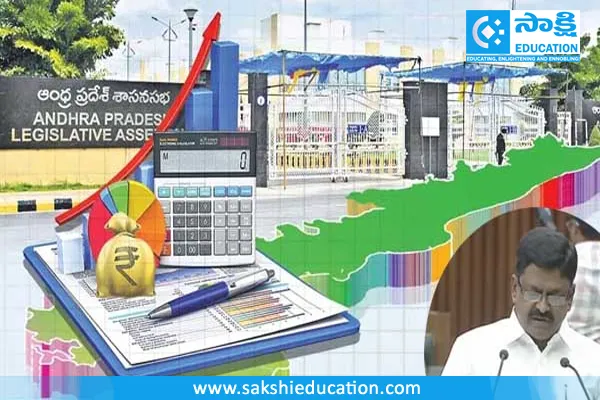

Growth is driven by a balanced performance across key sectors, particularly Agriculture and Allied activities (15.86% growth at current prices) and Services (11.70%). Despite these gains, the state faces fiscal challenges, including a projected total debt of ₹5,64,488 crore by the end of FY 2024-25 and a rising cost of living reflected in the Consumer Price Index.
The document also introduces the "Swarna Andhra Vision 2047," a strategic roadmap aiming to transform the state into a global economic powerhouse with a target GSDP of over $2.4 trillion by 2047.
1. Macro-Economic Performance and Aggregates
- The state economy has demonstrated resilience and accelerated growth compared to the previous fiscal year and national benchmarks.
1.1 Gross State Domestic Product (GSDP)
- Current Prices: The GSDP for 2024-25 is estimated at ₹16.06 lakh crore, up from ₹14.22 lakh crore in 2023-24. The growth rate of 12.94% exceeds the national GDP growth rate of 9.7%.
- Constant (2011-12) Prices: At constant prices, GSDP is estimated at ₹8.73 lakh crore, representing a growth of 9.24%, compared to the national growth rate of 6.4%.
1.2 Sectoral Contribution (GVA at Current Prices)
- The state's Gross Value Added (GVA) is distributed across three primary broad sectors:
- Agriculture & Allied: 35.29%
- Industry: 23.18%
- Services: 41.53%
1.3 Per Capita Income (PCI)
- The PCI is a primary indicator of improved living standards. Andhra Pradesh's PCI of ₹2,68,653 for 2024-25 reflects a 12.9% growth over the previous year (₹2,37,951), maintaining a significant lead over the national PCI of ₹2,00,162.
2. Sectoral Analysis
2.1 Agriculture and Allied Activities
- Agriculture remains the backbone of the rural economy, supporting 60% of the population.
- Production Trends: Food grain production is estimated at 161.86 lakh tonnes, a 12.94% increase. Paddy production rose by 12.95% to 127.15 lakh tonnes.
- Horticulture: The state is India's largest fruit producer, contributing 15.6% of national output. It ranks first in the production of oil palm, papaya, lime, cocoa, tomato, and chillies.
- Livestock & Fisheries: AP ranks 1st in egg production nationally. The fisheries sector contributes 30% of India's total fish production and 31% of shrimp exports.
- Natural Farming: The APCNF scheme supports 25,000 acres under natural farming to improve community health.
2.2 Industry Sector
- The industry sector's GVA is estimated at ₹3.41 lakh crore (current prices).
- Growth Drivers: The construction sub-sector grew by 10.47%, while manufacturing contributed approximately 11% to the GSDP.
- Industrial Corridors: Three major corridors are under development: Visakhapatnam-Chennai (VCIC), Chennai-Bangalore (CBIC), and Hyderabad-Bangalore (HBIC).
- Investment: The State Investment Promotion Board (SIPB) approved projects totaling ₹2,45,275 crores in FY 2024-25, expected to create over 65,000 jobs.
2.3 Services Sector
- Contributing 41.53% to the GVA, the services sector is the largest economic component.
- High-Growth Areas: Communications (15.28% growth) and Banking & Insurance (14.61% growth) are the leading sub-sectors.
- Trade & Transport: Trade, Hotels & Restaurants and Transport services continue to show consistent upward trends in GVA.
3. Public Finance and Cost of Living
3.1 State Finances
- Revenue Sources: Own Tax sources (₹94,967 cr), Own Non-Tax sources (₹7,018 cr), and Central Transfers (₹89,157 cr).
- Expenditure: Total expenditure is expected to reach ₹2,49,418 crore in FY 2024-25.
- Deficits: The Revenue Deficit is projected at ₹48,311 crore, while the Fiscal Deficit is estimated at ₹73,362 crore.
- Debt: The total state debt is expected to reach ₹5,64,488 crore by the end of FY 2024-25.
3.2 Prices, Wages, and PDS
- Inflation: The Consumer Price Index (CPI) for Agricultural Labourers rose by 5.93%. Specific commodities, such as onions, saw price spikes of 40.24%, requiring government intervention.
- Wages: Average daily wages for male agricultural laborers increased to ₹561 (5.65% growth), while skilled trades like carpentry saw faster growth (7.74%).
- Public Distribution: 29,796 Fair Price Shops cover 1.48 crore beneficiaries. Monthly rice allocation stands at 2.35 lakh metric tonnes.
4. Social Infrastructure and Human Development
4.1 Poverty and Employment
- Multidimensional Poverty Index (MPI): AP's MPI score declined to 0.025 (2019-21) from 0.053 (2015-16). The headcount poverty ratio is 6.06%, significantly lower than the national 14.96%.
- Labor Force: The Labour Force Participation Rate (LFPR) is 47.5%. Unemployment stands at 4.1% overall, though youth unemployment (ages 15-29) is notably higher at 17.5%.
4.2 Education and Health
- Education: The state maintains a teacher-pupil ratio of 20:1 in primary schools. Initiatives like the "Dokka Seethamma Mid-Day Meal" have been extended to Intermediate students.
- Health: The Maternal Mortality Rate (MMR) is 45 per 100,000 live births, and the Infant Mortality Rate (IMR) is 24, both performing better than national averages. The Dr. NTR Vaidya Seva Trust provides healthcare coverage to 1.43 crore families.
4.3 Social Welfare
- Pensions: The NTR Bharosa Pension Scheme provides ₹4,000 per month to elderly, widowed, and disabled persons.
- Self-Help Groups (SHGs): AP leads India with a 36% share in SHG financing, involving 8.50 lakh groups and 89.21 lakh women.
5. Swarna Andhra Vision 2047
Launched on December 13, 2024, this vision aims to transform Andhra Pradesh into a "Wealthy, Healthy, and Happy State."
Strategic Target
- Goal for 2047
- GSDP
- Over $2.4 Trillion
- Per Capita Income
- Over $42,000
- Unemployment Rate
- Below 2%
- Women Workforce Participation
- Over 80%
- Skilled Workforce
- Over 95%
 |