
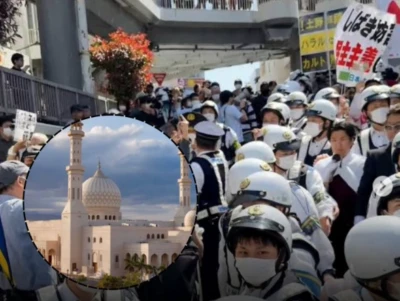

Locals claim that the mosque will cause noise pollution, traffic congestion and safety issues
Fujisawa (Japan) - Locals have strongly opposed the construction of the first mosque proposed in the city of Fujisawa, Japan.
They have launched a signature campaign and demonstrations. The mosque is being opposed as it is larger than a nearby Shinto shrine. The protesters also say it is provocative and a threat to Japanese culture.
Local citizens have stated in a letter to the administration that,
1. The 'Azaan' (call to prayer) said 5 times a day in the mosque will be said on loudspeaker, which will disturb the peace of the area.
2. Cities in Japan are very disciplined and have limited space. If a large number of people gather in a mosque, there will be traffic congestion in the area. The problem of parking vehicles will become serious.
3. Citizens have claimed that such construction may affect the safety of the area.
4. Many senior citizens have expressed concern that the differences between the Japanese lifestyle and Islamic traditions could lead to social tensions in the future.
The Muslim side
The mosque trust has tried to allay the doubts of the locals. They have clarified that the azaan will not be said loudly so as not to disturb the neighbours. Volunteers will be deployed to plan the traffic.
The mosque will not only be a place of worship, but also a 'community centre' where Japanese citizens will also be welcomed.
Administrative dilemma
According to the Japanese Constitution, every citizen has the right to religious freedom. Therefore, it is difficult for the administration to completely ban the construction of the mosque; however, in a democracy, it is also difficult to ignore the feelings of local citizens. Currently, the work on this project is progressing slowly and rounds of discussions are ongoing on both sides.
Similar disputes over graveyards and mosques have previously taken place in Shizuoka and Oita prefectures. The dispute in Fujisawa is being seen as a symbol of Japan's struggle between 'traditional values and globalization'.
Muslim population tripled in just 14 years
Waseda University Professor Emeritus Hirofumi Tanada said that by the end of 2024, the Muslim population in Japan reached about 4,20,000. In 2010, it was 1,10,000. Of the Muslims in Japan, 90% have settled from abroad. The remaining 10% have converted from other religions.
Number of mosques tripled
The number of elderly people in Japan has increased. Due to this, there is a shortage of workers. The Japanese government has opened the doors of Japan to allow workers from abroad to come to Japan. A large number of people from Indonesia, which is a Muslim majority country, are migrating to Japan for employment. The Japanese government has started many initiatives to train them. This has caused Japan's social structure to change. In the year 2008, there were 50 registered mosques. In the year 2025, at least 164 mosques have been registered in Japan.
Muslim graveyards cause tension
According to Japanese culture, Japanese citizens are cremated after death. In Islamic tradition, burial is performed after death. There is widespread opposition to the burial ritual in Japan. Protesters in Japan say that 'burial affects the environment'. Some have claimed that groundwater is being contaminated.
The number of cemeteries in Japan is small. This is also creating tension. There are 10 cemeteries for Muslims in Japan. A proposal for more cemeteries was made; it was strongly opposed. Local citizens are opposing the cemeteries.
Along with this, local citizens in Japan have also opposed the azaan, as the loud sound is disturbing. Muslims gather in large numbers during the Eid-ul-Fitr festival, which is also being opposed.