

|
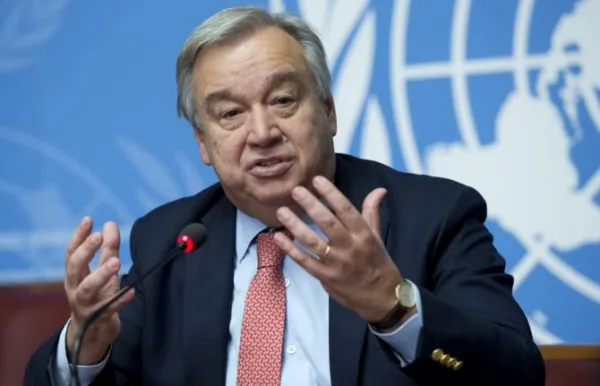
Beirut (Lebanon) - The structure of the United Nations Security Council has become outdated and needs restructuring. It is still stuck in the circumstances of 1945 and does not reflect present-day realities, said Antonio Guterres, criticising the functioning of the council. He made these remarks during a press conference in Beirut. The Security Council was originally established in 1945.
Guterres further stated:
1. Of the 15-member council, five are permanent members. Among them, three countries are from Europe, one from Asia, and one from the Americas. Surprisingly, no country from large regions such as Africa and Latin America has permanent membership. Despite Asia's enormous population and economic strength, only China represents the region as a permanent member of the council.
2. Because of the veto power, the council is often unable to take necessary decisions at the right time. When there is a need to stop a war, a permanent member may use its veto power, which causes peace efforts to stall. He also expressed doubt that this situation is likely to change significantly in the future.
Structure of the Security Council
Under the current structure, China, France, Russia, United Kingdom, and the United States hold veto power as permanent members. The remaining 10 members are non-permanent, elected for two-year terms, and they do not possess veto power. (China often uses its veto power to support terrorists, and therefore the power should be withdrawn. Countries should collectively push for restructuring the Security Council, and India should exert greater pressure for this reform. - Editor)
The current Security Council appears to be struggling to maintain global peace. There are sharp disagreements among member countries regarding major conflicts such as the Russia-Ukraine War, the Israel-Hamas War, and the growing confrontation involving the United States and Israel against Iran.
India's demand for permanent membership
India has been demanding reforms in the Security Council for several decades. According to India, the system established in 1945 does not reflect the realities of the 21st century and contemporary international politics. India has repeatedly stated that it qualifies for permanent membership, and many countries have supported its demand. India most recently served as a non-permanent member of the Security Council for the 2021-2022 term.
Editorial Perspective The weak and ineffective state of the UN Security Council is known to everyone. However, the major powers are unwilling to restructure it, because they prioritise their own interests rather than the welfare of the world. |