

|
(LPG - Liquefied Petroleum Gas)
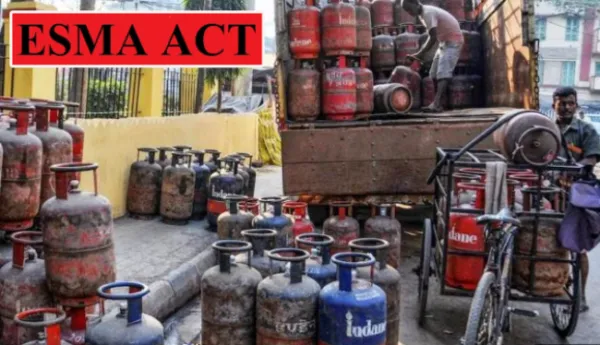
New Delhi - In the backdrop of disruptions in the supply of LNG (Liquefied Natural Gas) through the Strait of Hormuz due to the war in the Middle East, India's Petroleum Ministry has ordered regulation of the supply and distribution of natural gas. To control the availability, supply, and equitable distribution of petroleum, petroleum products, and natural gas, the government has invoked powers under the Essential Commodities Act, 1955 and the Essential Services Maintenance Act (ESMA). Under this order, gas supply will be prioritised for household PNG (Piped Natural Gas), CNG (Compressed Natural Gas) used for transportation, and LPG production. This means that if gas shortages occur, households and transportation will receive priority, followed by other sectors. The government stated that the decision was taken to maintain uninterrupted supply in critical sectors and ensure fair distribution.
The fertiliser industry will receive 70% of its average gas consumption over the past six months. The tea industry, manufacturing sector, and other industrial consumers will receive up to 80% of their usual supply. Gas supply to petrochemical industries and certain power plants may be reduced and diverted toward priority sectors.
Directions issued to petrochemical establishments
The Union Government has directed refineries and petrochemical plants to maximise LPG production and divert major hydrocarbon sources to the "LPG pool." In this system, the government and oil companies combine domestically produced LPG and imported LPG into a common pool and maintain a shared account of stock and costs. This integrated system is called the LPG pool.
What is ESMA ?
The Essential Services Maintenance Act (ESMA) was created to ensure the uninterrupted delivery of services essential to daily public life. If these services are disrupted, the public will be directly affected. Such services include public transportation, healthcare services, doctors, and hospitals. Currently, due to the Middle East conflict, oil depots and energy facilities are being attacked, and some countries have shut down oil projects. As a result, the global supply of energy has decreased while demand remains high, creating a shortage. In this context, the Union Government has taken this decision. Violations of ESMA provisions can lead to legal action. |
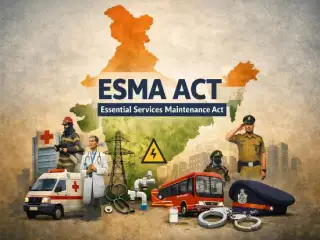
Who will receive LPG cylinders during India's gas shortage ? Household PNG: Supply of cooking gas delivered through pipelines to homes in cities will not be interrupted. Domestic LPG cylinders: Production and distribution of red cylinders used for household cooking in rural and urban areas will be given priority. Public transport (CNG): CNG stations supplying rickshaws, taxis, and buses will continue receiving gas at full capacity. |
Cylinder refill booking restricted for 25 days
To ensure long-term availability of gas stocks, the government has extended the waiting period for booking refills. After receiving one cylinder, customers will now have to wait 25 days before booking another refill. Previously, the waiting period was 21 days. The move aims to prevent unnecessary hoarding.
Use gas sparingly despite a 40-day buffer stock
Although the situation is serious, India currently has LPG buffer stock sufficient for about 40 days. India is also preparing to increase imports from countries such as the United States and Australia, reducing reliance solely on Middle Eastern suppliers. The ministry has appealed to citizens to use gas sparingly in the coming days.
Shortage of commercial LPG threatens restaurants in Maharashtra and Karnataka
A major shortage of commercial LPG cylinders has emerged in the states of Maharashtra and Karnataka. This has raised fears that restaurants and food businesses may shut down. Due to the shortage, the price of commercial cylinders has also increased, which may lead to higher food prices for customers.
20% of Mumbai restaurants already closed; 50% may shut within two days
According to the restaurant association Aahar, 20% of restaurants in Mumbai have already closed due to lack of supply. If the situation does not improve, up to 50% may shut within two days, the association warned.
1. In cities such as Mumbai, Pune, and Nagpur, restaurant owners are struggling to obtain cylinders. Many restaurants have reduced their menus or shortened operating hours.
2. The situation is also serious in Bengaluru. Many small restaurants have already shut due to lack of gas, while larger restaurants are buying gas from the black market at higher prices.
3. Restaurant associations have demanded urgent government intervention, warning that thousands of jobs could be at risk if supply is not restored.
Quota system introduced for industries
Tea and manufacturing sectors: Only 80% of usual gas supply will be available.
Fertiliser production: Limited to 70% allocation.
Oil refineries: Supply cut by up to 65%.
Due to these reductions, commercial LPG cylinders (blue cylinders) may become more expensive or scarce, placing the restaurant industry under pressure.
State government will resolve the crisis: Tamil Nadu Education Minister
Anbil Mahesh Poyyamozhi, Education Minister of Tamil Nadu, said the government has been monitoring the situation for the past two days. He stated that gas prices appear to have increased by about ₹60, but expressed confidence that the Chief Minister would introduce alternative solutions to control the crisis.
Chennai Hotels Association writes to PM Narendra Modi
The Chennai Hotels Association has written a letter to Narendra Modi seeking intervention. The association warned that any temporary halt in commercial LPG supply could severely affect restaurants and food businesses. According to association president M. Ravi, restaurants currently have only two days' worth of cylinders remaining.
50,000 people completely dependent on restaurants
In Tiruppur, restaurants may be able to operate for only two more days. Currently, many are serving only ready foods such as tomato rice or khichdi. Most restaurants rely solely on gas stoves, and obtaining permission from the pollution control board to use wood-burning stoves is extremely difficult. Around 2,00,000 people eat at restaurants daily in Tiruppur, and about 50,000 people depend entirely on restaurant food. If the situation does not change, a major crisis may arise, the report warns.
50,000 restaurants in Jaipur on the verge of closure
In Jaipur, the capital of Rajasthan, the situation is also worsening. Due to the shortage of commercial gas, more than 50,000 hotels and restaurants are on the verge of shutting down.
Difficult situation in Lucknow as well
In Lucknow, the capital of Uttar Pradesh, restaurants are also nearing closure because commercial cylinder supplies have been delayed for the past two days.